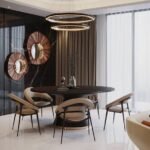


A small dining room can be just as comfortable, stylish, and functional as a large dining area. The key is not the amount of space you have, but how intelligently you use it. With the right furniture, colors, lighting, storage solutions, layout, and decorating techniques, even a very compact dining room can become a welcoming place for everyday meals, family gatherings, homework, conversations, and special occasions.
Many modern homes and apartments have limited floor space. Open-plan layouts, studio apartments, small houses, and compact urban homes often require one area to perform several functions. A dining space may need to fit between the kitchen and living room, occupy a corner of a larger room, or share space with another part of the home.
Fortunately, limited space does not mean you have to sacrifice style or comfort. A carefully planned dining room can feel open and organized even when the actual floor area is small.
This guide explores practical and beautiful small dining room ideas for limited spaces. You will learn how to select the right table, arrange chairs, use walls effectively, improve lighting, create storage, choose colors, make a room appear larger, and decorate without creating visual clutter.
Why Small Dining Rooms Need Smart Planning
A dining room has several basic requirements. You need enough space for a table, seating, movement, lighting, and sometimes storage. In a large room, these elements can be spread out. In a small room, every inch matters.
Poor planning can make a compact dining area feel crowded. A table that is slightly too large may block a doorway. Heavy chairs can make the room visually busy. Too many decorations can make surfaces look cluttered.
Smart planning solves these problems.
Before purchasing furniture or decorating, consider:
- The dimensions of the room
- Door and window locations
- Traffic flow
- Number of people who normally use the dining area
- Frequency of entertaining guests
- Available storage
- Natural light
- Existing furniture
- The relationship between the dining area and kitchen or living room
The goal should be to create a dining space that supports everyday life without making movement difficult.
1. Choose a Small Dining Table
The dining table is usually the largest piece of furniture in a dining area, so selecting the correct size is extremely important.
A compact table can provide enough space for meals without overwhelming the room.
Round, square, rectangular, and oval tables can all work in small dining rooms, but each shape has different advantages.
Round Dining Tables
A round table is one of the most useful choices for a compact dining room.
Because there are no sharp corners, people can move around it more easily. A round table can also encourage conversation because everyone faces one another.
Round tables are particularly useful in:
- Small square rooms
- Apartment dining areas
- Kitchen corners
- Open-plan homes
- Breakfast areas
A pedestal-style round table can be even more practical because the central base provides more legroom.
Square Dining Tables
A square table can work well in a small square-shaped dining room.
It can fit neatly into a compact layout while providing a balanced appearance. A small square table can also be pushed against a wall when it is not being used.
Rectangular Dining Tables
Rectangular tables are classic and practical, especially for narrow rooms.
If your dining room is long and narrow, choose a table that follows the direction of the room. Avoid oversized tables that leave little walking space.
Oval Dining Tables
An oval table combines some of the advantages of rectangular and round designs.
The elongated shape provides useful seating capacity while the rounded edges make movement easier.
2. Consider an Extendable Dining Table
One of the smartest solutions for a small dining room is an extendable table.
An extendable table can remain compact during everyday meals and become larger when guests arrive.
For example, a small table may comfortably serve two to four people on a normal day. When additional guests visit, the table can be extended.
This approach eliminates the need to keep a large dining table in a small room all the time.
Look for designs with:
- Drop leaves
- Butterfly extensions
- Sliding extensions
- Fold-out sections
- Removable center leaves
Choose an extension mechanism that is easy to operate and does not require complicated storage.
3. Use a Drop-Leaf Table
A drop-leaf dining table is another excellent solution for limited space.
Its sides can be lowered when the table is not being used. This allows the table to occupy less floor space.
A drop-leaf table can also serve several functions. During the day, one side can remain extended for meals, while the other side can be lowered to create more walking space.
This type of furniture is especially useful for:
- Studio apartments
- Small kitchens
- Compact dining corners
- Rental homes
- Small family rooms
4. Try a Wall-Mounted Dining Table
If floor space is extremely limited, consider a wall-mounted dining table.
A folding wall-mounted table can remain flat against the wall when it is not needed.
When mealtime arrives, it can be folded down.
This creates an extremely flexible dining area.
A wall-mounted table can be paired with folding chairs that can also be stored against a wall or inside a closet.
For very small apartments, this arrangement can provide a full dining solution without permanently occupying valuable floor space.
5. Use a Dining Bench
Dining benches are excellent for small dining rooms because they can accommodate several people while taking up less visual space than individual chairs.
A bench can often slide completely underneath the table when it is not being used.
This creates a cleaner and more open appearance.
Benches are especially useful when one side of the dining table is positioned against a wall.
You can choose:
- Wooden benches
- Upholstered benches
- Built-in benches
- Storage benches
- Corner benches
A storage bench is particularly practical because it provides seating and hidden storage at the same time.
6. Create a Built-In Dining Nook
A built-in dining nook can transform an unused corner into a useful dining area.
A corner bench can be installed along two walls, creating an L-shaped seating arrangement.
The table can then be positioned in front of the bench.
This arrangement makes efficient use of corners that might otherwise remain unused.
Built-in dining nooks can also include:
- Drawers
- Lift-up storage
- Shelves
- Cushioned seating
- Wall cabinets
If you are renovating your home, a custom dining nook can be an excellent long-term investment.
7. Use Chairs That Are Easy to Store
Large dining chairs with wide arms can make a small dining room feel crowded.
Instead, consider slim chairs with simple profiles.
Stackable chairs are particularly useful because several chairs can be stacked and stored when they are not required.
Folding chairs can also work well.
When guests arrive, additional chairs can be brought out. After the meal, they can be folded and stored.
Choose chairs that are comfortable enough for normal meals rather than selecting them purely for their compact size.
8. Select Armless Dining Chairs
Armless chairs often occupy less visual space than chairs with large armrests.
They can slide completely underneath the table, creating a clean appearance.
Slim armless chairs are especially useful around:
- Round tables
- Small rectangular tables
- Narrow dining spaces
- Breakfast nooks
If comfort is important, choose chairs with supportive backs and appropriately padded seats.
9. Match the Table and Chairs Carefully
Furniture does not have to be identical, but the proportions should work together.
A large table paired with small chairs can look unbalanced. Likewise, bulky chairs around a tiny table can make the room feel crowded.
Think about:
- Table height
- Chair height
- Seat width
- Chair depth
- Leg placement
- Visual weight
The furniture should allow people to sit comfortably without blocking pathways.
10. Keep the Dining Area Close to the Kitchen
If possible, place the dining area near the kitchen.
This reduces unnecessary movement when serving food and clearing dishes.
In an open-plan home, a dining table can create a natural transition between the kitchen and living room.
For example:
Kitchen → Dining Area → Living Room
This arrangement creates an intuitive flow.
The dining table can also visually separate the kitchen from the living room without requiring a wall.
11. Use an Open-Plan Dining Layout
Open-plan homes can make small dining areas feel larger because there are fewer physical barriers.
Instead of separating the dining room with walls, allow the dining area to connect naturally with the kitchen or living room.
Use furniture and lighting to visually define the dining zone.
A pendant light above the table is one of the easiest ways to establish a dining area within a larger room.
A rug can also help define the space, provided it is appropriately sized.
12. Choose Light Colors
Color has a major impact on how spacious a room feels.
Light colors generally reflect more light and can help a small room feel brighter.
Consider shades such as:
- White
- Cream
- Soft beige
- Pale gray
- Light taupe
- Soft blue
- Gentle green
- Warm off-white
You do not have to make everything white.
Combining light walls with natural wood furniture can create warmth without making the room visually heavy.
13. Use One Consistent Color Palette
Too many colors can make a small dining room feel visually fragmented.
Instead, choose a limited palette.
For example:
Warm white + light wood + beige
or:
Soft gray + white + natural oak
or:
Cream + muted green + wood
A consistent color scheme allows furniture and architectural features to blend together.
14. Use Mirrors to Create Visual Space
A mirror can make a small dining room appear larger by reflecting light and surrounding space.
Place a mirror where it reflects:
- A window
- A light fixture
- An attractive wall
- An open area
Avoid positioning a mirror where it reflects clutter.
Large mirrors can have a dramatic effect, but several smaller mirrors can also work.
A round mirror above a dining table can create an attractive focal point.
15. Install a Large Wall Mirror
If your dining room has one narrow wall, a large mirror can make the wall appear wider.
A full-height mirror can also create the illusion of greater room height.
For a traditional look, choose a framed mirror.
For a modern dining room, consider a simple frameless mirror or a thin metal frame.
16. Maximize Natural Light
Natural light is extremely valuable in a small room.
Keep windows as clear as possible.
Avoid placing tall furniture directly in front of windows unless necessary.
Use lightweight curtains instead of heavy drapes.
Sheer curtains can allow daylight to enter while maintaining some privacy.
A bright dining room often feels larger and more welcoming than a dark one.
17. Choose the Right Dining Room Lighting
Lighting should combine functionality and atmosphere.
A small dining room generally benefits from three types of lighting:
- Ambient lighting
- Task lighting
- Accent lighting
A ceiling fixture can provide general illumination.
A pendant light above the dining table can create focused lighting.
Wall lights can provide additional illumination without using floor space.
18. Install a Pendant Light Above the Table
A pendant light is one of the easiest ways to make a dining area look intentional.
Hang it above the center of the dining table.
For a small table, avoid oversized fixtures that dominate the room.
Choose a fixture that is visually proportional to the table.
Simple pendant designs often work well in modern small dining rooms.
19. Use Wall Sconces
Wall sconces are useful when ceiling space is limited.
They provide light without taking up table or floor space.
Sconces can also create a decorative focal point.
Install them on either side of a mirror, artwork, or built-in dining nook.
20. Avoid Bulky Light Fixtures
A large chandelier may look beautiful in a spacious dining room but can overwhelm a compact room.
Instead, choose fixtures with:
- Slim profiles
- Open designs
- Light colors
- Glass elements
- Minimal frames
The goal is to provide enough light without making the ceiling feel crowded.
21. Use Vertical Space
One of the biggest mistakes in small rooms is focusing only on floor space.
Walls provide valuable storage and decoration opportunities.
Use vertical surfaces for:
- Shelves
- Cabinets
- Artwork
- Mirrors
- Hooks
- Lighting
- Decorative objects
A tall, narrow cabinet can provide considerable storage without using much floor width.
22. Install Floating Shelves
Floating shelves can provide storage without making the room feel as heavy as traditional cabinets.
Use them to display:
- Plates
- Glassware
- Small plants
- Cookbooks
- Artwork
- Decorative bowls
Do not overcrowd the shelves.
Leave some empty space between objects.
23. Use a Narrow Sideboard
A sideboard can provide valuable dining storage, but it must be appropriately sized.
Choose a narrow sideboard rather than a deep one.
A slim sideboard can store:
- Plates
- Cutlery
- Table linens
- Serving dishes
- Glasses
The top can be used for a mirror, artwork, lamp, or a small decorative arrangement.
24. Choose Furniture With Built-In Storage
Small dining rooms benefit greatly from multifunctional furniture.
Consider:
- Storage benches
- Tables with drawers
- Cabinets with adjustable shelves
- Sideboards
- Wall-mounted storage
- Shelving units
Furniture that performs two functions can reduce the total number of objects in the room.
25. Use a Storage Bench
A storage bench can be particularly useful in a dining nook.
The seat lifts up to reveal hidden storage.
Use the interior for:
- Tablecloths
- Napkins
- Serving dishes
- Seasonal decorations
- Extra cushions
This keeps these items out of sight while keeping them close to the dining area.
26. Keep the Dining Table Clear
A small dining room can quickly appear messy when the table becomes a storage surface.
Try to keep the table mostly clear.
Instead of leaving paperwork, electronics, mail, and miscellaneous objects on the dining table, create dedicated storage areas elsewhere.
A small centerpiece is usually enough.
27. Use a Small Centerpiece
A dining table does not need a large centerpiece.
Try:
- A small vase
- A bowl of fruit
- A candle
- A small plant
- A simple decorative object
For everyday use, choose something that can easily be moved when food is served.
28. Decorate the Walls Instead of the Floor
In a small dining room, floor decorations can take up valuable space.
Instead of large floor plants or decorative furniture, use walls for visual interest.
Artwork, mirrors, shelves, and wall lights can add personality without reducing walking space.
29. Use a Gallery Wall Carefully
A gallery wall can add character to a small dining room.
However, too many frames can make the space feel busy.
Choose a small collection of coordinated artwork.
You can create a simple arrangement with:
- Family photographs
- Botanical prints
- Abstract art
- Food illustrations
- Minimalist posters
Keep the frame colors coordinated for a more organized appearance.
30. Try One Large Artwork
If a gallery wall feels too busy, use one large artwork instead.
A single statement piece can create a focal point without filling the entire wall.
Choose artwork that complements the dining furniture and room colors.
31. Use Transparent Furniture
Transparent furniture can reduce visual clutter.
A glass dining table, acrylic chairs, or glass shelving can make a small dining area appear more open.
Because these pieces allow the eye to travel through them, they can create a lighter visual effect.
However, choose durable and practical materials, particularly in homes with children.
32. Choose Furniture With Slim Legs
Furniture with slim legs often looks lighter than furniture with solid bases.
A dining table with slender legs allows more of the floor to remain visible.
This can make the room feel less crowded.
The same principle applies to chairs, sideboards, and shelving.
33. Use Round Furniture in Tight Spaces
Round furniture can improve movement in compact rooms.
A round table has no corners that people need to navigate around.
This can be especially useful when the dining table is positioned close to:
- A doorway
- Kitchen counters
- A hallway
- Living room furniture
34. Make a Narrow Dining Area Work
A narrow dining room does not necessarily require a tiny table.
The key is choosing furniture that follows the room’s proportions.
A narrow rectangular table can fit against the longest wall.
A bench can be placed against one wall while chairs occupy the opposite side.
This creates seating while preserving a central pathway.
35. Use a Wall Bench
A wall bench is ideal for narrow dining areas.
Instead of pulling chairs away from the wall, the bench remains fixed against it.
When people are not sitting, the table can be pushed closer to the bench.
This creates more open floor space.
36. Consider a Corner Dining Table
A corner dining table can turn an unused corner into a functional eating area.
Pair a small rectangular or square table with an L-shaped bench.
This arrangement is especially effective in kitchens and apartments.
37. Use Folding Furniture
Folding furniture is one of the best solutions for extremely limited spaces.
Consider:
- Folding tables
- Folding chairs
- Drop-leaf tables
- Folding benches
These pieces can be stored when the dining area needs to serve another purpose.
38. Create a Multi-Purpose Dining Space
A small dining room can serve multiple functions.
It can become:
- A dining area
- A homework station
- A home office
- A crafting table
- A reading space
- A board-game area
Choose furniture that can adapt to different activities.
For example, an extendable table can become a workspace during the day and a dining table at night.
39. Keep the Floor Visible
Visible floor space contributes to the feeling of openness.
Avoid placing unnecessary furniture around the dining table.
A compact room often looks larger when the floor extends visually from one side to another.
Furniture with legs can help achieve this effect.
40. Use a Small Area Rug
An area rug can define the dining space and add warmth.
However, the rug should be large enough to accommodate the table and chairs.
If the rug is too small, chairs may fall off the edge when pulled backward.
For very small dining areas, you may decide to skip the rug entirely.
41. Choose Easy-to-Clean Materials
Small dining rooms are often high-use areas.
Choose practical surfaces that are easy to maintain.
Good options include:
- Finished wood
- Laminates
- Durable stone
- Easy-clean upholstery
- Washable fabrics
If you frequently eat with children, practical materials can be more important than delicate decorative finishes.
42. Use Light Wood Furniture
Light wood can create warmth while maintaining an airy appearance.
Oak, ash, birch, and other lighter finishes can work beautifully in compact dining spaces.
Pair light wood with neutral walls for a Scandinavian-inspired appearance.
43. Try a Minimalist Dining Room
Minimalism can be especially effective in small dining rooms.
A minimalist dining area usually focuses on:
- Simple furniture
- Neutral colors
- Clean lines
- Limited decoration
- Functional storage
- Open floor space
The objective is not to make the room empty, but to make every item purposeful.
44. Use Scandinavian-Inspired Design
Scandinavian interiors often work well in small spaces.
The style commonly combines:
- Light colors
- Natural wood
- Simple furniture
- Soft textiles
- Functional design
- Natural light
This approach can create a dining room that feels warm, modern, and uncluttered.
45. Create a Modern Small Dining Room
For a modern look, choose simple shapes and limited materials.
For example:
- Round wood table
- Slim black or neutral chairs
- Simple pendant light
- Large mirror
- Minimal artwork
Avoid too many decorative objects.
Modern design often works best when the room has visual breathing space.
46. Use a Neutral Dining Room Palette
Neutral colors make it easier to decorate a small space without overwhelming it.
Try combinations such as:
White and Natural Wood
Bright and timeless.
Beige and Brown
Warm and comfortable.
Gray and White
Clean and contemporary.
Cream and Green
Fresh and relaxing.
Black and White
Modern and dramatic.
Use darker colors as accents rather than covering every surface.
47. Add a Small Indoor Plant
Plants can make a dining room feel fresh and lively.
In a small space, choose compact plants.
Examples include:
- Small snake plants
- Pothos
- Herbs
- Small palms
- Succulents
Place them on a shelf, windowsill, or dining table rather than using a large floor planter.
48. Create a Small Herb Garden
If your dining area is close to the kitchen, a small herb garden can be both decorative and useful.
Consider growing:
- Mint
- Basil
- Parsley
- Rosemary
- Coriander
A narrow wall shelf or windowsill can provide enough space.
49. Use Curtains Strategically
Curtains can affect how large a dining room feels.
Hanging curtains slightly higher than the window frame can make the ceiling appear taller.
Using curtains that extend close to the floor can create a longer vertical line.
Choose lightweight fabrics in small rooms.
50. Keep Window Treatments Simple
Heavy patterns can make a compact dining area feel visually busy.
Simple curtains or blinds are often better.
Neutral or softly colored window treatments can blend into the room.
51. Avoid Overdecorating
One of the most important small dining room rules is to avoid unnecessary decoration.
Every object occupies visual space.
Instead of decorating every surface, choose a few meaningful pieces.
For example:
- One mirror
- One pendant light
- One artwork
- One plant
- One simple centerpiece
This may be enough.
52. Use Hidden Storage
Hidden storage keeps everyday items out of sight.
Storage can be incorporated into:
- Benches
- Cabinets
- Sideboards
- Tables
- Wall units
The cleaner the surfaces, the more spacious the room tends to feel.
53. Use the Space Under the Table Carefully
If your table has space underneath it, chairs should slide fully under the table.
This is an easy way to reduce the room’s visual footprint when the table is not being used.
Avoid placing baskets or storage boxes under the table unless necessary.
54. Use Stackable Chairs for Guests
If you usually eat with two or four people but occasionally host larger gatherings, do not permanently keep eight chairs around the table.
Instead, store additional stackable or folding chairs elsewhere.
Bring them out only when needed.
This keeps everyday space open.
55. Use a Round Pedestal Table
A pedestal base eliminates the traditional four-corner leg arrangement.
This provides more flexibility for seating.
Guests can sit anywhere around the table without hitting table legs.
It also makes cleaning the floor easier.
56. Consider a Bistro-Style Dining Area
For a very small home, a bistro-style setup can be attractive.
A small round table with two chairs can create an intimate dining area.
This works particularly well in:
- Studio apartments
- Kitchen corners
- Small balconies
- Compact breakfast areas
57. Create a Two-Person Dining Corner
Not every home needs a large dining table.
If only one or two people normally use the dining area, a small two-person table may be sufficient.
This can free up substantial floor space.
When guests arrive, use an extendable table or bring in additional seating.
58. Use a Window Dining Nook
A window can provide a beautiful location for a small dining area.
Place a narrow table near the window and use natural light to create an inviting atmosphere.
A window bench can provide additional seating.
59. Use the Kitchen Island as a Dining Area
If your home has a kitchen island with seating, you may not need a separate dining table.
This can be a practical solution for small homes.
The island can serve as:
- Breakfast area
- Casual dining area
- Workspace
- Food preparation area
This allows the home to use one surface for several purposes.
60. Use a Counter-Height Dining Table
A counter-height table can work well in certain compact spaces.
It can visually connect the kitchen and dining area.
However, make sure the height is comfortable for everyone who will regularly use it.
61. Create a Dining Area Behind a Sofa
In an open-plan room, the space behind a sofa can sometimes be used for a compact dining area.
A narrow table can fit behind the sofa without disrupting the living room.
This arrangement creates natural zoning within a single room.
62. Use Furniture as a Room Divider
A small dining table can help divide a large open room.
A narrow sideboard or shelving unit can also create separation between dining and living areas.
Choose open shelving if you want the room to remain visually connected.
63. Use Glass to Maintain Openness
Glass can visually separate spaces without making them feel closed.
A glass dining table or glass partition can maintain a sense of openness.
This can be useful in apartments where the dining area shares space with the living room.
64. Make the Ceiling Part of the Design
The ceiling is often overlooked.
A simple pendant light can draw attention upward.
Vertical design elements can also make the room feel taller.
Avoid filling the ceiling with too many decorative fixtures.
65. Use Vertical Stripes
Vertical patterns can create the impression of height.
You can introduce vertical lines through:
- Wallpaper
- Curtains
- Wall paneling
- Tall artwork
- Narrow shelving
Use patterns carefully so the room does not become visually busy.
66. Use Horizontal Lines in Narrow Rooms
In some narrow dining rooms, horizontal design elements can help emphasize width.
A long narrow sideboard, horizontal artwork, or low shelf can visually stretch the room.
Balance horizontal and vertical elements according to the room’s proportions.
67. Choose Furniture With Rounded Edges
Rounded edges can improve movement and safety in a tight dining room.
They are particularly useful when the table is positioned close to a walkway.
Rounded furniture can also create a softer visual appearance.
68. Avoid Furniture That Blocks Doorways
Always measure door swings before purchasing dining furniture.
A beautiful table is not useful if it prevents a door from opening properly.
Leave enough clearance around doors and major pathways.
69. Think About Traffic Flow
People should be able to move around the dining room without constantly bumping into furniture.
Think about common routes:
- Kitchen to table
- Dining room to living room
- Entryway to hallway
- Table to storage
Keep the most frequently used paths clear.
70. Measure Before Buying
Never guess whether furniture will fit.
Measure:
- Room length
- Room width
- Doorways
- Windows
- Existing furniture
- Ceiling height
- Available wall space
Then compare these measurements with the furniture dimensions.
Also consider how far chairs need to move backward when people sit down.
71. Create a Simple Floor Plan
Before buying furniture, draw a basic floor plan.
You can use paper or a digital design tool.
Mark:
- Doors
- Windows
- Radiators
- Electrical outlets
- Existing furniture
- Walking paths
Then experiment with different table positions.
This can prevent expensive mistakes.
72. Think About Everyday Use
A dining room should work for your normal routine.
Ask yourself:
- How many people eat here daily?
- Do I frequently host guests?
- Do children use the table?
- Is the table also used for work?
- Do I need storage nearby?
- How often do I need extra chairs?
Your answers should determine the design.
73. Design for Guests Without Losing Space
If you occasionally host large dinners, use flexible furniture instead of keeping a large table permanently.
An extendable table is a great option.
A compact everyday arrangement can become a larger entertaining area when necessary.
74. Use a Folding Dining Set
For extremely limited spaces, a folding dining set can be stored against a wall.
This is useful when the dining room also serves another purpose.
Fold the furniture away after meals to reclaim the floor.
75. Create a Dining Area in a Hallway
A wider hallway or unused passage can sometimes become a compact dining area.
A narrow table placed against one wall can provide enough space for meals.
Use benches or folding chairs to maintain flexibility.
76. Use a Console That Converts Into a Table
Convertible furniture can be extremely useful in small homes.
A console table can sometimes expand into a full dining table.
During everyday use, it occupies very little space.
When guests arrive, it can be expanded.
77. Use Multipurpose Furniture
Every piece of furniture should ideally contribute something useful.
A bench can provide seating and storage.
A sideboard can provide storage and display space.
An extendable table can provide dining space and workspace.
This is especially valuable in compact homes.
78. Use a Narrow Cabinet
A tall, narrow cabinet can provide storage without taking much floor space.
Use it to organize:
- Plates
- Glasses
- Bowls
- Napkins
- Serving trays
Choose doors that fit comfortably within the room’s circulation.
79. Keep Decorative Items Proportional
Large decorations can overwhelm a small dining room.
Choose objects that are proportional to the furniture.
A small table needs a small centerpiece.
A narrow wall needs artwork that fits its dimensions.
Proportion is one of the most important principles of successful small-space design.
80. Use Repetition for a Cohesive Look
Repeating materials or colors creates visual unity.
For example, you could repeat:
- Wood tones
- Black metal
- Beige textiles
- Green accents
This makes the room feel intentionally designed.
81. Add Texture Instead of More Objects
If the room feels too plain, you do not necessarily need more decorations.
Add texture through:
- Upholstered chairs
- Linen curtains
- Wooden furniture
- Woven baskets
- Textured rugs
Texture adds interest without requiring many additional objects.
82. Use a Small Round Rug
If you have a round dining table, a round rug can emphasize the shape.
Make sure the rug is large enough for the chairs to remain on it when pulled backward.
If the room is extremely small, a rug may not be necessary.
83. Use Washable Dining Textiles
Small dining spaces can become messy quickly.
Choose washable:
- Seat cushions
- Table runners
- Curtains
- Tablecloths
This makes maintenance easier.
84. Use a Table Runner Instead of a Large Tablecloth
A table runner can add style without covering the entire table.
It works particularly well with wood tables because it allows the natural material to remain visible.
Choose a runner that complements your room’s colors.
85. Create Seasonal Decorations Carefully
Seasonal decorations can make a dining room feel festive.
However, storage can become a problem.
Use a small collection of reusable pieces rather than accumulating large decorations.
A seasonal centerpiece or wall decoration may be enough.
86. Use Dining Room Mirrors Strategically
Mirrors are particularly effective when positioned opposite windows.
They reflect daylight and make the room feel brighter.
A decorative mirror can also function as artwork.
Choose a frame that complements the dining furniture.
87. Make a Small Dining Room Feel Luxurious
A small room can still look sophisticated.
Focus on quality and simplicity.
Try:
- Elegant lighting
- Coordinated colors
- Natural materials
- Quality textiles
- One statement artwork
- Clean furniture lines
Luxury does not require a large room.
88. Create a Cozy Dining Atmosphere
A small dining room can naturally feel intimate.
Use:
- Warm lighting
- Comfortable chairs
- Soft textiles
- Natural materials
- Simple decorations
A cozy atmosphere can make a small room feel intentional rather than restricted.
89. Use Warm Lighting at Dinner
Cool, bright lighting may be useful during the day, but warmer lighting can create a more comfortable atmosphere during evening meals.
A dimmable pendant light can give you control over brightness.
90. Add Dimmers
Dimmers allow the dining area to adapt to different activities.
Use brighter lighting for cleaning or working.
Use softer lighting for meals and entertaining.
This simple feature can dramatically improve flexibility.
91. Keep Electrical Cords Hidden
Visible cords can create visual clutter.
Use cable management solutions to keep cords organized.
Wall-mounted lighting can also reduce visible wiring.
92. Use Smart Storage Habits
Good organization is just as important as good furniture.
Assign every dining item a home.
For example:
- Napkins in one drawer
- Cutlery in another
- Serving dishes in a cabinet
- Tablecloths in a storage bench
When everything has a place, the room stays cleaner.
93. Declutter Regularly
Small rooms become cluttered faster than large rooms.
Regularly remove items that you do not use.
Ask:
Do I actually need this in the dining area?
If not, store it elsewhere or remove it.
94. Avoid Too Many Dining Accessories
You do not need dozens of decorative plates, vases, candles, and ornaments.
Choose a few pieces that complement the room.
Less decoration often makes a small dining room feel more sophisticated.
95. Use Wall-Mounted Cabinets
Wall-mounted cabinets can provide storage without occupying much floor space.
They are especially useful above a dining bench or sideboard.
Make sure the cabinet height is appropriate and does not make the room feel top-heavy.
96. Create a Small Home Dining Bar
If space is extremely limited, a narrow counter attached to a wall can function as a dining bar.
Pair it with two compact stools.
This arrangement can be ideal for:
- Breakfast
- Coffee
- Quick meals
- Working on a laptop
97. Use Stools Instead of Chairs
Stools can be smaller than conventional dining chairs.
When not in use, they can often slide completely under the table.
Choose stools with comfortable seating and appropriate height.
98. Use Backless Benches
A backless bench can create a very streamlined look.
It can slide under the table when not in use.
This is particularly useful in minimalist dining rooms.
For long meals, however, a supportive back may provide greater comfort.
99. Design Around the Table
Because the table is usually the central piece, start your design from it.
Choose the table first.
Then select chairs, lighting, rug, artwork, and storage based on its size and style.
This makes the room easier to coordinate.
100. Make Every Inch Count
The most important rule for a small dining room is simple:
Every inch should have a purpose.
Use corners.
Use walls.
Use vertical space.
Use multifunctional furniture.
Use foldable pieces.
Use hidden storage.
Use light colors.
Use natural light.
Avoid unnecessary clutter.
When these principles are combined, a limited dining area can become highly functional and visually appealing.
Small Dining Room Ideas for Apartments
Apartments often have limited dining space, especially when the kitchen and living room are combined.
A small round table can work well in an apartment corner.
If space is extremely limited, use a wall-mounted table or a narrow breakfast counter.
An extendable table is another excellent choice because it allows you to host guests without occupying additional space every day.
Choose lightweight furniture that can be moved when necessary.
Small Dining Room Ideas for Studio Apartments
Studio apartments require especially flexible furniture.
The dining area may also serve as a workspace or part of the living area.
Consider:
- Folding tables
- Convertible tables
- Stackable chairs
- Wall-mounted storage
- Slim benches
- Transparent furniture
A small round table can also create a visual separation between the kitchen and living areas.
Small Dining Room Ideas for Families
Families need more seating and storage than individuals or couples.
A bench can provide efficient seating for children.
A durable dining table with easy-to-clean surfaces is practical.
Storage benches can hold children’s placemats, tablecloths, or other dining supplies.
Choose rounded furniture edges when possible for safer movement in tight spaces.
Small Dining Room Ideas for Entertaining
If you regularly invite guests, flexibility should be a priority.
Choose an extendable dining table.
Store extra chairs nearby.
Use stackable seating.
Keep serving dishes in a nearby cabinet.
A small room can accommodate larger gatherings temporarily if furniture is designed to adapt.
Small Dining Room Ideas on a Budget
You do not need expensive furniture to create an attractive dining room.
Start with what you already own.
Rearrange the furniture.
Remove unnecessary objects.
Paint the walls.
Add a mirror.
Replace old lighting.
Use inexpensive cushions.
Install floating shelves.
Add a small plant.
Secondhand furniture can also be refreshed with paint, new hardware, or refinishing.
DIY Small Dining Room Ideas
There are many ways to improve a dining area without major construction.
You can:
- Paint an accent wall
- Install floating shelves
- Create a simple gallery wall
- Refinish an old table
- Make a bench
- Add removable wallpaper
- Build a narrow storage shelf
- Replace chair cushions
DIY projects allow you to customize the room according to your needs.
Common Small Dining Room Mistakes
Choosing Furniture That Is Too Large
The most common mistake is buying furniture based on appearance rather than room dimensions.
Always measure first.
Blocking Walkways
Furniture should not interfere with doors or common pathways.
Using Too Many Decorations
Clutter reduces the sense of space.
Ignoring Lighting
A poorly lit room can feel smaller.
Choosing the Wrong Rug Size
A rug that is too small can make the room look awkward.
Forgetting Storage
Without storage, dining surfaces often become cluttered.
Using Too Many Dark Colors
Dark colors can be beautiful, but using them everywhere may make a small room feel enclosed.
Buying Uncomfortable Chairs
Saving space is not useful if the furniture is uncomfortable.
How to Plan a Small Dining Room Step by Step
Step 1: Measure the Room
Write down the exact dimensions.
Step 2: Identify Traffic Paths
Determine how people move through the room.
Step 3: Choose the Table
Select a size and shape that fit comfortably.
Step 4: Select Seating
Consider chairs, benches, stools, or a combination.
Step 5: Plan Storage
Decide where dishes, linens, and serving items will go.
Step 6: Plan Lighting
Choose ceiling, pendant, wall, or accent lighting.
Step 7: Select Colors
Use a simple, coordinated palette.
Step 8: Add a Mirror or Artwork
Create one strong focal point.
Step 9: Add Minimal Decoration
Use plants, textiles, and small accessories.
Step 10: Remove Unnecessary Items
Step back and evaluate the room.
If something does not improve function or appearance, consider removing it.
How to Make a Small Dining Room Look Bigger
There are several visual tricks that can make a compact dining area feel more spacious.
Use light wall colors.
Maximize natural light.
Install mirrors.
Choose furniture with exposed legs.
Avoid oversized furniture.
Keep surfaces clean.
Use transparent materials.
Keep the floor visible.
Use a consistent color palette.
Create clear pathways.
Use vertical storage.
These techniques do not physically increase the room size, but they can significantly change how the space feels.
Frequently Asked Questions
What is the best dining table for a small room?
Round and compact rectangular tables are often practical choices. The best shape depends on the room’s dimensions and traffic flow.
Is a round table better for a small dining room?
A round table can be excellent for small rooms because it has no corners and allows easier movement around the table.
How can I fit a dining table in a tiny apartment?
Consider a drop-leaf table, folding table, wall-mounted table, or small extendable table.
How many chairs should a small dining room have?
Use the number of chairs you normally need. For occasional guests, keep extra folding or stackable chairs stored elsewhere.
Can a dining bench save space?
Yes. A bench can accommodate several people and slide underneath the table when not in use.
What color is best for a small dining room?
Light neutrals such as white, cream, beige, and soft gray can help create a brighter and more open appearance.
Do mirrors make small dining rooms look bigger?
A strategically placed mirror can create the visual impression of additional space by reflecting light and the surrounding room.
Should I use a rug in a small dining room?
You can, but it is not essential. If you use one, choose a size that allows the table and chairs to remain comfortably on the rug.
How can I create storage in a small dining room?
Use floating shelves, narrow cabinets, sideboards, storage benches, wall-mounted cabinets, and furniture with built-in storage.
What type of lighting is best?
A properly sized pendant light above the table can provide both functional and decorative lighting. Additional wall or ceiling lighting can provide general illumination.
Can a small dining room also be a home office?
Yes. A dining table can serve as a workspace during the day and a dining area during meals.
How do I keep a small dining room organized?
Give every item a designated storage location and keep the dining table and other surfaces as clear as possible.
Final Thoughts
Creating a beautiful dining room in a limited space is primarily a matter of thoughtful planning. You do not need a huge room, expensive furniture, or elaborate decoration to create a comfortable dining environment.
The most effective approach is to select furniture according to the room’s proportions, maintain clear walking paths, use vertical space, incorporate smart storage, and choose colors and lighting that create an open atmosphere.
Round tables, extendable tables, folding furniture, benches, floating shelves, mirrors, and multifunctional pieces can all help maximize a compact dining area.
Remember that the dining room should support the way you actually live. If you normally eat with two people, there is no reason to dedicate most of the room to an eight-person table. If you frequently entertain, choose flexible furniture that can expand when needed. If the dining area also functions as a workspace, prioritize furniture that can perform multiple roles.
The best small dining rooms are not necessarily the ones with the fewest items. They are the ones where every item has a clear purpose.
With careful measurements, smart furniture choices, appropriate lighting, practical storage, and a simple decorating strategy, even the smallest dining area can become comfortable, stylish, organized, and welcoming.
A limited dining room can become a place where family meals feel special, guests feel comfortable, and everyday life becomes easier. The secret is to work with the space rather than against it.