
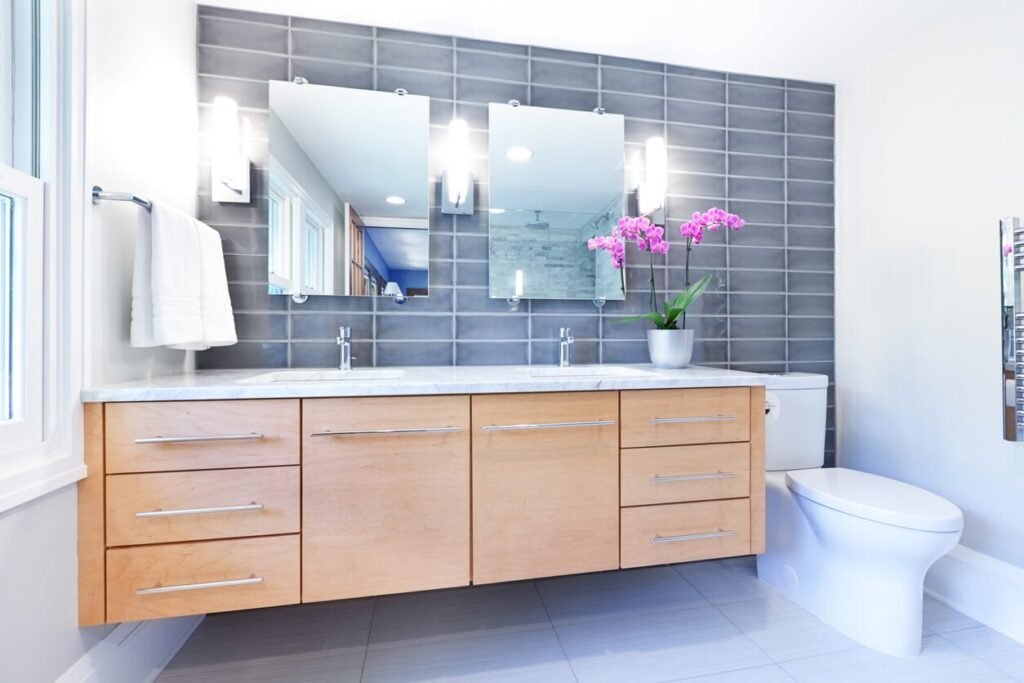

Introduction
A bathroom is one of the most frequently used spaces in any home, but it is often one of the smallest. In apartments, compact houses, studio homes, and modern urban residences, bathroom space can be limited. When toiletries, towels, cleaning supplies, skincare products, hair tools, and other essentials accumulate, even a beautiful bathroom can quickly become cluttered. This is why modern bathroom storage ideas for small spaces have become an important part of contemporary interior design.
A well-organized bathroom does not necessarily require a large renovation, expensive furniture, or a bigger room. With thoughtful planning, suitable storage furniture, attractive accessories, and smart use of vertical space, even a tiny bathroom can become comfortable, practical, and visually appealing.
Modern bathroom storage focuses on combining functionality with attractive design. Instead of filling a small bathroom with bulky cabinets, homeowners can use floating shelves, wall-mounted organizers, recessed niches, vanity drawers, mirrored cabinets, corner shelving, and baskets to make better use of the available space. These solutions help keep everyday essentials within reach while maintaining a clean and uncluttered appearance.
The secret to successful bathroom organization is understanding how the space is used. A family bathroom may require storage for several people’s toiletries, towels, and personal care products. A guest bathroom may need only a few essentials, while a small apartment bathroom might require carefully planned storage for everything from shampoo bottles to laundry supplies.
In this comprehensive guide, we will explore modern bathroom storage ideas for small spaces, explain how to choose the right storage solutions, discuss affordable organization methods, and share practical design tips for creating a bathroom that looks larger, feels more comfortable, and remains easy to maintain.
Whether you are decorating a new home, renovating an existing bathroom, or simply trying to organize a crowded space, these ideas can help you create a more efficient and beautiful bathroom without wasting valuable floor area.
1. Understand Your Bathroom Storage Needs Before Decorating
Before purchasing shelves, cabinets, baskets, or organizers, take some time to understand what you actually need to store. Many people buy attractive storage accessories without considering whether they fit their bathroom layout or daily routine. As a result, they may end up with more clutter instead of a more organized space.
Start by removing unnecessary products from your bathroom. Check expired skincare items, empty shampoo bottles, unused cosmetics, damaged accessories, and duplicate products. Keeping only useful items immediately reduces the amount of storage required.
Next, divide your bathroom essentials into categories. For example, everyday toiletries should be easy to reach, while extra towels, replacement products, and occasional-use items can be stored in less accessible areas.
A practical bathroom storage plan may include the following categories:
- Daily personal care products
- Skincare and grooming accessories
- Towels and washcloths
- Toilet paper and bathroom tissues
- Hair dryers, straighteners, and electric shavers
- Cleaning products
- First-aid and personal care supplies
- Laundry accessories
- Guest toiletries
- Extra shampoo, soap, and toothpaste
Once you understand the quantity and type of items you need to store, measure the available space carefully. Consider the width of the vanity, the height above the toilet, the wall area beside the mirror, the available corner spaces, and the clearance around the shower or bathtub.
Also consider how you move around the bathroom. Storage should not block the door, interfere with drawers, create obstacles near the toilet, or make it difficult to enter and exit the shower safely.
The most effective storage solution is one that fits your lifestyle, available space, and daily habits.
2. Use Floating Shelves to Save Valuable Floor Space

Floating shelves are among the most practical modern bathroom storage ideas for small spaces. They provide useful storage without occupying the floor, making them especially suitable for narrow bathrooms and compact apartment bathrooms.
These shelves can be installed above the toilet, beside the vanity, near the bathroom mirror, or on an unused wall. Their simple appearance also complements contemporary, Scandinavian, minimalist, and natural bathroom designs.
Benefits of Floating Shelves
Floating shelves offer several advantages. First, they create storage without requiring a large cabinet. Second, they keep frequently used items visible and accessible. Third, they can become decorative features when styled carefully.
For example, a wooden floating shelf can hold folded hand towels, a small plant, a soap dispenser, and a decorative container. A white shelf can blend into a light-colored wall, while a black metal shelf can create contrast in a modern bathroom.
Choosing the Right Materials
Bathroom shelves should be selected according to the moisture level in the room.
- Sealed wood: Provides warmth and a natural appearance.
- Powder-coated metal: Creates a contemporary look and works well with industrial designs.
- Glass: Maintains a light visual appearance and is useful in bathrooms with limited natural light.
- Moisture-resistant composite materials: Offer practical options for everyday storage.
- Stone or ceramic shelves: Can complement tiled bathrooms and modern shower areas.
Avoid untreated wood in frequently wet areas because moisture may cause swelling, staining, or deterioration.
How to Style Floating Shelves
The best way to style floating shelves is to combine practical storage with a small amount of decoration. Use matching containers for cotton pads, hair accessories, and small toiletries. Fold towels neatly and keep frequently used items near the front.
Do not fill every available space. Leaving some empty space between objects helps shelves look organized instead of crowded.
For a small bathroom, two or three carefully arranged shelves may provide more practical storage than a large decorative shelving unit.
3. Install a Wall-Mounted Bathroom Cabinet

A wall-mounted bathroom cabinet is an excellent solution when floor space is limited but additional enclosed storage is necessary.
Unlike open shelves, cabinets conceal personal care products, cleaning accessories, medicine organizers, and other everyday essentials. This creates a cleaner appearance, particularly in bathrooms shared by multiple family members.
Why Wall-Mounted Cabinets Work Well
Wall-mounted cabinets use vertical wall space rather than valuable floor area. They also make cleaning beneath the furniture easier because the cabinet does not touch the floor.
In a small bathroom, a narrow cabinet installed above the toilet or beside the vanity can hold numerous items without interfering with normal movement.
Choose a cabinet with a depth appropriate for the available clearance. A cabinet that projects too far into the room can make a narrow bathroom feel uncomfortable.
Select the Right Cabinet Style
Modern bathrooms commonly use simple cabinet designs with smooth doors, concealed handles, neutral colors, and moisture-resistant finishes.
White cabinets are suitable for bright, minimalist interiors. Natural wood finishes create warmth, while charcoal, black, or deep green cabinets provide contrast.
If the bathroom already contains several decorative elements, choose a simple cabinet that blends into the background.
Organize the Interior
Inside the cabinet, use small bins to separate toiletries, spare products, and personal care accessories. Store frequently used items on the most accessible shelves and less frequently used products higher up.
Families can assign separate baskets to different household members. This makes it easier to find products and reduces the likelihood of several people placing their belongings in the same crowded area.
Remember to secure the cabinet properly to suitable wall framing or appropriate masonry anchors. Heavy cabinets should not rely on weak plasterboard fixings alone.
4. Choose a Bathroom Vanity with Built-In Storage

A bathroom vanity is more than a decorative base for a sink. It can provide some of the most valuable storage in a small bathroom.
Traditional pedestal sinks offer little or no enclosed storage, which means toiletries and cleaning supplies must be stored elsewhere. A compact vanity with drawers or cabinet doors makes better use of the space beneath the sink.
Why Vanity Storage Matters
The area beneath a bathroom sink is often underused because plumbing pipes occupy part of the cabinet. However, a carefully designed vanity can accommodate storage around the pipes.
Choose a model with drawers shaped to fit around the plumbing or with adjustable shelves inside the cabinet. This arrangement can store toilet paper, cleaning cloths, spare soap, and personal care products.
Drawer-Based Vanity Designs
Deep drawers are especially useful for organizing items that would otherwise be stacked in a cabinet.
You can use the upper drawer for toothbrushes, skincare products, razors, and other everyday essentials. A lower drawer can hold spare towels, toilet paper, and replacement toiletries.
Drawer dividers prevent small items from moving around and make it easier to maintain an organized interior.
Floating Vanities for Small Bathrooms
Floating vanities create an open area beneath the cabinet, allowing more of the floor to remain visible. This can make the bathroom appear less crowded.
They also make it easier to clean the floor beneath the vanity. However, the exposed area beneath a floating vanity should not automatically become a storage zone. Adding too many baskets or boxes underneath can reduce the spacious appearance.
Choose a vanity width that leaves sufficient room for comfortable movement. In a very small bathroom, a narrow vanity with well-designed drawers may be more useful than a wider model with a large but poorly organized cabinet.
5. Make Better Use of the Space Above the Toilet

The wall above the toilet is frequently overlooked when planning a small bathroom. Because this area often remains unused, it can provide additional storage without requiring major structural changes.
An over-the-toilet shelving unit, floating shelves, or a shallow wall-mounted cabinet can transform this empty area into a practical storage zone.
Over-the-Toilet Shelving Units
Freestanding shelving units designed to fit around the toilet tank are useful in rental properties where drilling into walls may be restricted.
These units usually have a frame that stands on the floor and extends above the toilet. They can hold folded towels, toilet paper, baskets, and small bathroom accessories.
Before purchasing one, measure the toilet height, tank dimensions, available wall clearance, and the distance between the toilet and surrounding fixtures.
Choose a stable unit that does not interfere with access to the toilet or the water supply.
Floating Shelves Above the Toilet
Floating shelves create a more streamlined appearance than many freestanding units. Two shelves can provide enough space for neatly folded towels, spare tissue rolls, and small containers.
For a modern design, consider natural wood against a white wall or white shelving against light gray tiles.
Avoid placing fragile decorative objects or heavy containers where they could fall onto someone using the toilet. Secure shelves properly and keep essential items within easy reach.
Keep the Area Visually Balanced
The area above the toilet should not become an overcrowded display. A few useful items arranged in matching containers are usually more attractive than a large collection of different bottles and decorations.
6. Use Mirrored Cabinets for Two Functions in One

A mirrored cabinet combines two essential bathroom features: a mirror and enclosed storage. This makes it especially useful in small bathrooms where every wall needs to perform more than one function.
Instead of installing a separate mirror and storage cabinet, a mirrored cabinet allows you to store everyday products directly behind the reflective surface.
Advantages of Mirrored Storage
Mirrored cabinets help keep toothbrushes, skincare products, grooming accessories, and small toiletries organized and out of sight.
The reflective surface also distributes light visually around the room. When positioned opposite a light source, a mirror may make the bathroom appear brighter and more open.
Choose the Right Size
A mirrored cabinet should fit the width of the vanity or sink area without interfering with lighting fixtures, wall-mounted taps, or nearby doors.
In a compact bathroom, a shallow cabinet may provide sufficient room for everyday essentials without projecting too far from the wall.
Look for adjustable shelves so that bottles and containers of different heights can be arranged efficiently.
Integrated Lighting
Some modern mirrored cabinets include integrated LED lighting. This can provide useful illumination for shaving, applying makeup, and other grooming tasks.
If the cabinet includes electrical components, choose a product suitable for the bathroom’s installation zone and have electrical work completed according to local safety requirements.
A mirrored cabinet is particularly helpful for people who prefer a clean, minimalist bathroom with fewer objects visible on the countertop.
7. Add Recessed Wall Niches for Built-In Storage

Recessed wall niches are built into the wall cavity rather than projecting outward into the room. They are especially useful in showers, bathtub surrounds, and selected dry areas of the bathroom.
Because the storage sits within the wall, a niche provides space for shampoo bottles, body wash, soap, and other bathing products without requiring a separate shelf.
Shower Niches
A shower niche can eliminate the need for plastic corner racks or bottles sitting on the shower floor.
A long horizontal niche can accommodate several products, while a vertical niche can separate taller bottles from smaller containers.
The size should reflect the number and dimensions of the products you regularly use. Avoid creating a niche that is so small that bottles cannot stand upright or so large that it becomes difficult to clean.
Design Options
A niche can match the surrounding wall tiles for a seamless appearance. Alternatively, contrasting tiles or a different finish can create a subtle decorative feature.
For example, a light beige niche against warm gray tiles creates visual depth without overwhelming the room.
Some homeowners also use stone shelves inside niches to divide the storage into separate sections.
Waterproofing Is Essential
Recessed niches require proper construction and waterproofing, particularly inside showers. Poor installation can allow water to penetrate the wall structure and cause long-term damage.
If you are renovating an existing bathroom, consult a qualified contractor before cutting into walls. Plumbing pipes, electrical wiring, and structural elements may be concealed inside the wall cavity.
A recessed niche is a useful long-term investment when it is properly planned and installed.
8. Install Corner Shelves to Use Unused Areas

Corners can provide valuable storage in bathrooms where straight wall space is limited. A corner shelf fits into an area that might otherwise remain unused, allowing toiletries and accessories to be stored without occupying the main walkway.
Shower Corner Shelves
Corner shelves are suitable for shampoo, conditioner, soap, and body wash. Depending on the bathroom layout, they can be installed in the shower enclosure or bathtub area.
Choose materials that resist moisture and corrosion. Stainless steel, suitable coated metals, ceramic, and quality plastic are common options.
A shelf with drainage openings can help prevent water from collecting beneath bottles.
Decorative Corner Shelves
Outside the shower, corner shelves can hold small towels, tissue boxes, skincare products, or decorative containers.
In a narrow bathroom, rounded corner shelves may be easier to move around than shelves with sharp projecting edges.
Keep the Shelves Accessible
Do not install corner shelves so high that you must stretch to reach everyday products. Similarly, avoid placing shelves where they interfere with shower controls or create an obstruction.
A small number of well-positioned shelves can provide more practical storage than a large organizer installed in an inconvenient location.
9. Use Under-Sink Organizers for Hidden Storage
The cabinet beneath the sink can become difficult to manage because plumbing pipes, cleaning products, and spare toiletries compete for space.
Under-sink organizers help transform this awkward area into an organized storage zone.
Pull-Out Baskets
Pull-out baskets make it easier to reach items stored at the back of a cabinet. Instead of removing several bottles to reach one product, you can slide the basket forward.
These organizers are useful for cleaning cloths, spare toiletries, personal care supplies, and other small household items.
Stackable Storage Bins
Stackable bins allow you to use the vertical space inside a cabinet. You can place lighter products in upper containers and heavier items on lower shelves.
However, avoid stacking containers so high that accessing the bottom bin becomes difficult.
Adjustable Organizers
Adjustable under-sink organizers can accommodate different plumbing arrangements. Some include cutouts or sliding shelves that fit around pipes.
Measure the cabinet interior before purchasing an organizer. Pay particular attention to the height beneath the basin, the location of plumbing connections, and the clearance required for doors or drawers.
Create Separate Categories
Use one container for cleaning accessories, another for replacement toiletries, and another for personal care products.
Cleaning chemicals should remain in their original, clearly labeled containers and be stored securely away from children. Do not transfer chemicals into food or drink containers, and avoid storing them where they may leak onto personal care products.
A well-organized under-sink cabinet can hold many essentials while keeping the bathroom countertop clear.
10. Choose Slim Storage Cabinets for Narrow Bathrooms
Slim storage cabinets are designed to fit into narrow gaps between fixtures, beside a vanity, or along an available wall.
They are particularly useful when a bathroom has limited floor space but still requires enclosed storage.
Vertical Cabinets
A tall, narrow cabinet uses height instead of width. It can store towels, toilet paper, skincare products, and spare toiletries while occupying a relatively small floor area.
Choose a cabinet with adjustable shelves to accommodate products of different sizes.
Between-Fixture Storage
If there is a suitable gap between the toilet and vanity, a slim cabinet may provide extra storage. However, ensure that the cabinet does not restrict access to plumbing, interfere with the toilet, or make cleaning difficult.
Door and Drawer Options
Cabinets with doors are useful for concealing clutter, while drawers provide convenient access to smaller objects.
For very narrow spaces, consider a pull-out unit that can slide into a gap when not in use. Make sure the mechanism is stable and that the unit can be opened without hitting other fixtures.
Styling Slim Cabinets
A cabinet in the same color as the walls may visually blend into the room. This is helpful when the bathroom already contains several fixtures and decorative elements.
A wood-finish cabinet can introduce warmth into a white or gray bathroom, while a dark cabinet can create a more dramatic modern appearance.
11. Use Baskets to Organize Towels and Toiletries

Storage baskets are affordable, flexible, and attractive accessories for small bathrooms. They can organize everyday essentials while introducing texture and warmth into a modern interior.
Baskets work well on shelves, inside cabinets, beneath floating vanities, and in suitable corners of the room.
Different Types of Bathroom Baskets
Woven baskets: Natural woven baskets create a relaxed, spa-inspired appearance. They are suitable for dry storage areas where ventilation is adequate.
Plastic baskets: These are easy to clean and useful for toiletries, hair accessories, and cleaning supplies.
Wire baskets: Metal wire baskets provide visibility and airflow, making them suitable for towels and selected bathroom accessories.
Fabric baskets: Fabric containers are lightweight and often foldable, although they should be kept away from standing water and excessive humidity.
Lidded baskets: These conceal small items and help create a cleaner appearance on open shelves.
Organize Baskets by Purpose
Instead of placing unrelated products in one large basket, create separate containers for different categories.
For example, one basket can hold spare toilet paper, another can store clean washcloths, and a third can contain replacement toiletries.
Labeling the baskets can make it easier for family members to return items to the correct location.
Choose Suitable Colors
Neutral baskets in beige, white, gray, or natural brown complement many modern bathroom styles.
Matching baskets create a coordinated appearance, while a combination of two complementary materials can add visual interest.
Avoid filling every shelf with baskets. Leave some space for frequently used products and allow the room to retain an open, uncluttered feeling.
12. Install Hooks Instead of Traditional Towel Racks

Traditional towel bars can take up considerable horizontal wall space. Hooks provide an alternative that is particularly useful in small bathrooms.
They can be installed behind the bathroom door, beside the shower, near the vanity, or on an available wall.
Benefits of Wall Hooks
Hooks require little space and can accommodate towels, bathrobes, shower caps, and reusable toiletry bags.
Multiple hooks can be arranged vertically, allowing several items to hang within a narrow area.
They also provide a convenient solution for families who need separate places for individual towels.
Choose Durable Materials
Bathroom hooks are exposed to humidity, so select corrosion-resistant materials such as suitable stainless steel or quality coated metal.
Wooden hooks can also work in dry areas when they have an appropriate protective finish.
For frequently used towels, ensure that hooks are firmly attached to a suitable wall surface.
Placement Tips
Place towel hooks within comfortable reach of the shower or bathtub, but keep towels far enough away from direct splashing that they can dry properly.
Avoid placing too many hooks in one location, as crowded towels may retain moisture and develop unpleasant odors.
A simple row of hooks can provide practical storage while maintaining a modern appearance.
13. Use the Back of the Bathroom Door
The back of the bathroom door is often an overlooked storage opportunity. In small bathrooms, this unused vertical surface can accommodate several lightweight organizers.
Over-the-Door Organizers
Over-the-door racks can hold washcloths, hair accessories, small toiletry bags, and other lightweight items.
Some models include pockets, while others use hooks or narrow shelves.
Before installing an organizer, check the gap between the door and the wall, the door’s thickness, and the available clearance when opening and closing it.
Door-Mounted Hooks
A simple row of hooks can hold towels and bathrobes without requiring wall drilling.
This solution is particularly useful in rental homes, where permanent modifications may not be permitted.
Keep the Door Functional
Do not overload door-mounted storage. Excessive weight can damage hinges, cause the door to swing awkwardly, or make it difficult to close.
Also avoid storing heavy glass bottles or items that could fall when the door moves.
Door storage works best for lightweight, frequently used accessories rather than large containers or bulky towels.
14. Create a Compact Laundry Storage Area
Laundry can quickly become a source of clutter in a small bathroom. Dirty clothes, damp towels, and laundry products may occupy valuable floor space if they do not have a designated home.
A compact laundry solution can help maintain a clean appearance.
Narrow Laundry Hampers
Tall, narrow hampers use vertical space and can fit into suitable corners. Choose a size that accommodates your household’s needs without blocking the doorway or access to the shower.
A hamper with ventilation can help reduce trapped moisture, especially when damp towels are placed inside.
Foldable Laundry Baskets
Foldable baskets are useful in bathrooms where space is needed for other activities. They can be stored flat against a wall or inside a cabinet when not in use.
Laundry Cabinets
If space and budget allow, a tall cabinet with a dedicated laundry compartment can conceal dirty clothes while providing shelves for spare towels and laundry supplies.
However, ensure that the compartment is ventilated and that wet laundry is not left in a closed, damp environment for extended periods.
Separate Clean and Dirty Items
Clean towels should be stored away from dirty laundry. Use separate containers and avoid placing damp clothing in a hamper intended for dry laundry.
A planned laundry area can prevent clothes from accumulating on the floor and make bathroom cleaning easier.
15. Use Transparent Containers for Small Items
Transparent storage containers are useful for organizing small bathroom products without making them difficult to find.
They are particularly effective inside vanity drawers, medicine cabinets, and bathroom cupboards.
What to Store in Clear Containers
Depending on the container’s size, you can organize cotton pads, cotton swabs, hair ties, nail-care accessories, makeup tools, travel-size toiletries, and replacement toothbrush heads.
Transparent containers allow you to identify their contents quickly, reducing the time spent searching through drawers.
Drawer Organization
Place containers inside drawers according to how frequently you use each item. Daily essentials should be easiest to reach, while occasional-use products can be stored toward the back.
Use dividers to prevent containers from sliding around whenever the drawer opens.
Maintain Hygiene
Choose containers that are easy to clean. Keep them dry and avoid leaving uncovered personal care products near the shower where they may become wet.
Do not place sharp objects loosely inside containers, and keep potentially hazardous items away from children.
Create a Consistent Look
Although transparent containers are practical, too many different shapes and sizes can make storage look disorganized.
Choose a consistent style for the most visible areas, particularly open shelves and countertops. Inside closed drawers, prioritize convenience over appearance.
16. Install Pull-Out Storage Drawers
Pull-out drawers can make deep cabinets significantly easier to use. Instead of reaching into a dark cabinet and moving products around, you can slide a drawer forward to see the contents.
Why Pull-Out Drawers Are Useful
Deep bathroom cabinets often waste space because items at the back are difficult to reach. Pull-out storage brings those items closer to you.
It can be used for toiletries, cleaning cloths, replacement products, and other household essentials.
Different Drawer Configurations
Some systems use a single deep drawer, while others have multiple shallow drawers.
Shallow drawers are useful for cosmetics, grooming tools, and small accessories. Deeper drawers can hold spare towels and larger bottles.
Choose a configuration that fits the cabinet’s dimensions and plumbing arrangement.
Soft-Close Mechanisms
Soft-close runners can reduce noise and prevent drawers from slamming. They are particularly convenient in family bathrooms.
However, the storage system should remain easy to maintain. Choose durable runners and avoid overloading drawers beyond their specified capacity.
Plan Before Purchasing
Measure the cabinet’s interior width, depth, and height. Check for hinges, plumbing pipes, and other obstructions.
A carefully fitted pull-out system can improve access to existing storage without requiring an entirely new bathroom vanity.
17. Make Use of Space Beneath a Floating Vanity

A floating vanity creates a visible gap between the cabinet and the floor. This gap can contribute to an airy appearance, but it may also provide room for carefully selected storage accessories.
Open Shelves Beneath the Vanity
Some floating vanities include an open lower shelf for towels, baskets, or frequently used items.
A single shelf can accommodate neatly folded towels without making the area look too crowded.
Storage Baskets
A small basket may fit beneath a floating vanity, particularly in bathrooms where the gap is relatively tall.
Choose baskets that can be removed easily for cleaning and avoid positioning them where they interfere with plumbing or create a tripping hazard.
Maintain the Spacious Appearance
One advantage of floating furniture is the visibility of the floor beneath it. Filling this space with multiple storage boxes may eliminate that benefit.
Use the area only when the additional storage is genuinely necessary. A mostly open floor beneath the vanity can help a compact bathroom feel less crowded.
18. Choose Sliding Doors for Bathroom Cabinets
Traditional cabinet doors require space to swing outward. In narrow bathrooms, this movement may interfere with the toilet, shower enclosure, or nearby furniture.
Sliding doors can help solve this problem.
Advantages of Sliding Storage
Sliding cabinet doors move along a track rather than opening into the room. This can make a cabinet easier to access in tight spaces.
They are useful for wall-mounted cabinets, tall storage units, and selected bathroom vanity designs.
Choose Appropriate Hardware
Bathroom cabinets should use durable tracks and materials suitable for humid conditions.
Keep sliding tracks clean because dust, hair, and product residue can interfere with movement.
When Sliding Doors Make Sense
Sliding doors are particularly helpful when the cabinet is located near a doorway or another fixture.
However, some sliding designs expose only part of the cabinet at a time. Consider whether this arrangement suits the items you need to access regularly.
The right cabinet design should support your routine rather than making everyday tasks more complicated.
19. Use Magnetic Organizers for Small Metal Accessories
Magnetic organizers can provide convenient storage for selected bathroom accessories, particularly small metal items.
Depending on the product, a magnetic strip or magnetic container may be installed inside a cabinet door or on a suitable metal surface.
Useful Applications
Magnetic storage may be appropriate for certain tweezers, nail clippers, hairpins, and other small metal grooming accessories.
A magnetic strip can help keep these objects from becoming mixed with larger products inside a drawer.
Safety Considerations
Not every grooming tool is suitable for magnetic storage. Avoid placing sharp objects where they could fall, and do not install magnetic accessories near electrical equipment unless the equipment’s instructions permit it.
Use magnets only on surfaces that support them securely. Ordinary ceramic tiles and many painted walls will not hold magnetic organizers without an appropriate mounting system.
Keep the System Simple
Magnetic storage works best as a small organizational addition rather than a replacement for cabinets or drawers.
For most bathrooms, one carefully placed magnetic organizer is more practical than multiple strips scattered around the room.
20. Use a Rolling Storage Cart Where Space Allows
A slim rolling cart can provide flexible storage for bathrooms that have a small amount of spare floor area.
Unlike fixed furniture, a rolling cart can be moved when you need to clean the floor or access another fixture.
What to Store on a Rolling Cart
A compact cart may hold spare toiletries, folded towels, hair-care products, or lightweight cleaning accessories.
Use its lower levels for larger containers and its upper levels for frequently used items.
Select the Right Dimensions
Measure the available floor area before purchasing a cart. Make sure there is enough room to move it without blocking the toilet, shower, or bathroom entrance.
A narrow three-tier cart can be useful in some layouts, but it may be unsuitable for a particularly tight bathroom.
Keep It Stable
Choose a cart with secure shelves and suitable wheels. Locking wheels can prevent unwanted movement when the cart is being used.
Avoid storing heavy glass containers on the upper shelves, especially if the cart will be moved regularly.
A rolling cart is a flexible solution for renters and homeowners who prefer storage that can be rearranged without permanent installation.
21. Select Space-Saving Bathroom Furniture
Furniture selection has a major impact on how spacious a small bathroom feels. Oversized cabinets, deep vanities, and bulky storage units can restrict movement and make the room appear crowded.
Space-saving furniture is designed to provide useful storage while occupying less floor area.
Compact Vanities
A compact vanity can provide a sink, countertop, and enclosed storage within a relatively small footprint. Models with integrated drawers often make better use of the available area than a simple cabinet with one large empty compartment.
Narrow Storage Towers
A narrow storage tower can fit beside a vanity or in an unused corner. Look for a model with adjustable shelves and a stable base.
Multifunctional Furniture
Some bathroom furniture combines several functions, such as a mirror with shelving, a vanity with integrated drawers, or a cabinet with a built-in laundry compartment.
Multifunctional furniture is especially useful in studio apartments and small homes where storage must serve several purposes.
Keep Furniture Proportional
Measure the bathroom before purchasing any large item. Consider door swings, walking clearance, access to plumbing, and the space needed to use the sink comfortably.
Furniture should make the bathroom easier to use, not simply provide more places to store objects.
22. Add Storage Above the Bathroom Door
The wall above a bathroom door can provide additional storage in rooms with sufficient ceiling height.
This area is not suitable for every bathroom, but it can be useful when conventional shelves and cabinets cannot fit elsewhere.
Installing an Over-Door Shelf
A sturdy shelf installed above the door can store lightweight items that are not needed every day, such as spare towels or sealed packages of toilet paper.
Keep frequently used items in more accessible locations.
Design Considerations
Choose a shelf that matches the room’s width and leaves sufficient clearance above the door frame.
The shelf must be securely installed and suitable for the wall structure. Avoid placing heavy objects overhead because falling items can cause injury.
Keep It Visually Simple
Use matching storage boxes or baskets to keep the shelf organized. Avoid creating a crowded collection of packages and containers above the doorway.
This solution is most suitable for bathrooms with higher ceilings and enough clearance to access the shelf safely.
23. Organize the Shower with Modern Storage Accessories

The shower area can become cluttered when shampoo bottles, conditioners, body washes, soaps, and exfoliating products are placed along the edges of the bathtub or shower floor.
Modern shower organizers provide designated places for these items.
Hanging Shower Caddies
A hanging shower caddy can be positioned over a suitable shower fixture or enclosure. It provides multiple compartments for bathing products without requiring a built-in niche.
Check the manufacturer’s instructions to ensure that the caddy is compatible with your shower fittings.
Tension-Pole Organizers
Some shower organizers use a tension pole that extends between the floor and ceiling. These systems can provide several shelves without permanent drilling.
They require suitable surfaces and secure installation. Follow the product’s weight limits and inspect the tension mechanism periodically.
Wall-Mounted Shower Baskets
Wall-mounted baskets are useful when they can be securely installed into an appropriate surface. Some use adhesive mounting systems, while others require screws or other mechanical fixings.
Adhesive products should be installed only on compatible, properly prepared surfaces and within the manufacturer’s weight limits.
Reduce the Number of Bottles
Storage accessories become less useful if they simply accommodate an excessive number of products.
Keep the items you use regularly in the shower and store replacement products elsewhere. This simple habit reduces clutter and makes cleaning easier.
24. Use a Shower Curtain with Storage Pockets
A shower curtain with integrated pockets can provide additional storage in certain bathrooms.
These curtains usually include compartments on the side facing away from the shower spray or within another designated section of the curtain.
Best Uses
Depending on the design, pockets may hold lightweight bathing accessories, washcloths, or small personal care products.
However, the suitability of this solution depends on the curtain’s construction and the location of the pockets.
Avoid Excessive Weight
Do not load the curtain with heavy bottles or large containers. Excessive weight can strain the curtain rings, rod, or fabric.
Keep electrical devices and products that could be damaged by moisture outside the wet area.
Maintain Cleanliness
Fabric pockets can collect moisture, soap residue, and mildew if they remain damp. Select washable materials and follow the manufacturer’s cleaning instructions.
A shower curtain organizer can be convenient, but it should not replace more durable storage where large quantities of products need to be kept.
25. Create a Minimalist Bathroom Storage System
Minimalist storage focuses on keeping useful objects accessible while reducing unnecessary visual clutter.
This approach works particularly well in small bathrooms because fewer visible objects can make the room appear calmer and more spacious.
Keep Countertops Mostly Clear
Store everyday toiletries in a vanity drawer, mirrored cabinet, or compact countertop organizer.
Leave enough space around the sink for handwashing and routine cleaning.
Use Matching Containers
Matching containers can create a consistent visual appearance. For example, a set of neutral-colored dispensers and a small tray may organize hand soap, lotion, and other frequently used products.
Only transfer products into containers designed for that purpose, and label them clearly when necessary.
Store Extras Elsewhere
If your home has a linen cupboard, bedroom wardrobe, or utility cabinet, consider storing bulk toiletries and replacement supplies outside the bathroom.
This reduces the amount of storage furniture required in the room.
Follow a Simple Rule
Before adding a new organizer, consider whether you can remove unnecessary items or reorganize existing storage instead.
The purpose of minimalist storage is to make the bathroom easier to use, not to purchase more accessories.
26. Use Light Colors to Make Storage Look Less Bulky

Color can influence how large or small a bathroom appears. Light-colored storage furniture often blends into pale walls, reducing strong visual contrasts.
White Storage Cabinets
White cabinets work well in bathrooms with white tiles, pale walls, or light countertops. They create a consistent appearance and can complement both traditional and modern interiors.
Pale Wood Finishes
Light oak, ash, and similar wood finishes introduce warmth while maintaining a bright appearance.
Pale wood can be paired with white walls, beige tiles, brushed metal fittings, and soft neutral accessories.
Soft Gray and Beige
Gray and beige storage furniture can create a gentle contrast without making the room feel visually heavy.
These colors are particularly suitable for bathrooms with stone-look tiles or natural finishes.
Dark Storage as an Accent
Dark cabinets and black shelving can also work in small bathrooms. The key is to use them carefully and maintain sufficient lighting.
A dark vanity against a light wall may create a clear focal point, while several large dark cabinets can make a compact room feel more enclosed.
There is no single color scheme that works for every bathroom. Consider the amount of natural light, the existing tiles, and the size of the furniture when making your choice.
27. Improve Bathroom Storage with Better Lighting
Lighting does not directly increase storage capacity, but it can make storage areas easier to use and help the room feel more comfortable.
Poor lighting can make the contents of cabinets difficult to identify, especially in bathrooms without windows.
Illuminate the Vanity Area
A well-lit mirror makes it easier to find daily essentials and perform grooming tasks.
Integrated mirror lighting, suitable wall lights, or properly positioned ceiling lights can improve visibility.
Light Inside Cabinets
Some cabinets include integrated lighting or sensor-operated lights. These features can help illuminate deep storage compartments.
If you add electrical lighting inside a bathroom cabinet, use products suitable for the location and follow local electrical safety requirements.
Avoid Excessive Decorative Lighting
A small bathroom usually benefits more from practical, balanced illumination than from several oversized decorative fixtures.
Choose lighting that makes shelves, drawers, and countertops easy to use without creating harsh shadows.
Lighting and storage should work together to improve everyday convenience.
28. Choose Moisture-Resistant Storage Materials
Bathrooms experience humidity, temperature changes, water splashes, and occasional condensation. These conditions can affect furniture and storage accessories.
Selecting appropriate materials can reduce maintenance and help storage systems last longer.
Suitable Material Options
Stainless steel: Often suitable for bathroom fittings and organizers, although the grade and finish influence corrosion resistance.
Quality plastic: Lightweight and easy to clean, particularly useful for bins and drawer organizers.
Glass: Provides a clean appearance and is suitable for selected shelves and cabinet doors when installed securely.
Sealed wood: Adds natural warmth but requires a suitable protective finish and appropriate placement.
Moisture-resistant board: Can be useful for bathroom cabinetry when its edges, joints, and exposed surfaces are appropriately protected.
Materials That Need Extra Care
Untreated wood, ordinary cardboard boxes, and unsuitable metal finishes may deteriorate in humid environments.
Fabric and natural woven materials can also retain moisture if placed near wet surfaces.
Maintenance Matters
Even moisture-resistant materials require care. Wipe standing water from surfaces, clean storage accessories regularly, and maintain ventilation.
Choose materials based on their actual intended use rather than appearance alone.
29. Organize Bathroom Drawers with Dividers
Bathroom drawers often become cluttered because small items are placed together without a clear arrangement.
Drawer dividers provide separate spaces for toiletries, cosmetics, grooming tools, and accessories.
Adjustable Dividers
Adjustable dividers can be adapted to different drawer widths. They are useful when you want to organize a changing collection of products.
Compartment Organizers
Small trays with separate compartments can keep items such as cotton pads, nail-care accessories, hair ties, and makeup products organized.
Choose compartments that fit the objects you use rather than purchasing an organizer with many unnecessary sections.
Arrange Items by Frequency of Use
Place everyday products in the most accessible areas. Less frequently used products can be stored toward the back or in a lower drawer.
Avoid Overfilling
An organized drawer should open and close easily. If the contents are tightly packed, remove duplicate or unnecessary items.
A drawer that contains fewer useful objects is often more convenient than one filled to its maximum capacity.
30. Build a Dedicated Skincare and Grooming Station
Many bathrooms need space for skincare products, shaving supplies, cosmetics, hair accessories, and grooming tools.
Without a designated storage area, these items often accumulate around the sink.
Use a Small Countertop Tray
A tray can organize a few frequently used products in one defined area. This makes the countertop easier to clean because the items can be moved together.
Choose a tray with a smooth, washable surface and sufficient space for the products you use every day.
Store Less Frequently Used Items in Drawers
Special occasion cosmetics, replacement razors, travel-size toiletries, and occasional-use skincare products can be stored inside a vanity drawer or mirrored cabinet.
This keeps the daily grooming area simple.
Provide Safe Storage for Electrical Tools
Hair dryers, straighteners, and electric grooming tools require special attention.
Allow heated tools to cool completely before putting them away. Store electrical equipment in a dry location, keep cords organized without tightly bending them, and follow the manufacturer’s safety instructions.
Avoid using electrical appliances near standing water and ensure that outlets and electrical installations are appropriate for bathroom use.
Keep Products Clean
Clean the tray and drawer organizers regularly. Avoid storing damp brushes or wet accessories in sealed containers where moisture may remain trapped.
A dedicated grooming station can improve convenience while preventing products from spreading across the entire vanity.
31. Use Under-Shelf Baskets for Extra Storage
Under-shelf baskets are useful accessories that slide onto the edge of a suitable shelf, creating an additional storage level beneath it.
They are particularly helpful inside bathroom cabinets where the space between existing shelves is too tall for the items being stored.
How Under-Shelf Baskets Work
These baskets hang beneath an existing shelf and can hold lightweight products, washcloths, small toiletry packages, or other compact accessories.
They can be used in linen cupboards, vanity cabinets, and selected open shelving systems.
Choose the Correct Design
Check the thickness and depth of the existing shelf before buying an under-shelf basket. Some products are designed for specific shelf dimensions and may not fit every cabinet.
Ensure the basket does not obstruct cabinet doors or interfere with objects stored underneath it.
Make the Most of Vertical Space
For example, a cabinet shelf containing folded towels may have enough clearance underneath for a shallow hanging basket containing washcloths.
This arrangement adds storage without requiring a new cabinet or permanent installation.
Under-shelf baskets are a practical option for homeowners who want to improve existing storage rather than replace their bathroom furniture.
32. Use Wall-Mounted Toothbrush Holders and Soap Dispensers
Small bathroom accessories can occupy surprisingly large amounts of countertop space when they are scattered around the sink.
Wall-mounted toothbrush holders, soap dispensers, and selected toiletry organizers can help free up this area.
Toothbrush Storage
A wall-mounted toothbrush holder keeps toothbrushes organized and prevents them from lying on the countertop.
Choose a design that is easy to remove and clean. Allow toothbrushes to air-dry, and keep them away from sources of contamination.
Soap Dispensers
A suitable wall-mounted soap dispenser can reduce countertop clutter. Some designs are refillable, while others use replaceable cartridges.
Install the dispenser at a comfortable height and in a position where soap will not continually drip onto the floor or other fixtures.
Small Accessory Holders
Wall-mounted cups and containers may also be useful for selected grooming products.
Make sure accessories are suitable for the mounting surface and can be cleaned easily.
Keep Installation Practical
Adhesive accessories may be appropriate for some smooth surfaces, but they are not suitable for every tile, wall finish, or load.
Follow the manufacturer’s installation instructions and avoid mounting heavy glass objects where they could fall.
33. Create a Small Towel Storage System
Towels take up considerable space when they are folded inefficiently or stored in large piles.
A dedicated towel storage system can make a small bathroom feel more organized while keeping clean towels accessible.
Fold Towels Consistently
Fold towels into similar shapes so they stack neatly on shelves.
For narrow shelves, rolling towels may make better use of the available depth. For deeper cabinets, flat stacks can be more practical.
Use Vertical Towel Storage
A narrow shelf or cabinet can hold several stacks of towels without occupying a large amount of floor space.
Place frequently used hand towels at an accessible height and reserve higher shelves for spare bath towels.
Separate Towels by Type
Keep hand towels, washcloths, bath towels, and guest towels in separate groups.
Small labels or dedicated baskets can help family members identify the correct items.
Avoid Damp Storage
Only place fully dry towels inside closed cabinets or baskets. Damp towels stored in poorly ventilated spaces can develop musty odors.
If the bathroom is particularly humid, consider storing extra towels in a separate linen cupboard.
34. Install a Recessed Medicine Cabinet Where Appropriate
A recessed medicine cabinet is installed partly or fully inside a suitable wall cavity. Like a recessed shower niche, it reduces the amount of space projecting into the room.
Advantages of Recessed Cabinets
A recessed cabinet can provide storage for small toiletries and selected personal care supplies while maintaining a relatively flat wall surface.
It may be particularly useful above a vanity in a narrow bathroom where a conventional cabinet would project too far outward.
Plan the Installation Carefully
Before cutting into a wall, determine whether it contains plumbing, wiring, structural framing, or other services.
Not every wall has sufficient cavity depth for a recessed cabinet. Masonry walls and external walls may require different installation methods.
Consult a qualified professional if the wall construction is uncertain.
Organize the Interior
Use small, stable containers for items that might otherwise fall over when the cabinet door opens.
Keep frequently used items on accessible shelves and avoid overcrowding the cabinet.
A recessed cabinet can create a streamlined appearance while providing practical storage in a carefully planned bathroom renovation.
35. Choose Storage That Matches Your Bathroom Layout
There is no universal storage arrangement that works for every small bathroom. A narrow rectangular room requires a different approach from a square bathroom or a compact ensuite.
The most effective storage plan considers the room’s dimensions, door position, plumbing layout, and the location of existing fixtures.
Narrow Bathrooms
For a narrow bathroom, prioritize vertical storage and shallow cabinets. Wall-mounted shelves, mirrored cabinets, and slim vanities can provide storage without reducing the walking area too much.
Avoid placing deep cabinets opposite one another in a particularly tight passage.
Square Bathrooms
A square bathroom may provide more flexibility for corner shelving, compact storage towers, or a vanity with drawers.
Choose one main storage area and supplement it with smaller organizers where needed.
Ensuite Bathrooms
Ensuite bathrooms often have limited space because they connect directly to a bedroom.
Floating vanities, wall-mounted cabinets, and recessed niches can help maintain an open appearance.
Bathrooms Without Windows
Bathrooms without windows may require extra attention to ventilation, lighting, and moisture-resistant materials.
Choose storage furniture that is easy to clean and avoid filling every available wall with cabinets.
Family Bathrooms
Family bathrooms generally require more storage for towels, toiletries, and personal care products.
Use separate baskets or labeled cabinet sections so each household member has a designated place for their belongings.
36. Use Affordable DIY Bathroom Storage Ideas

Improving bathroom storage does not always require buying expensive furniture or undertaking a full renovation. Many useful changes can be made with affordable accessories and simple organizational techniques.
Repurpose Suitable Containers
Small plastic containers, washable trays, and suitable baskets can organize products inside drawers and cupboards.
Before reusing a container, ensure that it is clean, dry, and appropriate for bathroom conditions.
Avoid using food containers for chemicals or products that require secure, clearly labeled packaging.
Rearrange Existing Shelves
Sometimes, the most effective improvement is simply changing the position of existing shelves.
Move frequently used products to accessible levels and group similar items together.
Add Simple Hooks
A small number of properly installed hooks may provide enough space for towels and bathrobes without requiring a new towel rack.
Reuse Existing Storage Furniture
A suitable narrow cabinet or small shelving unit from another room may be adaptable for bathroom storage if its materials and finish are appropriate for humid conditions.
Check its stability and protect it from water exposure.
Set a Budget Before Shopping
Make a list of the specific storage problems you want to solve before buying accessories.
For example, if the main issue is a crowded vanity, drawer dividers and a mirrored cabinet may be more useful than an additional floor-standing unit.
A small, targeted improvement can provide meaningful results without unnecessary spending.
37. Bathroom Storage Ideas for Renters
Renters may have restrictions on drilling holes, modifying walls, or replacing bathroom fixtures. Fortunately, several storage solutions can be installed without permanent alterations.
Freestanding Shelving
A compact shelving unit can provide additional storage without being fixed to the wall.
Choose a stable design and position it where it will not obstruct doors or walkways.
Over-the-Door Hooks
Over-the-door hooks provide convenient space for towels and bathrobes. Check that the hooks fit the door properly and do not prevent it from closing.
Removable Adhesive Organizers
Some lightweight organizers use removable adhesive mounting systems.
They may work on compatible, clean, smooth surfaces, but their performance varies with humidity, surface texture, and load.
Follow the manufacturer’s weight limits and removal instructions to reduce the risk of damage.
Freestanding Bathroom Caddies
Freestanding shower caddies and countertop organizers can be removed when you move.
Choose rust-resistant materials and products that can be cleaned easily.
Avoid Unauthorized Alterations
Before installing permanent shelves, drilling into tiles, or modifying cabinets, check your rental agreement and obtain permission where necessary.
Portable storage can improve bathroom organization while keeping the room easier to restore when your tenancy ends.
38. Bathroom Storage Ideas for Families
Family bathrooms often need to accommodate several people with different routines, toiletries, and storage preferences.
Without a clear system, items can become mixed together and countertops can quickly become crowded.
Assign Each Person a Storage Area
Use separate drawers, baskets, or labeled containers for different family members.
For example, one section may hold children’s bath products, another may contain adult toiletries, and a third may store shared essentials.
Keep Daily Items Accessible
Place commonly used products in convenient locations. Store occasional-use products and replacement supplies in higher cabinets or separate storage areas.
Store Children’s Products Safely
Keep cleaning chemicals, sharp grooming tools, medications, and other potentially hazardous products securely out of children’s reach.
Do not assume that a high shelf alone provides adequate protection if children can climb onto nearby furniture.
Organize Towels Separately
Assign towel hooks or shelf sections to individual family members.
This makes it easier to identify clean towels and helps prevent wet towels from accumulating in one crowded location.
Establish a Simple Reset Routine
Encourage household members to return toiletries to their designated locations after use.
A brief daily tidy-up can prevent the bathroom from becoming disorganized and reduce the need for frequent major cleaning sessions.
39. How to Keep a Small Bathroom Organized Every Day
Installing storage is only the first step. Maintaining an organized bathroom requires a routine that prevents unnecessary clutter from returning.
Return Products After Use
Put toiletries back in their designated locations rather than leaving them on the sink or bathtub edge.
This habit keeps frequently used surfaces available for washing and cleaning.
Remove Empty Packaging
Dispose of empty bottles, used packaging, and unnecessary products promptly.
Avoid keeping containers simply because they might be useful someday unless you have a specific purpose and suitable storage space for them.
Clean Storage Areas Regularly
Wipe shelves, trays, and cabinet surfaces to remove dust, soap residue, and water marks.
Check the contents of drawers and cabinets periodically for expired products, damaged packaging, or unnecessary duplicates.
Keep Towels Dry
Hang used towels where air can circulate around them. Avoid placing wet towels in closed baskets or cupboards.
Review Supplies Before Shopping
Check existing supplies before buying additional toiletries.
This helps prevent duplicate purchases and reduces the amount of space needed for replacement products.
Use a Weekly Reset
Once a week, spend a few minutes returning items to their proper places, wiping surfaces, and checking that frequently used supplies remain organized.
Consistent small efforts can make a greater difference than occasional large reorganizations.
40. Common Bathroom Storage Mistakes to Avoid
Even attractive storage systems can create problems when they are poorly planned. Avoiding a few common mistakes can help you maintain a bathroom that is both practical and comfortable.
Buying Storage Before Measuring
A cabinet that looks compact in a showroom may be too deep for your bathroom. Always measure the intended location and consider door swings, plumbing access, and walking clearance.
Using Too Many Open Shelves
Open shelves make products easy to reach, but they also display everything stored on them. Too many shelves filled with different bottles and containers can make a small bathroom appear cluttered.
Use enclosed cabinets for less attractive items and reserve open shelves for frequently used products and a few decorative accessories.
Ignoring Moisture
Storage accessories that are not suitable for humid environments may deteriorate over time.
Choose appropriate materials, dry wet surfaces, and ensure the bathroom has adequate ventilation.
Blocking Essential Fixtures
Never position shelves or cabinets where they prevent access to taps, shut-off valves, electrical controls, or other important fixtures.
Keep emergency access and routine maintenance in mind when planning storage.
Storing Too Many Products
More storage does not necessarily mean better organization. Excessive products can fill even a large cabinet.
Regularly review what you own and keep only items that are useful, necessary, or genuinely valued.
Forgetting Cleaning Access
Storage furniture should not make routine cleaning unnecessarily difficult.
Choose furniture with accessible surfaces and avoid placing too many small objects directly on the floor.
Ignoring Safety
Secure tall cabinets, heavy shelves, and wall-mounted units appropriately. Keep sharp objects and hazardous chemicals away from children, and use suitable materials around wet areas.
A successful storage plan combines convenience, durability, safety, and an uncluttered appearance.
41. How to Design a Modern Bathroom Storage Plan
A structured plan helps you decide which storage features are genuinely necessary and how to combine them without overcrowding the room.
Step 1: Measure the Bathroom
Record the dimensions of the walls, vanity, shower, toilet area, and available corners.
Measure the height above the toilet and vanity, as well as any space behind the door.
Step 2: Identify the Main Storage Problem
Determine whether the bathroom needs more room for toiletries, towels, cleaning products, laundry, or personal care accessories.
Different problems require different solutions.
Step 3: Prioritize Existing Furniture
Before purchasing additional storage, inspect the vanity, medicine cabinet, and shelves you already have.
Drawer dividers, baskets, and adjustable organizers may improve their usefulness without requiring replacement.
Step 4: Use Vertical Space
Identify suitable areas for floating shelves, wall-mounted cabinets, hooks, or narrow storage towers.
Keep fixtures and movement areas clear.
Step 5: Select Enclosed Storage
Use a vanity cabinet or mirrored cabinet for products you do not want on display.
Enclosed storage can make the bathroom appear more organized even when it contains many everyday essentials.
Step 6: Add Smaller Organizers
Use baskets, transparent containers, and drawer dividers to organize individual categories.
Avoid buying too many organizers before you understand the dimensions and needs of your storage areas.
Step 7: Choose a Consistent Design
Select a small range of finishes and colors that work with the bathroom’s existing tiles, fixtures, and lighting.
Consistency helps create a coordinated appearance.
Step 8: Review Safety and Maintenance
Ensure that shelves are secure, cabinets are stable, and materials are suitable for the environment.
Make sure that the new arrangement does not interfere with ventilation, plumbing access, or everyday movement.
Following these steps can help you develop a storage plan that fits your space instead of forcing your bathroom to accommodate unsuitable furniture.
42. Modern Bathroom Storage Ideas by Budget
A small bathroom can be improved at different spending levels. The most suitable approach depends on the existing furniture, the size of the room, and whether structural changes are possible.
| Budget level | Storage ideas | Main purpose |
|---|---|---|
| Very low budget | Decluttering, rearranging shelves, reusable organizers | Reduce clutter |
| Low budget | Hooks, baskets, drawer dividers, simple trays | Improve everyday organization |
| Moderate budget | Floating shelves, slim cabinets, shower caddies | Increase accessible storage |
| Higher budget | New vanity, mirrored cabinet, custom cabinetry | Improve capacity and layout |
| Renovation budget | Recessed niches, built-in storage, redesigned bathroom furniture | Integrate storage into the room |
Very Low-Budget Improvements
Start by removing unnecessary items and reorganizing the storage you already have.
Group similar products together, fold towels consistently, and relocate bulk supplies to another suitable cupboard if possible.
These changes may provide noticeable improvements without purchasing new furniture.
Low-Budget Improvements
Hooks, baskets, trays, and drawer dividers can address many everyday storage problems.
Choose accessories based on specific needs instead of buying a complete collection of decorative containers.
Moderate-Budget Improvements
A wall-mounted cabinet, compact shelving unit, or better shower organizer can increase capacity without requiring a major renovation.
Prioritize storage that addresses the most inconvenient parts of your daily routine.
Higher-Budget Improvements
Replacing an inefficient vanity with a drawer-based model or installing a mirrored cabinet can improve storage significantly.
Measure carefully and consider installation costs, material quality, and long-term maintenance.
Renovation-Level Improvements
Built-in niches, recessed cabinets, and custom storage furniture can create a coordinated bathroom design.
These solutions require more planning and may involve plumbing, waterproofing, electrical, or structural considerations.
Choose the level of investment that matches your needs rather than assuming that an expensive renovation is necessary.
43. Modern Bathroom Storage Styles for Different Interiors
Storage can contribute to the overall character of a bathroom. Choosing furniture and accessories that complement the existing interior creates a more coordinated appearance.

Minimalist Bathroom Storage
Minimalist interiors use simple forms, smooth cabinet doors, neutral colors, and a limited number of visible accessories. Floating vanities, mirrored cabinets, and concealed drawers are suitable options. Keep countertops relatively clear and choose storage that blends into the architecture.

Scandinavian Bathroom Storage
Scandinavian-inspired bathrooms often combine pale wood, white surfaces, simple shelves, and natural textures. Light oak cabinets, woven baskets in dry areas, and uncomplicated wall hooks can create a warm and functional interior.

Industrial Bathroom Storage
Industrial interiors frequently use dark metal, wood, and concrete-inspired finishes. Black metal shelves, simple wall hooks, and compact cabinets can support this style. Select corrosion-resistant materials suitable for bathroom humidity.

Contemporary Luxury Storage
Contemporary luxury bathrooms often feature integrated cabinetry, elegant stone surfaces, concealed storage, and carefully positioned lighting. A floating vanity with deep drawers and a large mirrored cabinet can combine practical storage with a refined appearance.

Natural Spa-Inspired Storage
Spa-inspired interiors emphasize calm colors, natural textures, neatly folded towels, and limited decorative objects. Suitable wood finishes, simple shelving, and coordinated containers can create a relaxing atmosphere without filling the bathroom with accessories.
The most important consideration is consistency. Storage furniture does not need to match every fixture exactly, but its materials, colors, and proportions should work with the room as a whole.
44. Practical Examples of Small Bathroom Storage Layouts
The following examples show how several storage solutions can work together in different bathroom layouts.
Example One: A Very Small Apartment Bathroom
Imagine a compact bathroom with a toilet, a small sink, and a shower enclosure.
The main challenge is limited floor space.
A floating vanity with one or two drawers could store daily toiletries, while a mirrored cabinet above the sink provides additional enclosed storage. A small recessed niche or suitable shower caddy could hold bathing products.
A couple of hooks behind the door would provide space for towels.
In this arrangement, most storage is attached to the wall, helping preserve the available floor area.
Example Two: A Narrow Bathroom
A narrow bathroom may have fixtures arranged along one or both walls.
A shallow wall-mounted cabinet, a slim vanity, and vertical towel storage may be suitable choices. Avoid deep furniture that restricts movement.
A small shelf above the toilet could hold spare tissue rolls and a few essentials, provided that it is installed securely and does not create an obstruction.
The key is to prioritize depth and placement rather than adding as many storage units as possible.
Example Three: A Small Family Bathroom
A family bathroom may require more storage because several people share the same space.
A vanity with multiple drawers can provide separate areas for different family members. A wall-mounted cabinet can hold shared products, while labeled baskets can organize spare toiletries and washcloths.
Hooks can provide individual places for towels.
Cleaning products, medicines, and sharp grooming tools should be stored securely away from children.
Example Four: A Small Bathroom Without Built-In Cabinets
In a bathroom without existing cabinetry, start with a compact vanity or a suitable storage cabinet.
Add a mirrored cabinet above the sink and a small shelving unit above the toilet if the layout allows.
Use baskets and drawer organizers to separate the contents.
This approach can create several useful storage zones without requiring a complete redesign of the bathroom.
Example Five: A Rental Bathroom
For a rental property, prioritize removable and portable accessories.
A freestanding shelf, over-the-door hooks, a suitable shower caddy, and removable adhesive organizers may provide enough storage for daily essentials.
Avoid permanent modifications unless permitted.
This arrangement allows you to improve organization while keeping the existing bathroom largely unchanged.
45. Frequently Asked Questions About Modern Bathroom Storage Ideas
1. What are the best storage ideas for a very small bathroom?
The most useful options often include floating shelves, mirrored cabinets, wall-mounted vanities, recessed shower niches, corner shelves, and organizers inside existing cabinets. These solutions use wall space and hidden areas instead of occupying additional floor space.
The best choice depends on your bathroom layout, the items you need to store, and whether permanent installation is possible.
2. How can I add bathroom storage without renovating?
You can improve bathroom storage by adding hooks, baskets, drawer dividers, over-the-door organizers, freestanding shelving, and suitable shower caddies.
Start by decluttering your existing storage and grouping products by category. Rearranging current furniture may also reveal unused space.
3. How do I make a small bathroom look bigger?
Keep the floor relatively clear, choose appropriately sized furniture, use light colors where suitable, and install a mirror that reflects available light.
Wall-mounted storage can help preserve visible floor space. Avoid overcrowding shelves and countertops with too many decorative objects.
4. What can I store above the toilet?
You can use the space above the toilet for lightweight towels, toilet paper, small baskets, and selected toiletries.
Floating shelves and wall-mounted cabinets are common options. Ensure that the storage is securely installed and that objects cannot easily fall onto someone using the toilet.
5. Are floating shelves suitable for bathrooms?
Yes, floating shelves can be suitable when made from materials appropriate for the bathroom environment and securely installed.
Sealed wood, suitable coated metals, and other moisture-resistant materials are common choices. Keep shelves away from excessive water exposure unless they are specifically designed for wet areas.
6. How can I organize bathroom products under the sink?
Use pull-out baskets, adjustable organizers, stackable bins, and drawer-style storage systems.
Arrange products into categories, keep frequently used items accessible, and leave adequate room around plumbing connections. Store cleaning products securely in their original containers.
7. What is the best bathroom cabinet for a small space?
A wall-mounted cabinet, mirrored cabinet, compact vanity with drawers, or slim vertical cabinet may be suitable.
Choose a cabinet that fits the available dimensions and provides the type of storage you actually need. Shallow cabinets are often useful where movement space is limited.
8. How do I store towels in a small bathroom?
Fold towels consistently and place them on a narrow shelf, inside a cabinet, or in suitable baskets.
Wall hooks can hold towels currently in use. Ensure towels are dry before storing them in closed cupboards or containers.
9. How can renters improve bathroom storage without drilling?
Renters can consider freestanding shelving, over-the-door hooks, portable shower caddies, countertop organizers, and removable adhesive accessories compatible with their surfaces.
Check the product’s weight limits and the rental agreement before making modifications.
10. How do I prevent bathroom storage from becoming cluttered?
Give each category of products a designated location, return items after use, remove empty packaging, and periodically review your supplies.
Avoid purchasing organizers without a clear purpose. A small number of useful storage solutions is often easier to maintain than many separate accessories.
11. What materials are suitable for bathroom storage?
Suitable options include quality plastic, appropriate stainless steel, glass, sealed wood, and moisture-resistant cabinet materials.
The correct choice depends on whether the storage is located in a dry area, near the sink, or inside a frequently wet shower enclosure.
12. Are open shelves or closed cabinets better for small bathrooms?
Both have advantages. Open shelves provide quick access and can make storage visually lightweight, but their contents remain visible. Closed cabinets conceal clutter and protect products from some environmental exposure.
Combining a small number of open shelves with enclosed cabinets often provides a practical balance.
13. How can I organize a bathroom vanity drawer?
Use adjustable dividers or small trays to separate toiletries, cosmetics, grooming tools, and personal care products.
Place daily essentials near the front and less frequently used products farther back. Remove unnecessary items so the drawer remains easy to open and close.
14. What is the best way to store cleaning products in a bathroom?
Store cleaning products in a secure cabinet, preferably in their original labeled containers. Keep them separate from toiletries and away from children and pets.
Follow the manufacturer’s storage instructions and avoid mixing cleaning chemicals.
15. How often should bathroom storage be cleaned?
A practical routine includes wiping frequently used surfaces regularly and cleaning shelves, drawer organizers, baskets, and cabinets as needed.
Check stored products periodically and remove empty packaging, expired items, and anything that is damaged or no longer useful.
Conclusion
Modern bathroom storage ideas for small spaces can transform an overcrowded bathroom into a more comfortable, organized, and attractive part of the home. Even when the available floor area is limited, thoughtful design can create practical places for toiletries, towels, cleaning supplies, grooming accessories, and everyday essentials.
The most effective approach begins with understanding your storage needs and measuring the available space. From there, you can combine floating shelves, wall-mounted cabinets, mirrored storage, compact vanities, recessed niches, corner organizers, and baskets according to your bathroom’s layout.
Vertical storage is particularly valuable because it makes use of walls that might otherwise remain empty. Wall-mounted furniture can also preserve visible floor space, while drawer dividers and under-sink organizers help existing cabinets accommodate more items efficiently.
However, successful bathroom organization is not simply about adding more shelves or cabinets. It is about choosing the right storage solutions, keeping unnecessary items out of the room, selecting materials that tolerate bathroom conditions, and maintaining a simple organization routine.
Budget also matters. Many improvements can be made with affordable hooks, baskets, containers, and rearranged furniture. Larger investments, such as a new vanity or built-in shower niche, may be appropriate when additional capacity or a more integrated design is required.
Remember that every bathroom has different needs. A family bathroom may require separate storage zones for several people, while a small apartment bathroom may benefit from a compact vanity and a mirrored cabinet. Renters may prefer portable organizers, whereas homeowners planning a renovation may consider recessed storage.
Ultimately, the goal is to create a bathroom that supports your daily routine without feeling crowded. By combining practical storage, suitable materials, thoughtful lighting, and a consistent design, you can make even a small bathroom feel more spacious, functional, and welcoming.
A well-organized bathroom does not need to be expensive or complicated. With careful planning and a few appropriate changes, you can create a modern bathroom that looks attractive, keeps essentials within reach, and remains easier to clean and maintain for years to come.