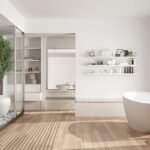


A small bathroom can sometimes feel cramped, dark, and uncomfortable, especially when it contains a toilet, sink, shower, storage cabinets, towels, and other essential items. However, a small bathroom does not have to look or feel tiny. With the right colors, lighting, mirrors, furniture, storage solutions, tiles, and layout, you can make even a compact bathroom appear significantly larger.
The most important thing to understand is that making a bathroom look bigger does not always require removing walls or spending a huge amount of money. Many visual design techniques can create the feeling of additional space. Light colors can make walls appear farther apart, large mirrors can reflect light and expand the visual field, glass shower panels can remove visual barriers, and smart storage can keep clutter away from countertops and floors.
Whether you are renovating a small bathroom, decorating an apartment bathroom, improving a guest bathroom, or simply looking for inexpensive ways to make your existing bathroom feel more open, this guide will provide practical ideas.
1. Start With a Clear Bathroom Layout
The layout is one of the most important factors when designing a small bathroom. Even a beautifully decorated bathroom can feel cramped if the toilet, sink, shower, and storage furniture are positioned poorly.
Before buying anything new, examine the existing layout.
Ask yourself:
- Is the bathroom easy to move around?
- Does the shower door block another fixture?
- Does the vanity take up too much floor space?
- Is there unnecessary furniture?
- Can the storage be moved higher?
- Is there unused wall space?
- Does the bathroom door open into the room?
- Can fixtures be rearranged during renovation?
A small bathroom benefits from an efficient circulation path. You want enough open floor area that the room does not feel crowded.
If a renovation is possible, consider placing fixtures along one wall where practical. A simple arrangement can create a cleaner visual line.
You should also avoid placing too many large objects in the center of the bathroom. Keeping the middle area visually open can make the room appear larger.
2. Use Light Colors
One of the easiest ways to make a small bathroom look bigger is to use light colors.
White is a classic choice, but you do not have to use an entirely white bathroom. Soft shades such as:
- Cream
- Beige
- Light gray
- Pale blue
- Soft green
- Warm ivory
- Light taupe
- Very pale pink
can also work well.
Light colors reflect more light and generally create an airy appearance. Dark walls can make a compact room feel enclosed, while lighter walls can visually expand the space.
A monochromatic color scheme can be especially effective. For example, use a light gray wall with slightly darker gray floor tiles and white fixtures.
This creates subtle contrast without breaking the room into too many visual sections.
3. Choose a Single Color Family
Using too many contrasting colors can make a small bathroom feel visually busy.
Instead, choose one primary color family and use different shades of that color throughout the room.
For example, a blue bathroom might include:
- Pale blue walls
- Blue-gray floor tiles
- White fixtures
- Light blue towels
- Silver hardware
Another option is a neutral palette:
- Warm white walls
- Beige floor
- Cream vanity
- Light wood accents
- Brushed metal fixtures
The goal is not to eliminate personality. Instead, it is to create visual continuity.
When the eye moves easily from one surface to another, the room can feel more spacious.
4. Paint the Ceiling a Light Color
Many homeowners focus on the walls and forget about the ceiling.
In a small bathroom, the ceiling can influence the overall sense of height.
A light ceiling, particularly white or a very pale shade, helps create an open feeling. If the walls are also light, the transition between wall and ceiling becomes less visually heavy.
For a bathroom with a low ceiling, avoid very dark ceiling colors unless you deliberately want a dramatic enclosed effect.
A clean white ceiling paired with light walls is usually one of the simplest ways to increase the perception of height.
5. Install a Large Mirror
A large mirror is one of the most effective visual tools for a small bathroom.
Instead of using a tiny mirror above the sink, consider a mirror that extends across a large portion of the wall.
A large mirror can:
- Reflect natural light
- Reflect artificial light
- Make walls appear farther away
- Create visual depth
- Make the room feel brighter
- Add a decorative feature
If possible, consider installing a mirror from the countertop to a higher point on the wall.
A large mirror can be especially useful above a floating vanity.
6. Consider a Wall-to-Wall Mirror
For maximum visual impact, you can install a mirror across the entire vanity wall.
A wall-to-wall mirror creates the impression that the bathroom continues beyond the actual wall.
This technique works particularly well in narrow bathrooms.
For example, if your vanity occupies a 5-foot-wide wall, a mirror covering most of that width can visually double the apparent width of the room.
However, make sure the mirror is properly installed and suitable for humid bathroom conditions.
7. Use Frameless Mirrors
Heavy decorative frames can add visual weight.
A frameless mirror has a cleaner appearance and can blend more naturally with the wall.
This is particularly useful in minimalist and modern bathrooms.
If you prefer a framed mirror, choose a slim frame rather than an oversized decorative design.
The goal is to maintain a sense of openness.
8. Add a Glass Shower Enclosure
Traditional shower curtains and opaque shower doors can divide a small bathroom into separate visual zones.
A clear glass shower enclosure can remove that visual barrier.
Because you can see through the glass, the bathroom appears more continuous.
This can make a major difference in a compact bathroom.
Frameless glass is especially useful because it minimizes visual interruptions.
If privacy is important, lightly textured or patterned glass can provide privacy while still allowing light to pass through.
9. Choose a Curved Shower Rod
If a glass enclosure is not practical and you use a shower curtain, consider a curved shower rod.
A curved rod can make the shower area feel slightly more spacious and can keep the curtain from pressing directly against the shower space.
Choose a light-colored shower curtain and keep its design simple.
Avoid extremely dark or heavily patterned curtains in very small bathrooms.
10. Hang the Shower Curtain Higher
Another useful trick is to hang the shower curtain closer to the ceiling.
A higher curtain can create the illusion of greater ceiling height.
Instead of installing the curtain rod immediately above the shower enclosure, consider placing it significantly higher if the bathroom design allows.
Choose a long curtain that reaches close to the floor.
This draws the eyes upward and creates a stronger vertical line.
11. Use Large Bathroom Tiles
Large tiles can make a small bathroom appear larger because they create fewer grout lines.
For example, a wall covered with small square tiles may contain dozens of visible lines. Those lines divide the surface into many sections.
Large-format tiles create fewer visual interruptions.
Popular options include:
- Large porcelain tiles
- Large ceramic tiles
- Marble-look tiles
- Stone-look tiles
- Concrete-look tiles
You do not necessarily need huge tiles. Even moderately large tiles can help create a cleaner appearance.
12. Keep Tile Colors Light
Large tiles work particularly well when paired with light colors.
A light beige or soft gray tile can reflect bathroom lighting and create a calm appearance.
If you love darker colors, consider using them as accents rather than covering every wall.
For example, a light bathroom could include one darker shower niche or a narrow accent strip.
13. Match the Grout Color to the Tiles
Strong grout contrast can make a small bathroom appear visually fragmented.
For example, white tiles with very dark grout create hundreds of visible lines.
If your goal is to create a spacious appearance, choose grout that is relatively close to the tile color.
This creates a smoother surface.
Matching grout is particularly effective with large-format tiles.
14. Continue Floor Tiles Into the Shower
If the bathroom layout allows, using the same floor tile throughout the room and shower can create visual continuity.
When the same material appears across multiple areas, the floor feels larger and less divided.
This technique is especially effective with walk-in showers.
Use appropriate slip-resistant materials and make sure the surface is suitable for wet areas.
15. Avoid Too Many Tile Patterns
Patterned tiles can be beautiful, but too many patterns can make a small bathroom feel busy.
If you want patterned tiles, choose one main location.
For example:
- Patterned floor
- Plain walls
- Simple vanity
- Minimal accessories
or:
- Plain floor
- Plain main walls
- Patterned shower wall
This creates a focal point without overwhelming the room.
16. Use Vertical Lines to Increase Height
Vertical lines naturally draw the eye upward.
You can use vertical design elements to make a low bathroom appear taller.
Examples include:
- Vertical wall tiles
- Tall mirrors
- Vertical wall panels
- Tall storage units
- Vertical tile patterns
- Long pendant-style lighting
The idea is to emphasize height rather than width.
17. Use Horizontal Lines to Increase Width
If your bathroom is extremely narrow, horizontal design elements can help emphasize width.
For example, long horizontal tiles can visually stretch a narrow wall.
A wide mirror can also create a horizontal effect.
However, avoid combining too many competing lines. Choose one dominant visual direction.
18. Install a Floating Vanity
A floating vanity is an excellent choice for a small bathroom.
Instead of reaching all the way to the floor, the vanity is mounted on the wall.
This exposes some of the floor underneath.
Because you can see more flooring, the room can appear more open.
A floating vanity also makes cleaning easier because there is less furniture touching the floor.
Choose a compact model with built-in drawers to maximize storage.
19. Choose a Narrow Vanity
A vanity does not need to be extremely deep.
In a small bathroom, a narrow vanity can preserve valuable walking space.
Measure the available area carefully before purchasing.
A slightly smaller vanity may provide enough storage while leaving more room for movement.
20. Use a Wall-Mounted Sink
For extremely small bathrooms, a wall-mounted sink can be a practical solution.
Because there is no bulky cabinet underneath, the floor remains visually open.
This can work particularly well in:
- Powder rooms
- Guest bathrooms
- Small apartment bathrooms
- Half bathrooms
You can add a small wall-mounted shelf for essential items if additional storage is required.
21. Choose a Compact Toilet
Toilets come in different sizes and shapes.
A compact toilet can help save valuable floor space.
Wall-mounted toilets can create an especially streamlined appearance because the tank may be concealed within the wall structure.
If replacing your toilet, check dimensions carefully.
A small bathroom requires careful consideration of clearance around every fixture.
22. Consider a Wall-Hung Toilet
A wall-hung toilet can create a modern and spacious appearance.
The toilet bowl is suspended from the wall, while the tank and plumbing are often concealed behind the wall.
This leaves more visible floor space.
The installation can be more complicated and expensive than a conventional toilet, so it should be considered as part of a larger renovation.
23. Use Sliding or Pocket Doors
A traditional swinging bathroom door can consume valuable space.
If your bathroom is extremely small, consider whether a pocket door or sliding door is practical.
A pocket door slides into the wall instead of swinging into the room.
This can free up floor space and improve movement.
Before making this change, consider wall structure, plumbing, electrical systems, and local construction requirements.
24. Keep the Floor as Open as Possible
Visible floor area contributes significantly to the feeling of spaciousness.
Avoid unnecessary floor-standing cabinets, baskets, stools, and decorative furniture.
Instead, use wall-mounted storage.
Even moving a small basket from the floor to a shelf can make the room feel less crowded.
25. Use Wall-Mounted Storage
Walls are valuable storage areas in small bathrooms.
Instead of filling the floor with furniture, use:
- Floating shelves
- Wall cabinets
- Recessed niches
- Towel bars
- Hooks
- Medicine cabinets
- Over-toilet storage
The goal is to move storage upward.
26. Install Recessed Shelves
Recessed shelves can provide storage without extending far into the room.
A shower niche can hold:
- Shampoo
- Conditioner
- Soap
- Shaving products
- Body wash
A recessed cabinet near the sink can store:
- Medicines
- Skincare
- Dental products
- Small toiletries
Because the storage is built into the wall, it creates less visual obstruction.
27. Use a Recessed Medicine Cabinet
A traditional medicine cabinet can project into the room.
A recessed medicine cabinet is installed into the wall cavity.
This creates a cleaner appearance.
Many modern medicine cabinets also include mirrors, lighting, or electrical outlets.
This allows one fixture to perform several functions.
28. Use the Space Above the Toilet
The wall above the toilet is often underused.
You can install:
- Floating shelves
- A slim cabinet
- Built-in storage
- Decorative baskets
- Towel storage
However, avoid overcrowding this area.
A few carefully selected items are better than a large collection of objects.
29. Use Tall Storage Instead of Wide Storage
When floor space is limited, think vertically.
A narrow, tall cabinet can provide significant storage without taking up much floor area.
This is particularly useful in bathrooms with high ceilings.
Tall storage can also emphasize vertical height.
30. Keep Countertops Clear
A cluttered countertop makes a small bathroom feel smaller.
Try to keep only daily essentials on the counter.
Move backup products into drawers or cabinets.
Use small organizers for items that need to remain accessible.
A clean countertop creates a calmer and more spacious appearance.
31. Reduce Visual Clutter
Clutter is one of the biggest reasons a small bathroom feels cramped.
Look at every item in the room and ask:
“Does this need to be visible?”
If the answer is no, store it away.
Remove unnecessary:
- Bottles
- Decorations
- Boxes
- Old products
- Extra towels
- Empty containers
- Cleaning supplies
A simple bathroom often feels much larger than a crowded bathroom of exactly the same dimensions.
32. Choose Simple Fixtures
Modern bathrooms often use simple, streamlined fixtures.
Avoid overly bulky designs if your primary goal is visual spaciousness.
Consider:
- Slim faucets
- Simple handles
- Minimalist towel bars
- Compact light fixtures
- Clean-lined vanities
The fewer visual interruptions you have, the more open the bathroom can feel.
33. Use a Consistent Metal Finish
Mixing many metal finishes can create visual complexity.
For a small bathroom, consider using one dominant finish.
Examples include:
- Chrome
- Brushed nickel
- Matte black
- Brass
- Brushed brass
A consistent finish creates a cohesive appearance.
34. Use Lighting to Create Space
Lighting is essential in a small bathroom.
A dark bathroom can feel much smaller than a bright one.
Instead of relying on one ceiling light, use multiple layers of lighting.
A good bathroom lighting plan may include:
- General lighting
- Vanity lighting
- Shower lighting
- Accent lighting
Proper lighting eliminates dark corners and makes the room feel more open.
35. Maximize Natural Light
If your bathroom has a window, make the most of it.
Avoid blocking the window with large storage furniture.
Use privacy solutions that still allow light to enter.
Options include:
- Frosted glass
- Privacy film
- Light-filtering shades
- Textured glass
Natural light can dramatically improve the atmosphere of a compact bathroom.
36. Use a Large Window Mirror Strategically
If you have a window opposite the mirror, positioning reflective surfaces carefully can distribute natural light throughout the bathroom.
However, make sure the mirror does not create unwanted privacy issues.
A mirror should enhance the space without compromising functionality.
37. Use Recessed Ceiling Lights
Recessed lights can provide strong general illumination without adding bulky fixtures.
They are particularly useful in modern bathrooms.
Make sure all electrical work is performed according to applicable safety requirements and local codes, especially around wet areas.
38. Add Vanity Lighting
Lighting around the mirror is essential for practical tasks such as shaving, makeup application, and grooming.
Wall sconces positioned on either side of the mirror can provide balanced illumination.
An illuminated mirror can also combine two functions: reflection and lighting.
39. Avoid One Harsh Light
One bright ceiling fixture can create shadows around the face and leave corners dark.
A layered lighting plan generally creates a more comfortable environment.
Use different sources of light rather than relying entirely on one fixture.
40. Use Reflective Surfaces
Reflective surfaces can help bounce light around a small bathroom.
Examples include:
- Mirrors
- Glossy tiles
- Glass
- Polished metal
- Gloss-finish cabinets
However, too many reflective surfaces can make the bathroom feel overly shiny.
Balance them with softer materials such as towels, wood tones, or matte surfaces.
41. Choose Glossy Tiles Carefully
Glossy tiles reflect light and can make walls appear brighter.
They can work particularly well on shower walls or backsplashes.
However, glossy flooring can become slippery when wet, so floor tiles should be selected with safety in mind.
42. Use Light Wood Accents
Light wood can add warmth without making a small bathroom feel heavy.
A light oak vanity, wooden shelf, or bamboo accessory can soften an otherwise white bathroom.
Avoid filling the room with too many wood elements.
One or two carefully selected pieces may be enough.
43. Use Transparent Accessories
Transparent accessories can reduce visual weight.
For example:
- Glass soap dispensers
- Clear shower panels
- Transparent containers
- Glass shelves
These objects allow the eye to move through the room.
44. Keep Towels Organized
Towels can quickly make a small bathroom look cluttered.
Instead of hanging multiple towels randomly, use a coordinated system.
Install:
- One towel bar
- A few hooks
- A heated towel rail
- A narrow ladder rack
Choose towels in colors that complement the bathroom palette.
45. Use Hooks Instead of Bulky Racks
Hooks require very little wall space.
They can be used for:
- Hand towels
- Bath towels
- Robes
- Small baskets
A row of simple hooks can be more space-efficient than a large towel rack.
46. Use a Minimalist Shower Curtain
If you cannot install glass, choose a simple shower curtain.
A light-colored curtain can help maintain visual openness.
Avoid very heavy patterns if your bathroom is already visually busy.
A ceiling-height curtain can emphasize the room’s vertical dimension.
47. Use One Strong Focal Point
A small bathroom does not need many decorative features.
Choose one focal point.
It could be:
- A beautiful mirror
- A patterned floor
- A statement vanity
- A feature tile wall
- An elegant light fixture
Everything else can remain simple.
This approach gives the room personality without overwhelming it.
48. Avoid Oversized Decorations
Large decorations can consume visual space.
Instead of placing several large objects on the vanity, use one small decorative item.
A small plant, framed print, or decorative tray can be enough.
49. Add a Small Plant
Plants can make a bathroom feel fresh and welcoming.
For bathrooms with suitable light and humidity, consider plants that tolerate those conditions.
Possible choices include:
- Pothos
- Snake plant
- Spider plant
- Ferns
Keep the plant size appropriate to the room.
A giant plant in a tiny bathroom can have the opposite effect.
50. Use a Floating Shelf for Decor
Instead of placing decorations on the floor or countertop, install a small floating shelf.
It can hold:
- A small plant
- Candle
- Decorative container
- Small artwork
Keep the shelf visually light.
51. Choose the Right Bathroom Rug
A large rug can make a small bathroom feel crowded.
Choose a small, appropriately sized bath mat.
Light colors can help maintain the airy appearance.
Make sure the material is suitable for wet conditions and has a secure backing.
52. Keep the Floor Pattern Simple
A complicated floor pattern can dominate a small bathroom.
If you choose patterned flooring, use simpler walls.
Alternatively, use simple flooring and introduce personality through accessories.
The key is balance.
53. Create a Continuous Floor
If possible, avoid unnecessary transitions between different floor materials.
A continuous surface makes the room look more unified.
For a walk-in shower, continuing the same visual floor material into the shower area can create an especially seamless appearance.
54. Avoid Too Many Different Materials
Small bathrooms can quickly become visually confusing if they contain:
- Marble
- Wood
- Patterned ceramic
- Mosaic
- Multiple metals
- Different wall colors
- Several types of glass
Choose two or three major materials and repeat them throughout the room.
55. Use One Main Wall Material
A unified wall treatment can make the room feel larger.
Large-format tile, waterproof wall panels, or a consistent paint color can create a smooth background.
Use accent materials selectively.
56. Make the Shower Area Feel Open
The shower is often the largest visual zone in a small bathroom.
A closed shower enclosure can make it feel like a separate room.
A clear glass enclosure can visually connect the shower to the rest of the bathroom.
A walk-in design can be particularly effective when the layout allows it.
57. Use a Corner Sink
In some extremely small bathrooms, a corner sink can save space.
By using an otherwise difficult corner, the center of the room can remain open.
This can be useful in powder rooms or unusually shaped bathrooms.
58. Use a Corner Shower
If the bathroom is compact, a corner shower may make better use of the available footprint.
A curved or neo-angle enclosure can sometimes provide practical shower space while preserving circulation.
59. Consider a Wet-Room Design
A wet-room-style bathroom can create an open appearance because the shower does not require a bulky enclosure.
However, this design requires careful waterproofing, drainage, and construction.
It is best considered during a proper renovation.
60. Choose a Compact Bathtub
If you need a bathtub, select one designed for smaller spaces.
Compact tubs can provide bathing functionality without occupying the entire bathroom.
A shower-bath combination may also be practical for households that need both functions.
61. Consider Removing an Unnecessary Bathtub
If you rarely use the bathtub and have a very small bathroom, replacing it with a shower may create significantly more usable space.
However, this depends on your household needs and the purpose of the bathroom.
62. Use a Large Mirror Across From the Door
A mirror positioned strategically can create an immediate sense of depth when entering the bathroom.
It can reflect light and visually extend the room.
Make sure the reflection creates an attractive view rather than highlighting clutter.
63. Keep the Door Area Clear
The entrance is the first part of the bathroom people see.
Avoid placing bulky objects immediately near the door.
An open entrance gives the room a better first impression.
64. Use the Same Wall and Vanity Colors
A vanity that strongly contrasts with the wall can visually divide the bathroom.
A vanity in a similar light tone can blend into the background.
For example, a white vanity against a soft white wall creates a continuous visual field.
65. Select Furniture With Rounded Edges
Rounded corners can make movement easier in tight spaces.
A rounded vanity or curved sink may reduce the feeling of sharp visual obstacles.
This can also improve safety in a compact bathroom.
66. Avoid Bulky Cabinets
Large cabinets may provide storage, but they can consume precious visual space.
If possible, replace one large cabinet with several smaller, strategically placed storage solutions.
For example:
- Medicine cabinet
- Floating vanity drawers
- Shower niche
- Small wall shelf
Together, these can provide plenty of storage without one massive cabinet.
67. Use Drawers Instead of Deep Cabinets
Deep cabinets often cause items to disappear into the back.
Drawers provide easier access and can make better use of vertical storage space.
Choose vanity drawers with compartments for smaller products.
68. Organize Products by Category
A well-organized bathroom automatically feels larger.
Group products together:
- Hair care
- Skin care
- Dental products
- Cleaning products
- Shaving supplies
- First-aid items
Use containers or drawer dividers to maintain order.
69. Remove Packaging From the Counter
Product packaging can introduce many colors and visual shapes.
Using coordinated dispensers for soap, shampoo, or lotion can create a cleaner appearance.
This is particularly effective in minimalist bathrooms.
70. Use Matching Containers
Matching containers create visual consistency.
For example, use similar bottles for:
- Hand soap
- Lotion
- Shampoo
- Conditioner
This small detail can make the bathroom feel more organized.
71. Use Minimal Wall Art
Artwork can personalize a bathroom, but too many frames can make the walls feel crowded.
Choose one or two pieces.
Use light frames and simple designs.
72. Keep Decorative Items Above Eye Level When Appropriate
Small decorative objects can be placed on higher shelves so they do not interfere with movement.
However, avoid placing heavy objects where they could fall.
Safety should always come first.
73. Use a Consistent Hardware Style
Cabinet handles, towel bars, hooks, faucets, and shower hardware can share the same finish.
This creates a unified look.
Consistency helps prevent the room from appearing visually fragmented.
74. Use Matte Finishes Strategically
Matte surfaces can create a sophisticated modern appearance.
A matte vanity combined with glossy tile and reflective mirrors can create a balanced design.
The important point is to avoid making every surface dull and dark.
75. Choose Light Fixtures That Do Not Dominate
A small bathroom does not need an enormous chandelier.
Choose lighting that provides sufficient illumination without overpowering the room.
Slim wall lights or compact ceiling fixtures can be ideal.
76. Use Backlit Mirrors
A backlit mirror can create soft illumination and a modern appearance.
It can also eliminate the need for an additional bulky fixture above the mirror.
Use it alongside adequate general lighting.
77. Use Under-Vanity Lighting
If you have a floating vanity, consider adding subtle lighting underneath.
This illuminates the floor and emphasizes the open space below the vanity.
It can also provide useful nighttime illumination.
78. Use a Light-Colored Ceiling Border
A consistent light ceiling can help maintain visual openness.
Avoid heavy decorative molding if your goal is maximum visual simplicity.
79. Use the Same Paint Color on Multiple Walls
Instead of creating many accent walls, use one consistent color.
This reduces visual boundaries.
If you want an accent, choose one carefully selected wall rather than several.
80. Use an Accent Wall Carefully
An accent wall can add personality.
For example, you might use:
- Green tile behind the vanity
- Blue tile in the shower
- Marble-look wall panels
- Subtle geometric tile
Keep the remaining surfaces simple.
81. Use Light-Colored Natural Stone
Natural stone can create an elegant bathroom.
Light marble, limestone-inspired surfaces, or pale stone-look porcelain can provide luxury without making the room feel heavy.
Real stone may require more maintenance, so porcelain alternatives can be considered.
82. Use Large-Scale Marble Patterns
Large marble patterns can create visual continuity when used on large tiles or panels.
Avoid small, highly fragmented marble patterns if you want a clean appearance.
83. Use Waterproof Wall Panels
Large waterproof wall panels can reduce grout lines.
They can also create a seamless appearance.
Options vary widely in material, texture, and cost, so choose according to your budget and installation requirements.
84. Make the Bathroom Smell Fresh
A spacious bathroom is not only about appearance.
A clean and fresh-smelling bathroom feels more comfortable.
Ventilation is essential.
Use an appropriate exhaust fan or other ventilation solution to reduce moisture.
Regular cleaning also prevents the room from feeling neglected or crowded.
85. Improve Ventilation
Good ventilation can protect surfaces and improve comfort.
Moisture can contribute to:
- Mold
- Mildew
- Peeling paint
- Unpleasant odors
A clean, dry bathroom naturally feels more pleasant.
86. Keep the Shower Glass Clean
A dirty glass shower enclosure can make a bathroom look cloudy and smaller.
Regularly remove water spots and soap residue.
Clear glass works best when it remains clear.
87. Keep Mirrors Clean
A large mirror loses much of its visual benefit if it is covered with spots or streaks.
Regular cleaning helps it reflect light effectively.
88. Use Natural Textures Sparingly
Natural textures can make a bathroom more interesting.
Consider:
- Wood
- Stone
- Woven baskets
- Linen towels
But use them selectively.
A small bathroom benefits from controlled texture rather than an abundance of materials.
89. Use Baskets for Hidden Storage
Baskets can organize:
- Toilet paper
- Towels
- Cleaning products
- Hair tools
Choose baskets that fit neatly on shelves or inside cabinets.
Avoid leaving too many baskets on the floor.
90. Use Over-Door Storage
The space above the bathroom door is often ignored.
A high shelf can store items that are not needed every day.
For example:
- Extra towels
- Backup toiletries
- Cleaning supplies
Make sure the shelf is safely installed and does not interfere with the door.
91. Use Behind-Door Storage
The back of the door can provide valuable storage space.
Over-door organizers can hold small bathroom items.
This is particularly useful when wall space is limited.
92. Install Towel Bars on the Door
If wall space is limited, the bathroom door can sometimes provide space for towel storage.
This keeps towels off the floor and reduces wall clutter.
93. Choose a Compact Laundry Solution
If laundry baskets must be kept in the bathroom, choose a narrow or foldable design.
A bulky basket can consume a surprising amount of floor space.
94. Use Foldable Accessories
In very small bathrooms, foldable stools, drying racks, or baskets can be useful.
They can be stored away when not needed.
95. Avoid Unnecessary Furniture
Ask whether every piece of furniture serves a purpose.
A small stool may look attractive but could make movement difficult.
A decorative cabinet may be unnecessary if your vanity already provides sufficient storage.
96. Use Built-In Storage During Renovation
If you are renovating, consider building storage directly into walls where practical.
Built-in storage can create a highly customized solution.
It may also help eliminate bulky freestanding furniture.
97. Think About Door Swing Clearance
During renovation, examine where the bathroom door swings.
A poorly positioned door can interfere with:
- Toilet
- Vanity
- Shower
- Towel rack
Changing the door configuration may improve the entire layout.
98. Use a Pocket Door Where Practical
A pocket door can be particularly useful in extremely small bathrooms.
It eliminates the swing area required by a conventional door.
Professional planning is important because the wall must accommodate the door mechanism.
99. Use Light-Colored Doors
A dark door can create a strong visual boundary.
A white, cream, or light wood door can blend more naturally with the bathroom.
100. Keep the Bathroom Visually Simple
The final principle is simplicity.
You do not need expensive materials to make a bathroom look larger.
A successful small bathroom often includes:
- Light colors
- Good lighting
- Large mirror
- Clear shower glass
- Minimal clutter
- Efficient storage
- Simple fixtures
- Consistent materials
- Open floor space
The combination of these elements creates the impression of a larger room.
How to Make a Small Bathroom Look Bigger on a Budget
You do not have to completely renovate your bathroom to improve its appearance.
Start with inexpensive changes.
Repaint the Walls
A fresh coat of light-colored paint can immediately brighten the room.
Choose bathroom-appropriate paint designed for humid environments.
Replace the Mirror
A larger mirror can make a dramatic difference without requiring construction.
Declutter
This costs nothing.
Remove items that are unnecessary or rarely used.
Replace Dark Towels
Use lighter towels to create a brighter appearance.
Add Better Lighting
Changing a light fixture or adding appropriate vanity lighting can significantly improve the room.
Install Floating Shelves
A few inexpensive shelves can move storage off the floor.
Replace Hardware
New cabinet handles and towel hooks can modernize the room without a full renovation.
How to Make a Tiny Bathroom Look Luxurious
A small bathroom can still feel luxurious.
Luxury does not always mean expensive materials.
Focus on details.
Use:
- Large mirrors
- Quality-looking fixtures
- Coordinated hardware
- Soft towels
- Simple lighting
- Elegant storage
- A limited color palette
- High-quality-looking accessories
Avoid filling the bathroom with unnecessary decorative objects.
A calm, organized room often feels more luxurious than a crowded room filled with expensive items.
Small Bathroom Ideas for Apartments
Apartment bathrooms often have limited dimensions.
If you cannot change the plumbing or walls, focus on cosmetic improvements.
Use:
- A large mirror
- Light wall colors
- Clear shower curtains or glass
- Floating shelves
- Compact storage
- Light-colored towels
- Wall-mounted hooks
- Minimal accessories
- Bright lighting
- A consistent color scheme
These changes can make a rental bathroom feel more open without major construction.
Small Bathroom Ideas for a Rental Home
Renters may not be able to replace tiles or plumbing.
Instead, focus on removable changes.
Try:
- Removable hooks
- Freestanding organizers
- Large mirrors that can be safely mounted with permission
- Coordinated towels
- Decorative baskets
- Shower curtains
- Small plants
- Storage carts
- Countertop organizers
Always follow your rental agreement before making permanent changes.
Small Bathroom Ideas for Families
Family bathrooms need more storage than guest bathrooms.
The challenge is to provide enough storage without filling the room.
Use vertical storage.
For example:
- Tall cabinets
- Wall-mounted shelves
- Recessed medicine cabinets
- Shower niches
- Drawer organizers
- Over-door storage
Assign storage zones to different household members.
This can prevent products from spreading across the countertop.
Small Guest Bathroom Ideas
A guest bathroom does not need a huge amount of storage.
Focus on appearance and comfort.
Provide:
- Fresh towels
- Hand soap
- Toilet paper
- Good lighting
- Mirror
- Small decorative plant
- Simple artwork
Keep the countertop mostly empty.
Small Powder Room Ideas
Powder rooms are often extremely small.
Because they do not require a shower or bathtub, you can focus on the sink, toilet, lighting, and wall design.
A bold wallpaper or decorative tile can work well in a powder room if balanced with simple fixtures.
A large mirror can also make the room feel much bigger.
Common Mistakes That Make a Small Bathroom Look Smaller
Using Too Many Dark Colors
Dark colors can be beautiful, but covering every surface in a small room can make it feel enclosed.
Using Too Many Patterns
Multiple patterns compete for attention.
Choose one main pattern.
Choosing Oversized Furniture
Large vanities and cabinets can consume valuable floor space.
Leaving Products Everywhere
Visible bottles create clutter.
Store unnecessary products.
Poor Lighting
Dark corners make the bathroom appear smaller.
Tiny Mirrors
A very small mirror wastes an opportunity to reflect light and create depth.
Heavy Shower Curtains
Dark or bulky curtains can divide the room visually.
Too Many Decorative Objects
Small spaces require restraint.
Ignoring Vertical Space
Walls provide valuable storage opportunities.
Using Too Many Materials
Different tile patterns, metals, woods, and colors can make the room feel fragmented.
A Step-by-Step Small Bathroom Transformation Plan
If you want to improve your bathroom without becoming overwhelmed, work in stages.
Step 1: Declutter
Remove everything you do not use.
Step 2: Clean Thoroughly
Clean walls, tiles, grout, glass, mirrors, fixtures, and floors.
Step 3: Improve Lighting
Replace outdated bulbs or fixtures where appropriate.
Step 4: Choose a Color Palette
Select two or three primary colors.
Step 5: Upgrade the Mirror
Choose a larger mirror if possible.
Step 6: Improve Storage
Move products from the countertop and floor into organized storage.
Step 7: Improve the Shower
Consider a clear curtain or glass enclosure.
Step 8: Simplify Accessories
Remove unnecessary decorations.
Step 9: Add Soft Details
Use coordinated towels and a suitable bath mat.
Step 10: Maintain the Space
Regular cleaning and organization will preserve the spacious appearance.
How Color Temperature Affects a Small Bathroom
Lighting color can influence how a bathroom feels.
Warm lighting can create a cozy atmosphere.
Cooler lighting can make a bathroom feel crisp and bright.
Neutral lighting can provide a balanced appearance.
The best choice depends on the bathroom’s color scheme and how the space is used.
Avoid extremely harsh lighting that makes the room uncomfortable.
How Mirrors Create an Illusion of Space
Mirrors are powerful because they create a visual continuation of the room.
A mirror does not physically add square footage, but it can reflect:
- Light
- Tiles
- Fixtures
- Windows
- Decorative elements
This reflection increases the amount of visual information in the room and can create a sense of depth.
However, mirror placement matters.
A mirror reflecting clutter will reflect clutter.
A mirror reflecting light or an attractive part of the bathroom can enhance the design.
How Flooring Influences Bathroom Size
Flooring can influence the visual scale of a room.
Large, light-colored flooring generally creates a cleaner appearance.
A continuous floor pattern can make the room feel more connected.
Avoid excessive transitions between materials.
If the bathroom is narrow, flooring installed in a direction that visually extends the room may help emphasize its shape.
How Ceiling Height Changes the Feeling of Space
A bathroom with a low ceiling can feel compressed.
Use vertical design elements to draw the eyes upward.
Tall mirrors, vertical tile patterns, and high shower curtains can help emphasize height.
Avoid heavy ceiling decorations.
Keep the ceiling light and uncluttered.
How to Make a Long Narrow Bathroom Look Wider
Long narrow bathrooms require careful planning.
Use a wide mirror on the longest wall.
Keep the floor visually continuous.
Choose light colors.
Place storage along the wall rather than projecting into the walking path.
Use large tiles where appropriate.
A glass shower enclosure can prevent the shower from visually blocking the room.
How to Make a Low-Ceiling Bathroom Look Taller
Use vertical lines.
Choose:
- Tall mirrors
- Vertical tile layouts
- High shower curtains
- Tall narrow cabinets
- Wall-mounted lighting
Keep the ceiling bright.
Avoid strong horizontal divisions.
How to Make a Dark Small Bathroom Look Brighter
First, identify why the room is dark.
Possible causes include:
- Small window
- Poor lighting
- Dark wall colors
- Dark flooring
- Heavy shower curtain
- Bulky furniture
You can improve the situation by using brighter lighting, lighter walls, a large mirror, reflective surfaces, and a clear shower enclosure.
How to Make a Small Bathroom Feel More Open
The basic formula is simple:
Light + Reflection + Open Floor + Organization + Continuity
Use light colors to brighten the room.
Use mirrors to reflect light.
Keep the floor open.
Organize toiletries.
Use consistent materials to reduce visual boundaries.
Together, these techniques can make a noticeable difference.
Frequently Asked Questions
What color makes a small bathroom look bigger?
Light colors such as white, cream, pale gray, beige, and soft blue can help create a brighter and more open appearance. The exact choice depends on lighting and the overall design.
Does a large mirror make a small bathroom look bigger?
Yes. A large mirror can reflect light and create visual depth, making the bathroom appear more spacious.
Are large tiles better for small bathrooms?
Large tiles can help create a more continuous appearance because they usually have fewer grout lines. However, tile size should be appropriate for the room and installation.
Does white make a bathroom look bigger?
White can make a bathroom feel brighter and more open because it reflects light. It can also work well as part of a larger neutral color palette.
Should a small bathroom have dark colors?
Dark colors can work in small bathrooms, especially as accents. If used on every surface, however, they may create a more enclosed visual effect.
Is a glass shower better for a small bathroom?
A clear glass shower enclosure can make a bathroom appear more open because it removes the visual barrier created by an opaque curtain or door.
What is the best storage solution for a small bathroom?
Wall-mounted and recessed storage are often effective because they use vertical or wall space without occupying much floor area.
How can I make a small bathroom look bigger without remodeling?
Declutter, repaint with a light color, install a larger mirror, improve lighting, use coordinated accessories, and move storage off the floor.
Does a floating vanity make a bathroom look bigger?
A floating vanity exposes some of the floor underneath, which can create a more open visual effect.
How do I make a narrow bathroom look wider?
Use light colors, a wide mirror, continuous flooring, simple patterns, and minimal furniture. A clear shower enclosure can also reduce visual barriers.
What type of lighting is best for a small bathroom?
A layered lighting plan combining general and vanity lighting can provide better illumination than relying on one light source.
Should bathroom grout match the tile?
Matching or closely coordinating grout can create a more continuous appearance, particularly when using large tiles.
Can plants make a small bathroom look better?
A small, suitable plant can add freshness and natural texture. Keep the size proportional to the bathroom.
How can I hide bathroom clutter?
Use drawers, recessed cabinets, medicine cabinets, baskets, shower niches, floating shelves, and over-door storage.
Is a wall-mounted toilet good for a small bathroom?
A wall-mounted toilet can expose more floor and create a streamlined appearance, although installation can be more involved than a standard toilet.
Should I use a shower curtain or glass door?
Both can work. Clear glass generally creates a more open visual connection, while a light-colored curtain can be a more affordable option.
Can a small bathroom look luxurious?
Absolutely. Consistent finishes, good lighting, a large mirror, quality-looking fixtures, clean surfaces, and organized storage can create an elegant appearance even in a small room.
Final Thoughts
Making a small bathroom look bigger is primarily about controlling how the eye experiences the space. You may not be able to increase the actual square footage, but you can make the bathroom feel brighter, cleaner, more open, and more comfortable.
Start with the basics: remove clutter, improve lighting, use light colors, install a large mirror, and keep the floor as open as possible. From there, consider larger improvements such as a floating vanity, clear shower enclosure, recessed storage, large-format tiles, or a more efficient layout.
The most successful small bathrooms do not try to fit everything into the room. Instead, they prioritize the features that are genuinely useful and eliminate unnecessary visual distractions.
A small bathroom can be stylish, functional, comfortable, and inviting. With thoughtful planning, smart storage, appropriate lighting, and a consistent design approach, even a very compact bathroom can create the impression of a much larger and more relaxing space.