
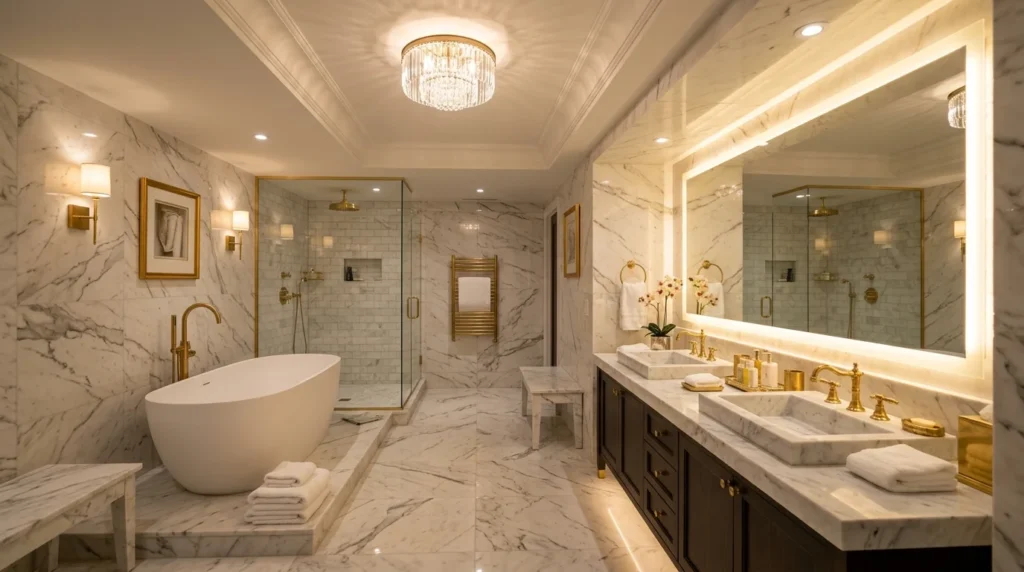

Bathroom lighting is one of the most important elements of a beautiful and functional bathroom. A well-designed bathroom is not only about attractive tiles, modern fixtures, stylish cabinets, or elegant accessories. Lighting can completely change how the room looks and feels. The right lighting can make a small bathroom appear larger, create a relaxing atmosphere, improve visibility around the mirror, highlight beautiful architectural details, and make everyday routines more comfortable.
Many homeowners focus heavily on bathroom colors and fixtures but underestimate the importance of lighting. A bathroom with expensive materials can still look dull if the lighting is poorly planned. On the other hand, a simple bathroom can feel sophisticated and luxurious when it has thoughtfully selected layers of light.
The best bathroom lighting design usually combines several types of lighting rather than depending on a single ceiling fixture. Ambient lighting provides general illumination, task lighting helps with activities such as shaving and applying makeup, accent lighting highlights decorative elements, and natural light adds warmth during the daytime.
This comprehensive guide explores the best bathroom lighting ideas for creating a stylish, comfortable, practical, and modern space. Whether you have a tiny bathroom, a large master bathroom, a guest bathroom, or a luxurious ensuite, these ideas can help you create a lighting plan that works for your needs.
Why Bathroom Lighting Matters
Bathroom lighting affects much more than appearance. It influences how easily you can perform daily tasks and how comfortable the room feels.
A bathroom is used for many different activities. You may take a shower, shave, apply makeup, style your hair, get ready for work, relax in a bathtub, or prepare for bed. Each activity requires a different level and type of illumination.
Good lighting can:
- Improve visibility
- Make the bathroom feel larger
- Reduce shadows around the face
- Highlight architectural features
- Improve the appearance of colors and finishes
- Create a relaxing atmosphere
- Make mirrors more functional
- Add a decorative focal point
- Increase the feeling of luxury
- Improve nighttime visibility
Lighting can also influence the emotional atmosphere of the room. Bright, clean lighting may help you feel energized in the morning, while softer warm lighting can make an evening bath feel calm and relaxing.
Understanding the Main Types of Bathroom Lighting
Before choosing fixtures, it helps to understand the major categories of lighting used in bathroom design.
1. Ambient Lighting
Ambient lighting is the general illumination that fills the room. It allows you to move around safely and comfortably.
Common sources include:
- Ceiling lights
- Recessed lights
- Flush-mount fixtures
- Semi-flush ceiling fixtures
- Large central pendant lights
- LED panels
Ambient lighting should provide even illumination throughout the bathroom without creating harsh dark areas.
2. Task Lighting
Task lighting is designed for specific activities. The bathroom mirror is one of the most important locations for task lighting.
Task lighting can be used around:
- Mirrors
- Vanity areas
- Makeup stations
- Shower areas
- Bathtubs
- Storage areas
The goal is to provide enough light for detailed activities without creating uncomfortable glare.
3. Accent Lighting
Accent lighting is primarily decorative. It can emphasize architectural or design features.
You can use accent lighting to highlight:
- Decorative tile
- Wall niches
- Artwork
- Plants
- Floating cabinets
- Architectural walls
- Bathtubs
- Shelves
Accent lighting can make an ordinary bathroom feel more sophisticated.
4. Decorative Lighting
Decorative fixtures serve as visual design elements as well as sources of illumination.
Examples include:
- Pendant lights
- Chandeliers
- Decorative sconces
- Sculptural ceiling fixtures
- Modern wall lights
Decorative lighting can become the centerpiece of a bathroom.
1. Use Layered Lighting
One of the best bathroom lighting ideas is to combine different layers of light.
Instead of installing one bright ceiling light and expecting it to illuminate everything, consider using:
- Ambient lighting
- Task lighting
- Accent lighting
- Decorative lighting
For example, a modern bathroom might have recessed ceiling lights for general illumination, wall sconces beside the mirror for task lighting, LED strips beneath the vanity for accent lighting, and a decorative pendant near the bathtub.
Layered lighting creates flexibility. You can use brighter illumination when getting ready in the morning and softer lighting when relaxing in the evening.
2. Install Wall Sconces Beside the Mirror
Wall sconces are one of the most stylish bathroom lighting options.
Placing sconces on both sides of a bathroom mirror can create balanced illumination. They can also reduce the shadows that often appear when light comes only from above.
Symmetrical sconces work particularly well in:
- Traditional bathrooms
- Modern bathrooms
- Contemporary bathrooms
- Hotel-inspired bathrooms
- Luxury master bathrooms
Choose fixtures that complement your faucets, cabinet hardware, and other metal finishes.
For example, black sconces can coordinate with matte-black faucets, while brass fixtures can create a warmer luxury appearance.
3. Add an LED Mirror
An LED bathroom mirror can combine functionality and style.
These mirrors often include integrated lighting around the edge or behind the mirror. The result is a clean and modern appearance.
LED mirrors are particularly useful in contemporary bathrooms because they eliminate the need for separate bulky fixtures.
Some modern mirrors may also offer features such as:
- Adjustable brightness
- Different color temperatures
- Anti-fog functions
- Touch controls
- Dimmability
- Backlighting
A backlit mirror can create a floating appearance and add a subtle glow to the wall.
4. Try Backlit Bathroom Mirrors
Backlighting behind the mirror creates a soft halo effect.
This lighting technique is especially attractive when the mirror is mounted against a darker wall or decorative tile.
Backlighting can:
- Create depth
- Highlight the mirror
- Add visual interest
- Produce soft ambient illumination
- Create a luxury hotel atmosphere
However, backlighting should generally complement rather than replace effective facial lighting.
5. Use Recessed Ceiling Lights
Recessed lights are popular because they provide clean illumination without visually occupying much space.
They are especially useful in minimalist and modern bathrooms.
You can install recessed lights:
- In the center of the room
- Above the shower
- Around the vanity
- Near the bathtub
- Along a corridor-like bathroom layout
Instead of placing a single recessed light directly above the mirror, consider positioning lights strategically to minimize shadows.
6. Choose the Right Color Temperature
Color temperature has a major impact on bathroom appearance.
Very cool lighting can make a bathroom feel clinical, while extremely warm lighting may make it difficult to see details.
A balanced color temperature can create a comfortable appearance while maintaining good visibility.
For many bathrooms, neutral to warm-neutral light works well. However, the ideal choice depends on your bathroom’s finishes and personal preferences.
If your bathroom has warm wood, beige tiles, and brass fixtures, warmer lighting can enhance the design.
If you have white tiles, gray surfaces, and modern chrome fixtures, neutral lighting may provide a crisp appearance.
7. Install Dimmable Bathroom Lights
Dimmers can make bathroom lighting more flexible.
Bright lighting may be useful when:
- Cleaning
- Shaving
- Applying makeup
- Styling hair
- Organizing storage
Lower lighting may be preferable when:
- Taking a bath
- Relaxing at night
- Preparing for sleep
Dimmable fixtures allow the same bathroom to serve different purposes throughout the day.
Electrical controls should be selected and installed appropriately for bathroom conditions.
8. Add Lighting Under the Vanity
Under-vanity lighting is a stylish way to add a soft glow.
LED strips can be installed beneath floating bathroom cabinets. When the main lights are turned off, the under-cabinet lighting can create a subtle floating effect.
This is especially attractive in modern bathrooms.
Under-vanity lighting can also provide enough illumination for nighttime movement without requiring all the bright lights to be switched on.
9. Illuminate Bathroom Niches
If your shower or bathtub includes a recessed wall niche, lighting it can turn a functional storage area into a design feature.
A small waterproof-rated lighting solution can highlight:
- Shampoo bottles
- Decorative objects
- Natural stone
- Decorative tile
- Bath accessories
The light should be designed specifically for the location and moisture conditions.
10. Add Shower Lighting
The shower area should not be overlooked.
A bathroom can have beautiful vanity lighting but still feel dark inside the shower.
Recessed fixtures designed and rated appropriately for wet locations can provide useful illumination.
Multiple smaller fixtures may distribute light more evenly than one very bright light.
Always choose products and installation methods appropriate for the electrical requirements and wet-zone regulations in your location.
11. Highlight a Freestanding Bathtub
A freestanding bathtub can become the focal point of a bathroom.
Lighting can emphasize its shape and position.
Consider:
- A decorative pendant above or near the tub
- Recessed ceiling lights
- Wall sconces
- Subtle floor-level lighting
- Accent lighting behind nearby features
The goal is to create visual emphasis without making the area feel overly bright.
12. Use Pendant Lights
Pendant lights can add personality to a bathroom.
A single pendant may work well in a small bathroom, while a pair of pendants can create symmetry around a larger vanity.
Pendant styles include:
- Glass globes
- Metal fixtures
- Minimalist cylinders
- Geometric designs
- Vintage-inspired fixtures
- Sculptural modern designs
However, pendant placement in bathrooms requires careful consideration of moisture exposure and applicable electrical safety requirements.
13. Install Double Vanity Lighting
Double vanities benefit from balanced lighting.
If two people use the vanity simultaneously, consider providing individual lighting zones.
Options include:
- One sconce on each outer side
- A central fixture plus side sconces
- Individual mirrors with integrated lighting
- A long horizontal light above both mirrors
- Multiple ceiling fixtures
The lighting should provide even facial illumination without creating strong shadows.
14. Use Horizontal Vanity Lights
A horizontal vanity fixture above a mirror is a classic bathroom lighting solution.
Modern versions are available in simple linear designs.
These fixtures can provide broad illumination across the vanity area.
They work particularly well with:
- Wide mirrors
- Double vanities
- Contemporary bathrooms
- Minimalist interiors
Make sure the fixture is proportionate to the mirror and vanity.
15. Try Vertical Lighting
Vertical fixtures positioned beside a mirror can provide excellent facial illumination.
They also emphasize the height of the room.
Vertical lighting is particularly attractive when:
- The bathroom has a tall ceiling
- The mirror is narrow and tall
- The vanity has a modern design
- You want a symmetrical appearance
Pairing tall sconces with a large mirror can create an elegant composition.
16. Create a Hotel-Inspired Bathroom
Many luxury hotels use layered lighting to create a sophisticated atmosphere.
You can recreate this feeling by combining:
- Mirror lighting
- Soft ceiling lighting
- Accent lighting
- Vanity sconces
- Under-cabinet LEDs
- Decorative fixtures
Keep the design coordinated rather than using too many unrelated fixtures.
A simple palette of two or three fixture finishes can maintain visual harmony.
17. Use Black Lighting Fixtures
Black bathroom lighting fixtures are popular in contemporary interiors.
They can create strong contrast against:
- White walls
- Light marble
- Beige tile
- Pale wood
- Neutral paint
Black fixtures work especially well with matte-black faucets and hardware.
For a cohesive design, repeat the black finish in several areas rather than using it only once.
18. Add Brass Lighting Fixtures
Brass lighting can create warmth and elegance.
It works beautifully with:
- Cream tiles
- Marble
- Beige walls
- Warm wood
- White bathroom fixtures
Brass can make a bathroom feel more luxurious without requiring expensive architectural changes.
Brushed or satin finishes may provide a softer appearance than highly polished metal.
19. Combine Lighting With Natural Light
Natural light can dramatically improve a bathroom.
If your bathroom has a window, skylight, or translucent opening, use it strategically.
Natural light can:
- Make the bathroom feel larger
- Improve daytime visibility
- Enhance colors
- Connect the room to the outdoors
- Reduce the need for artificial lighting during the day
However, natural light changes throughout the day, so artificial lighting is still essential.
20. Use a Skylight
A skylight can bring daylight into bathrooms that have limited wall windows.
Skylights can make a bathroom feel open and bright.
They are particularly effective in bathrooms with:
- High ceilings
- Private layouts
- Limited exterior wall space
A skylight also creates an opportunity to combine natural daylight with carefully positioned artificial lighting.
21. Add Cove Lighting
Cove lighting creates indirect illumination.
LED strips can be hidden in architectural recesses near:
- Ceilings
- Walls
- Cabinets
- Niches
The light reflects off surfaces rather than shining directly into the room.
This creates a soft, sophisticated appearance.
Cove lighting is especially attractive in luxury and contemporary bathrooms.
22. Use Ceiling Cove Lighting
A recessed ceiling perimeter can be illuminated with LED strips.
This technique can make the ceiling appear lighter and create a floating effect.
It is particularly effective when combined with minimalist walls and clean architectural lines.
23. Add Floor-Level Lighting
Floor-level lighting can provide subtle illumination at night.
LED strips can sometimes be integrated beneath:
- Floating vanities
- Wall cabinets
- Raised platforms
The result is a gentle glow that improves nighttime visibility.
This is particularly useful for families who frequently use the bathroom during the night.
24. Make a Small Bathroom Look Larger With Light
Lighting can influence how spacious a bathroom feels.
For a small bathroom:
- Use multiple light sources
- Avoid extremely dark corners
- Illuminate the mirror
- Add light beneath cabinets
- Use reflective surfaces carefully
- Keep fixtures visually simple
A well-lit small bathroom can feel much more open than a poorly illuminated larger bathroom.
25. Use Mirror Lighting to Reduce Shadows
Lighting direction is extremely important around mirrors.
When light comes only from above, shadows can appear under the eyes, nose, and chin.
Side lighting or integrated front-facing illumination can create more even facial lighting.
This is one reason professional vanity lighting often uses multiple light sources.
26. Illuminate the Vanity From Both Sides
Two matching wall lights on either side of the mirror can create symmetrical lighting.
This arrangement works especially well in classic bathroom designs.
It also creates a balanced visual composition.
Choose fixtures that are proportionate to the mirror and wall width.
27. Use Multiple Small Lights Instead of One Huge Fixture
A single oversized fixture can produce harsh illumination.
Several smaller fixtures may distribute light more evenly.
For example, a long bathroom could use multiple recessed ceiling fixtures rather than one central fixture.
This approach creates more consistent illumination and allows different zones to be controlled independently.
28. Highlight Decorative Tiles
If you have invested in beautiful bathroom tile, lighting can help show it off.
Directional accent lighting can emphasize:
- Stone texture
- Three-dimensional tiles
- Mosaic patterns
- Feature walls
- Natural materials
Avoid excessive brightness that could make the tile look flat.
29. Use Lighting Behind Floating Cabinets
A floating cabinet already creates visual lightness.
Adding LED illumination beneath or behind it can enhance this effect.
The cabinet appears to hover slightly above the floor, producing a contemporary look.
This technique works especially well with minimalist bathroom designs.
30. Add Lighting to Bathroom Shelves
Open shelves can benefit from integrated lighting.
LED strips can highlight:
- Folded towels
- Decorative containers
- Plants
- Candles
- Bathroom accessories
Lighting shelves turns storage into part of the interior design.
31. Use Smart Bathroom Lighting
Smart lighting systems provide additional flexibility.
Depending on the system, users may be able to control:
- Brightness
- Color temperature
- Scheduling
- Individual lighting zones
A smart system can create morning, daytime, evening, and nighttime lighting scenes.
For example, bright neutral lighting can be programmed for morning routines, while a softer setting can be used at night.
32. Add Motion-Activated Lighting
Motion sensors can be useful in bathrooms.
A low-level night light can automatically turn on when someone enters the room.
This avoids the need to switch on bright ceiling lights during nighttime visits.
Motion-activated lighting can be especially useful for children, older adults, and households where nighttime convenience is important.
33. Use Warm Lighting for Relaxation
Warm lighting can help create a cozy atmosphere.
It works particularly well around:
- Bathtubs
- Decorative walls
- Wooden cabinets
- Relaxation zones
Warm illumination can make natural materials appear richer and softer.
34. Use Neutral Lighting Around the Vanity
A neutral lighting tone can be useful for detailed tasks.
It may provide a more balanced representation of colors and surfaces.
This can be particularly important when applying makeup or coordinating clothing and accessories.
35. Consider Color Rendering
Color rendering is another important factor when choosing bathroom lighting.
A high-quality light source can make colors appear more naturally.
This is especially useful around mirrors because skin tones, makeup shades, and clothing colors can look different under poor-quality lighting.
When purchasing bulbs or fixtures, check the manufacturer’s color-rendering specifications.
36. Avoid Excessive Glare
Bright lighting is not automatically good lighting.
Glare can make a bathroom uncomfortable.
To reduce glare:
- Use diffused fixtures
- Choose appropriate brightness
- Position fixtures carefully
- Avoid exposed high-intensity bulbs at eye level
- Use dimmers
- Combine direct and indirect light
The goal should be comfortable illumination rather than maximum brightness.
37. Match Lighting With Bathroom Style
Lighting should complement the overall bathroom design.
Modern Bathroom
Choose:
- Linear LEDs
- Minimalist sconces
- Recessed lights
- Integrated mirror lighting
Traditional Bathroom
Consider:
- Classic sconces
- Brass fixtures
- Glass shades
- Decorative ceiling lights
Industrial Bathroom
Try:
- Black metal fixtures
- Cage-style designs
- Exposed-style decorative bulbs where appropriate
- Simple geometric forms
Scandinavian Bathroom
Use:
- Simple fixtures
- Soft illumination
- Light wood
- Minimal visual clutter
Luxury Bathroom
Consider:
- Layered lighting
- Elegant sconces
- Decorative pendants
- Cove lighting
- Backlit mirrors
38. Use Symmetry
Symmetrical lighting can make a bathroom feel organized and sophisticated.
For example, matching sconces on both sides of a central mirror create a strong visual balance.
Symmetry is particularly effective in bathrooms with:
- Double vanities
- Centered mirrors
- Freestanding tubs
- Classic architectural details
39. Use Asymmetrical Lighting for a Modern Look
Not every bathroom needs perfect symmetry.
An asymmetrical pendant, sculptural fixture, or strategically placed wall light can create a more artistic appearance.
This approach is suitable for contemporary and creative bathroom designs.
40. Make Lighting Part of the Architecture
Instead of treating lighting as an accessory added at the end, consider integrating it into the architecture.
Examples include:
- Recessed ceiling channels
- Illuminated niches
- Backlit walls
- Cove lighting
- Integrated vanity lighting
- Floating cabinet illumination
Integrated lighting often creates a cleaner and more expensive-looking result.
41. Bathroom Lighting for Dark Tile
Dark bathrooms can look dramatic and luxurious, but they require careful lighting.
If your bathroom has dark gray, charcoal, navy, or black surfaces, use several layers of illumination.
Light can be directed toward:
- Walls
- Mirrors
- Ceiling
- Vanity
- Shower area
The goal is to prevent dark surfaces from absorbing too much light and making the room feel smaller.
42. Bathroom Lighting for White Tile
White bathrooms reflect light effectively.
This can make them feel bright and spacious.
However, excessive cool-white lighting may make a white bathroom feel sterile.
Warm-neutral or balanced lighting can add comfort and depth.
43. Use Lighting to Highlight Natural Stone
Natural stone such as marble, limestone, or travertine has unique textures and patterns.
Directional lighting can reveal these details.
Wall washing can be particularly effective for textured surfaces.
44. Light a Feature Wall
A feature wall can become the focal point of a bathroom.
You can highlight it using:
- Wall washers
- Recessed spots
- Cove lighting
- Backlighting
- Decorative sconces
This approach works especially well with textured or patterned tile.
45. Add Lighting Around a Bathtub
A bathtub can become a relaxing centerpiece.
Instead of flooding the entire area with bright light, use layered illumination.
For example:
- Soft ceiling light
- Wall sconces
- Accent lighting
- Decorative pendant
This creates a spa-inspired environment.
46. Use Wall Washing
Wall washing involves directing light broadly across a wall.
It can make the wall appear more visually important and evenly illuminated.
This technique is excellent for:
- Stone walls
- Decorative tile
- Textured surfaces
- Large feature walls
47. Use Grazing Light
Grazing light is positioned close to a textured surface so that shadows reveal the texture.
It can dramatically emphasize three-dimensional tile and natural stone.
Because the effect can be strong, use it intentionally.
48. Consider Ceiling Height
Lighting choices should reflect ceiling height.
For low ceilings:
- Flush fixtures
- Recessed lights
- Slim LED panels
For high ceilings:
- Pendants
- Chandeliers where appropriate
- Larger decorative fixtures
- Layered ceiling lighting
The fixture should feel proportional to the room.
49. Use Large Mirrors to Reflect Light
Mirrors can increase the visual impact of bathroom lighting.
A large mirror can reflect both natural and artificial light, making the room appear brighter.
However, mirror placement should be carefully coordinated with light sources to prevent uncomfortable reflections.
50. Choose Fixtures That Are Easy to Maintain
Bathrooms experience humidity, moisture, dust, and cleaning products.
Lighting fixtures should therefore be practical as well as attractive.
Consider:
- Easy-to-clean surfaces
- Quality construction
- Suitable moisture ratings
- Durable finishes
- Replaceable components where applicable
A beautiful fixture is less useful if it is difficult to maintain.
51. Think About Electrical Safety
Bathroom lighting requires special attention to electrical safety because water and electricity are dangerous together.
Fixtures installed near showers, bathtubs, sinks, or other wet areas need to meet the appropriate safety requirements for their location.
Always follow local electrical codes and manufacturer instructions.
Where wiring or fixture installation is involved, use a qualified electrician.
Do not install ordinary indoor fixtures in areas where they are not rated for moisture or wet conditions.
52. Create Separate Lighting Zones
Dividing the bathroom into zones can improve functionality.
Possible zones include:
- Vanity
- Shower
- Bathtub
- Storage
- General room
- Night lighting
Separate switches or controls allow each zone to be used independently.
This prevents unnecessary brightness and can make the bathroom more energy efficient.
53. Use a Nighttime Lighting Scene
A nighttime lighting scene should be softer than daytime lighting.
You might use:
- Under-vanity LEDs
- Low-level wall lighting
- Dimmed sconces
- Motion-activated illumination
This helps maintain visibility without creating an overly bright environment.
54. Create a Morning Lighting Scene
Morning lighting can be brighter and more energizing.
Use:
- Vanity lighting
- Neutral illumination
- Ceiling lights
- Mirror lighting
The goal is to provide excellent visibility for getting ready.
55. Make Guest Bathrooms Welcoming
Guest bathrooms should feel clean, comfortable, and inviting.
A simple combination of:
- Mirror lighting
- Ceiling lighting
- Decorative sconces
- Soft accent lighting
can make a small guest bathroom feel polished.
56. Lighting Ideas for Powder Rooms
Powder rooms are excellent places to experiment with decorative lighting.
Because they are often small and used for shorter periods, you can choose more dramatic fixtures.
Consider:
- Sculptural sconces
- Decorative pendants
- Backlit mirrors
- Statement wallpaper
- Accent lighting
A powder room can have more personality than larger functional bathrooms.
57. Use Lighting to Emphasize Greenery
Plants can make bathrooms feel more natural.
If your bathroom includes suitable plants, subtle accent lighting can highlight them.
Avoid excessive heat or inappropriate lighting that could damage plants.
58. Combine Wood and Soft Lighting
Wooden cabinets and shelves become especially attractive under warm, layered lighting.
The combination of natural wood and soft illumination can create a spa-like environment.
59. Use Lighting With Marble
Marble can look elegant under carefully positioned light.
Backlighting may be possible with certain translucent stone applications, while directional lighting can emphasize veining.
Always ensure the material and installation method are appropriate for the intended lighting technique.
60. Don’t Overcrowd the Ceiling
A bathroom ceiling can quickly become visually cluttered if it contains too many fixtures.
Plan the lighting layout before installation.
Try to balance:
- Recessed lights
- Ventilation equipment
- Shower fixtures
- Speakers
- Smoke or safety devices where applicable
A clean ceiling contributes to a more modern appearance.
61. Use Consistent Metal Finishes
Lighting fixtures should coordinate with the rest of the bathroom.
For example:
- Black sconces + black faucets
- Brass lighting + brass cabinet hardware
- Chrome lighting + chrome fixtures
Mixing metals can also work, but it should look intentional.
62. Consider the Mirror Shape
Mirror shape should influence lighting.
Round mirrors often look attractive with:
- Side sconces
- Backlighting
- Small pendants
Rectangular mirrors may work well with:
- Horizontal fixtures
- Vertical sconces
- Integrated LED frames
63. Use Lighting to Create a Spa Atmosphere
A spa-inspired bathroom generally benefits from soft layers.
Consider:
- Warm illumination
- Indirect lighting
- Natural materials
- Dimmable fixtures
- Soft wall sconces
- Under-vanity lighting
Avoid making every fixture extremely bright.
64. Add Decorative Wall Lamps
Decorative wall lamps can make a bathroom feel more like a living space.
Instead of purely functional fixtures, choose designs that contribute to the overall interior style.
Glass, metal, ceramic, and fabric-inspired designs can all create different moods, provided the fixture is suitable for bathroom conditions.
65. Use Glass Shades
Glass shades can distribute light softly.
Clear glass provides more direct illumination, while frosted glass can diffuse light and reduce glare.
Choose the shade according to the lighting effect you want.
66. Use Opal or Frosted Diffusers
Diffused light can be more comfortable around mirrors and other areas where direct glare may be unpleasant.
Frosted or opal materials can soften the appearance of bright LEDs.
67. Consider Energy Efficiency
LED lighting is a popular choice for bathrooms because it can provide efficient illumination and is available in many fixture styles.
Look for fixtures with appropriate performance, durability, and efficiency specifications.
Energy-efficient lighting can reduce electricity use while providing consistent illumination.
68. Use Timers for Accent Lighting
Accent lighting can be placed on schedules.
For example, soft night lighting could be programmed to operate during typical nighttime hours.
Automation is particularly useful when multiple lighting zones are installed.
69. Choose the Right Brightness
The right amount of light depends on:
- Bathroom size
- Ceiling height
- Wall colors
- Reflective surfaces
- Natural light
- Intended activities
- Fixture efficiency
Do not choose fixtures based solely on appearance. Consider the amount of usable light they provide.
70. Plan Lighting Before Renovation
If you are remodeling your bathroom, plan lighting before walls and ceilings are finished.
This makes it easier to determine:
- Fixture locations
- Switch positions
- Wiring
- Mirror placement
- Vanity layout
- Shower lighting
- Accent lighting
Early planning can prevent expensive changes later.
Common Bathroom Lighting Mistakes to Avoid
Even a beautiful bathroom can suffer from poor lighting design.
Using Only One Ceiling Light
One central light often creates shadows and uneven illumination.
Putting a Bright Light Directly Above the Mirror
This can create shadows on the face.
Choosing Fixtures Only for Appearance
A beautiful fixture is not useful if it provides inadequate light.
Ignoring Wet-Location Requirements
Never assume a regular indoor fixture is suitable for every bathroom location.
Using Too Many Different Fixture Styles
Too many unrelated designs can make the bathroom look chaotic.
Making Everything Extremely Bright
Brightness is not the same as quality.
Forgetting Night Lighting
A soft nighttime light can significantly improve comfort.
Ignoring Natural Light
Use daylight as part of the overall lighting strategy.
How to Choose the Best Bathroom Lighting
When selecting bathroom lighting, start by considering the room itself.
Ask yourself:
- How large is the bathroom?
- How much natural light does it receive?
- Where is the vanity?
- What type of mirror is being used?
- Is there a shower or bathtub?
- What style does the bathroom have?
- What activities happen at the vanity?
- Do you want bright or relaxing lighting?
- Are dimmers useful?
- Do you need nighttime illumination?
- Which areas need accent lighting?
- What electrical safety requirements apply?
Answering these questions can help you create a practical lighting plan.
Bathroom Lighting Ideas for Different Sizes
Small Bathroom
For a small bathroom, prioritize:
- Integrated mirror lighting
- Recessed ceiling lights
- Under-vanity lighting
- Light-colored surfaces
- Compact sconces
Avoid oversized fixtures that make the space feel crowded.
Medium Bathroom
A medium bathroom provides more flexibility.
You can combine:
- Ceiling lighting
- Mirror lighting
- Sconces
- Shower lighting
- Accent lighting
Large Bathroom
Large bathrooms can support multiple lighting zones.
Consider:
- Double vanity lighting
- Bathtub accent lighting
- Shower lighting
- Decorative pendants
- Cove lighting
- Cabinet illumination
Bathroom Lighting Ideas on a Budget
You do not need an expensive renovation to improve bathroom lighting.
Affordable improvements can include:
- Replacing outdated bulbs
- Adding LED bulbs
- Installing a better mirror light
- Adding a simple wall sconce
- Using under-cabinet LED strips
- Replacing an old ceiling fixture
- Adding a dimmer where compatible and safely installed
Small changes can produce a surprisingly large visual improvement.
Luxury Bathroom Lighting Ideas
For a luxury bathroom, focus on layering.
A sophisticated design may combine:
- Architectural ceiling lighting
- Backlit mirrors
- Elegant sconces
- Under-vanity LEDs
- Bathtub accent lighting
- Shower illumination
- Decorative pendants
- Smart controls
The key is not simply adding more lights. It is creating a carefully controlled atmosphere.
Modern Bathroom Lighting Trends
Modern bathroom lighting increasingly focuses on integration and flexibility.
Popular approaches include:
- LED mirrors
- Minimalist linear lights
- Hidden LED strips
- Smart controls
- Motion sensors
- Floating vanity lighting
- Backlit architectural details
- Sculptural fixtures
The trend is moving away from one large central fixture toward layered lighting systems.
Final Thoughts
The best bathroom lighting ideas combine beauty, comfort, safety, and functionality. Lighting should not be treated as an afterthought. It is one of the most important design elements in a bathroom because it influences everything from the appearance of the walls and tiles to the functionality of the mirror and the overall mood of the room.
A successful bathroom lighting plan usually includes several layers. Ambient lighting provides general illumination, task lighting supports activities around the vanity and shower, accent lighting highlights attractive design features, and decorative fixtures add personality.
For a modern bathroom, consider an illuminated mirror, recessed ceiling lights, wall sconces, under-vanity LEDs, and carefully selected accent lighting. For a luxury bathroom, combine these elements with dimmers, decorative pendants, cove lighting, and smart controls. For a small bathroom, focus on bright but comfortable illumination, reflective surfaces, and compact fixtures.
Most importantly, lighting should match the way you use the bathroom. A space used primarily for quick morning routines needs excellent task lighting, while a bathroom designed around a freestanding bathtub may benefit from softer, layered illumination.
Always consider electrical safety when installing bathroom lighting, particularly around showers, bathtubs, and other wet areas. Use fixtures rated for their intended location and follow applicable local codes and manufacturer instructions. Professional electrical installation is recommended whenever wiring or fixture placement requires it.
With thoughtful planning, even a simple bathroom can become a stylish and inviting space. The right combination of light direction, brightness, color temperature, fixture design, and placement can transform an ordinary bathroom into a comfortable modern retreat.
Whether you are building a new bathroom or simply updating an existing one, investing time in the lighting plan can make one of the biggest differences to the finished space. Start with your everyday needs, add layers of illumination, coordinate the fixtures with your interior style, and create different lighting levels for morning, daytime, evening, and nighttime use.
Good bathroom lighting does more than brighten the room. It defines the atmosphere, improves functionality, highlights design details, and helps create a bathroom that feels beautiful every time you enter it.
Frequently Asked Questions
What is the best type of lighting for a bathroom?
The best bathroom lighting usually combines ambient, task, accent, and decorative lighting. Using several layers provides better illumination and more flexibility than relying on one fixture.
Are LED lights good for bathrooms?
Yes, LED lighting can be an excellent option for bathrooms. LEDs are available in many styles and can provide efficient, consistent illumination. Always select fixtures suitable for the specific bathroom location.
What is the best lighting for a bathroom mirror?
Lighting positioned on both sides of a mirror or integrated into the mirror can provide balanced facial illumination and reduce shadows.
Should bathroom lights be warm or cool?
A balanced neutral-to-warm-neutral light can work well for many bathrooms. The ideal choice depends on the room’s colors, materials, activities, and personal preference.
Can I use pendant lights in a bathroom?
Pendant lights can be used in appropriate bathroom locations when the fixture and installation meet applicable safety requirements. They should not be placed where they are unsuitable for moisture exposure.
How can I make a small bathroom brighter?
Use layered lighting, illuminate the mirror, add appropriate ceiling lighting, eliminate dark corners, and take advantage of natural daylight where available.
Is a backlit mirror enough for a bathroom?
A backlit mirror can provide attractive illumination, but it may not provide all the general and task lighting a bathroom needs. It often works best as one component of a layered lighting design.
How can I create a luxury bathroom lighting design?
Combine multiple lighting layers, such as recessed ceiling lights, elegant sconces, a backlit mirror, under-vanity LEDs, accent lighting, and dimmable controls.
What lighting is best for a bathroom vanity?
Vanity lighting should provide even illumination with minimal shadows. Side sconces or appropriately designed integrated mirror lighting are effective options.
Is dimmable bathroom lighting worth it?
Yes. Dimmable lighting provides flexibility for different activities and times of day. Bright light can be useful for grooming, while lower light can create a relaxing atmosphere.
How many lights should a bathroom have?
There is no single number that works for every bathroom. The number depends on room size, ceiling height, natural light, fixture output, layout, and lighting zones.
Can lighting make a bathroom look bigger?
Yes. Evenly distributed lighting can reduce dark corners and make a bathroom feel more open. Mirror reflections and light-colored surfaces can further enhance the effect.
What should I avoid when planning bathroom lighting?
Avoid relying on a single light, creating harsh glare, ignoring mirror shadows, using inappropriate fixtures in wet areas, and installing too many unrelated decorative fixtures.
What is the most important bathroom lighting area?
The vanity and mirror area is one of the most important because many detailed daily activities take place there. However, the shower and general room also require appropriate illumination.
Should bathroom lighting match the faucets?
It does not have to match exactly, but coordinating finishes can create a more cohesive appearance. Intentional mixed-metal designs can also look attractive.
Conclusion
Bathroom lighting is an essential part of creating a stylish and functional home. From simple recessed lights to sophisticated smart lighting systems, there are countless ways to improve the atmosphere and usability of your bathroom.
The strongest designs combine multiple layers rather than relying on a single source. Use task lighting where detailed work happens, ambient lighting for general visibility, accent lighting to highlight beautiful features, and decorative fixtures to express your personal style.
Whether you are designing a compact bathroom, modern ensuite, family bathroom, guest powder room, or luxury master bathroom, thoughtful lighting can make the space brighter, more comfortable, and more attractive.
A well-lit bathroom should feel practical in the morning, relaxing in the evening, and safe at night. By choosing suitable fixtures, planning their positions carefully, controlling brightness, and following electrical safety requirements, you can create a bathroom that looks stylish while working beautifully for everyday life.