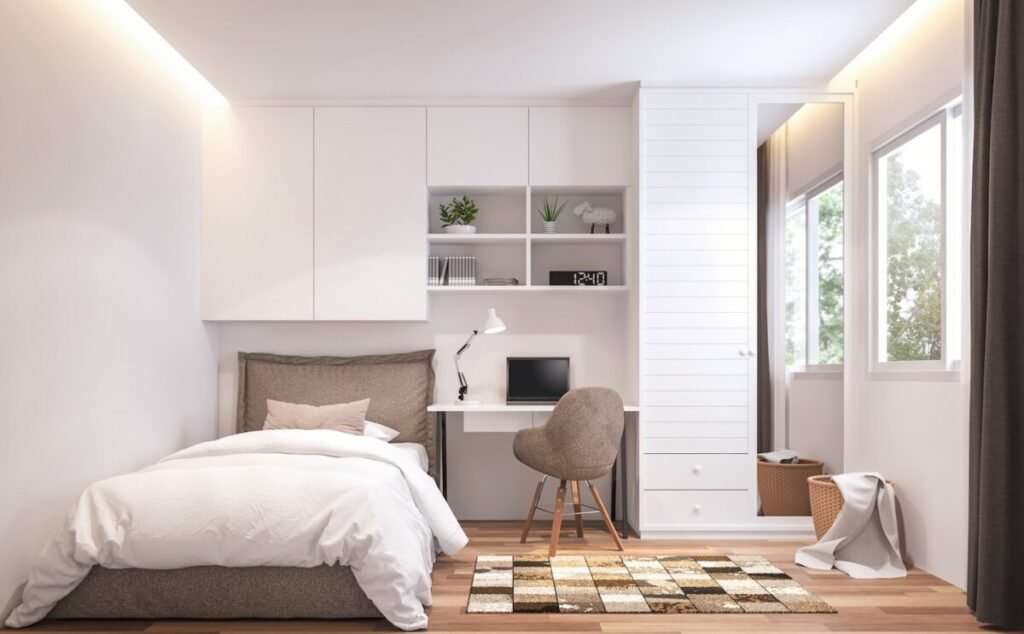

A small bedroom can be comfortable, stylish, and highly functional when every part of the room is planned carefully. Limited floor space does not mean you have to sacrifice comfort, storage, beauty, or personality. With the right furniture, colors, lighting, organization techniques, and layout, even a very small bedroom can feel open and relaxing.
The key to maximizing a small bedroom is to make better use of the space you already have. Instead of filling the room with large furniture and unnecessary decorations, focus on pieces that perform multiple functions. Vertical storage, under-bed organization, wall-mounted furniture, mirrors, smart lighting, and carefully selected colors can all make a noticeable difference.
Whether you live in a small apartment, a compact house, a dorm room, or simply have a bedroom with limited dimensions, there are many practical ways to create more usable space. This guide explores detailed small bedroom ideas that can help you transform a crowded room into an organized, comfortable, and attractive personal space.
Why Small Bedroom Design Matters
A bedroom is more than a place to sleep. It is often where people read, work, relax, get dressed, store personal belongings, and prepare for the day. When the room is small, these activities can compete for the same limited space.
Poor organization can make a small bedroom feel even smaller. Furniture may block walking paths, storage may overflow, and too many decorative objects can create visual clutter. On the other hand, thoughtful planning can make the same room feel surprisingly spacious.
Small bedroom design is therefore about more than appearance. It is about creating an environment where everything has a purpose and where movement remains easy.
A successful small bedroom should provide:
- A comfortable sleeping area
- Practical clothing storage
- Enough walking space
- Useful lighting
- Easy access to everyday items
- A relaxing atmosphere
- A visually organized appearance
- Space for personal activities when possible
The goal is not necessarily to make the room physically larger. The goal is to make it feel larger and function better.
1. Start With a Complete Bedroom Declutter
One of the easiest ways to maximize a small bedroom is to remove items you no longer need.
Before buying new storage furniture or decorating the room, look carefully at everything currently inside it. Small bedrooms become crowded quickly because even a few unnecessary objects can occupy valuable floor, shelf, or drawer space.
Begin with clothes. Separate them into categories such as:
- Clothes you wear regularly
- Seasonal clothing
- Formal clothing
- Clothing that needs repair
- Clothing you no longer wear
- Items you can donate
Next, examine shoes, books, accessories, bags, decorative objects, old electronics, and miscellaneous belongings.
A useful rule is to ask yourself whether each item is useful, meaningful, or regularly used. If it does not serve an important purpose, consider removing it.
Decluttering is particularly important in a small bedroom because visual clutter can make the room feel significantly smaller than its actual dimensions.
Use the One-In, One-Out Rule
A simple long-term strategy is the one-in, one-out rule.
Whenever you buy a new shirt, pair of shoes, decorative object, or storage item, consider removing an old item of similar purpose.
This prevents possessions from gradually taking over the bedroom.
Keep Surfaces Clear
Nightstands, desks, dressers, shelves, and window areas should not become storage zones for random objects.
A clear surface creates visual breathing room.
Instead of keeping everything on top of furniture, use:
- Drawers
- Baskets
- Boxes
- Wall organizers
- Shelves
- Small trays
The less visual clutter you have, the more spacious your bedroom will appear.
2. Choose the Right Bed Size
The bed is usually the largest piece of furniture in a bedroom, so its size has a major effect on available space.
If your bedroom is very small, consider whether the current bed size is appropriate for your needs.
A larger bed can provide comfort, but it can also consume a significant portion of the room. If two people share the bedroom, the bed must obviously accommodate both sleepers. However, for one person, choosing a suitable rather than oversized bed can free valuable space.
Measure the room before selecting a bed.
Consider:
- Bed width
- Bed length
- Walking space
- Door clearance
- Window access
- Wardrobe access
- Desk placement
- Nightstand space
Do not judge furniture only by whether it physically fits. It should also leave enough room to move comfortably.
3. Consider a Storage Bed
A storage bed is one of the most useful solutions for a small bedroom.
Instead of leaving the space beneath the mattress unused, a storage bed can provide drawers or compartments for belongings.
You can store:
- Extra bedding
- Blankets
- Towels
- Seasonal clothes
- Shoes
- Bags
- Extra pillows
This reduces the need for additional cabinets.
If purchasing a storage bed is not possible, you can use containers underneath a standard bed.
Choose containers with lids or wheels so they can be accessed easily.
4. Make Full Use of Under-Bed Space
Even without a storage bed, the area underneath your bed can become valuable storage.
Many people ignore this space, but it can hold a surprising number of items.
Use shallow storage boxes that slide underneath the bed.
Label each container so you do not need to pull everything out whenever you need something.
For example:
Box 1: Winter clothes
Box 2: Extra bedding
Box 3: Shoes
Box 4: Travel items
Keep frequently used belongings closer to the edge and less frequently used items toward the back.
5. Use Vertical Space
One of the most important principles for small bedroom design is to think vertically.
When floor space is limited, walls become valuable storage and decorating areas.
Instead of placing everything on the floor, move storage upward.
Consider:
- Tall bookshelves
- Wall-mounted shelves
- Vertical cabinets
- Hanging organizers
- Floating nightstands
- Pegboards
- Wall hooks
- Tall wardrobes
Vertical furniture can provide significant storage without occupying as much floor area as wide furniture.
A tall, narrow cabinet can sometimes provide almost as much storage as a short, wide cabinet while taking up less valuable floor space.
6. Install Floating Shelves
Floating shelves are excellent for small bedrooms because they provide storage without taking up floor space.
Install shelves above:
- A desk
- A bed
- A dresser
- A reading chair
- An empty wall
Use them for books, plants, framed photographs, small baskets, or decorative objects.
Avoid overcrowding shelves.
A few carefully arranged objects usually look better than filling every inch.
Use Shelves as Nightstands
If there is not enough room for a traditional bedside table, install a small floating shelf beside the bed.
It can hold:
- Phone
- Alarm clock
- Book
- Lamp
- Water bottle
- Glasses
This creates a functional bedside area without adding bulky furniture.
7. Choose a Tall Wardrobe
When choosing bedroom storage, a tall wardrobe is often more efficient than a wide one.
The unused vertical space above a short wardrobe can represent a major missed opportunity.
A tall wardrobe allows you to organize belongings across multiple levels.
Use the upper sections for seasonal items and lower sections for everyday clothing.
If possible, choose a wardrobe that reaches close to the ceiling.
This creates a more integrated appearance and maximizes storage.
8. Use the Space Above the Wardrobe
If you already own a shorter wardrobe, do not ignore the space above it.
Place attractive storage boxes or baskets on top.
These can hold:
- Seasonal clothes
- Luggage
- Extra blankets
- Rarely used accessories
- Keepsakes
Use matching containers to keep the area visually organized.
9. Install Wall Hooks
Wall hooks are inexpensive and extremely practical.
They can be installed behind doors, beside wardrobes, or on empty walls.
Use hooks for:
- Jackets
- Hats
- Bags
- Scarves
- Belts
- Robes
- Headphones
Instead of placing these items on chairs or the bed, give them a dedicated location.
10. Make Use of the Bedroom Door
The back of a bedroom door is often wasted space.
An over-the-door organizer can provide additional storage without reducing floor space.
Depending on the organizer, you can store:
- Shoes
- Accessories
- Hair products
- Small bags
- Cleaning items
- Scarves
This is particularly useful in rooms without large wardrobes.
11. Choose Furniture With Multiple Functions
Multifunctional furniture is one of the strongest solutions for maximizing a small bedroom.
Instead of buying several separate pieces, look for furniture that performs more than one job.
Examples include:
- Bed with storage drawers
- Desk with shelving
- Ottoman with storage
- Bench with hidden compartments
- Mirror with jewelry storage
- Headboard with shelves
- Fold-down desk
- Sofa bed
Multifunctional furniture reduces the total number of objects required in the room.
12. Use a Fold-Down Desk
If you need a workspace but do not have room for a traditional desk, consider a wall-mounted fold-down desk.
When you need to work, open the desk.
When you finish, fold it back against the wall.
This can create a useful workstation without permanently consuming floor space.
Pair it with a lightweight chair that can be moved elsewhere when the desk is not being used.
13. Use a Narrow Desk
A small bedroom does not necessarily require giving up a workspace.
Instead of a large office desk, choose a narrow desk.
A desk around a compact wall section can provide enough room for:
- Laptop
- Notebook
- Lamp
- Small accessories
Use wall shelves above the desk for additional storage.
14. Select Slim Furniture
Furniture depth matters as much as width.
A wardrobe that extends deeply into the room can make movement difficult.
Whenever possible, choose furniture designed for compact spaces.
Slim:
- Dressers
- Nightstands
- Bookshelves
- Desks
- Cabinets
can preserve valuable walking space.
15. Replace Bulky Nightstands
Traditional nightstands can consume more space than necessary.
If your bedroom is narrow, consider alternatives such as:
- Floating shelves
- Small stools
- Narrow cabinets
- Wall-mounted tables
- Slim drawer units
The goal is to retain bedside functionality while minimizing floor usage.
16. Use a Corner Effectively
Corners are frequently underused in small bedrooms.
A corner can become:
- A reading area
- A desk
- A small wardrobe
- A bookshelf
- A plant area
- A dressing station
Corner shelves can also use awkward spaces that standard furniture cannot.
17. Create a Small Reading Nook
You do not need a large chair to create a reading corner.
A compact chair, floor cushion, or small bench can work.
Add:
- A wall-mounted light
- Small shelf
- Basket
- Soft throw
Keep the area simple.
A reading corner should feel relaxing rather than crowded.
18. Choose Light Colors
Color has a significant psychological and visual effect on small spaces.
Light colors generally help a room feel brighter and more open.
Consider shades such as:
- White
- Cream
- Soft beige
- Light gray
- Pale blue
- Soft green
- Warm off-white
Light walls reflect more available light, helping the room feel airy.
This does not mean every small bedroom must be completely white.
You can still introduce color through:
- Bedding
- Curtains
- Artwork
- Rugs
- Cushions
- Plants
19. Try a Monochromatic Color Scheme
A monochromatic color scheme uses different shades of the same basic color.
For example, you might use:
- Light beige walls
- Medium beige bedding
- Darker beige accessories
Because the colors relate closely to each other, the room can appear visually connected rather than divided.
This can make a small room feel more cohesive.
20. Use Dark Colors Carefully
Dark colors are not forbidden in small bedrooms.
A deep color can create warmth and character when used carefully.
Instead of painting every wall dark, consider:
- One accent wall
- Dark bedding
- Dark furniture details
- Deep-colored curtains
Balance darker elements with lighter surfaces and good lighting.
21. Use Mirrors to Create Visual Space
Mirrors are a classic small-room design solution.
A large mirror can reflect light and make a bedroom appear deeper.
Place mirrors where they can reflect:
- Natural light
- Windows
- Bright walls
- Attractive parts of the room
A full-length mirror can also combine decoration with practical functionality.
22. Choose a Mirrored Wardrobe
A wardrobe with mirrored doors can serve two functions.
It provides clothing storage and acts as a large reflective surface.
This eliminates the need for a separate full-length mirror in some bedrooms.
23. Maximize Natural Light
Natural light can make a small bedroom feel significantly more spacious.
Keep windows as unobstructed as possible.
Avoid placing tall furniture directly in front of a window unless necessary.
Choose curtains that allow daylight to enter while providing privacy.
Light-colored curtains can also help maintain an airy appearance.
24. Use Sheer Curtains
Sheer curtains allow more daylight into the room.
They can be paired with thicker curtains when privacy or darkness is needed.
A simple layered window treatment can provide flexibility without making the room visually heavy.
25. Install Wall-Mounted Lighting
Floor and table lamps require surface or floor space.
Wall-mounted lighting can eliminate this problem.
Consider:
- Wall sconces
- Adjustable reading lights
- Small mounted lamps
Install lights beside the bed instead of using large bedside lamps.
26. Use LED Strip Lighting
LED strips can add subtle illumination without requiring additional furniture.
They can be placed:
- Under shelves
- Behind a headboard
- Under cabinets
- Around a desk
Use them to create ambient lighting rather than overwhelming the room.
27. Layer Your Bedroom Lighting
One ceiling light is often not enough.
A well-designed small bedroom can use several lighting layers.
These include:
Ambient lighting: General room illumination.
Task lighting: Light for reading, studying, or dressing.
Accent lighting: Decorative lighting that adds atmosphere.
Using several small sources can make the room more comfortable than relying on one extremely bright fixture.
28. Choose a Simple Headboard
A huge upholstered headboard can consume visual and physical space.
For a small bedroom, consider a slim headboard.
Alternatively, you can create a decorative focal point using:
- Wall paint
- Wallpaper
- Wood panels
- Artwork
- Fabric
This can provide the visual effect of a headboard without taking up as much space.
29. Use the Wall Behind the Bed
The wall behind the bed is an excellent opportunity for vertical design.
You can install:
- Floating shelves
- Narrow cabinets
- Artwork
- Wall lighting
- Decorative panels
Be careful with heavy shelves directly above your head and ensure all wall-mounted furniture is properly secured.
30. Choose a Platform Bed
A simple platform bed can create a cleaner appearance than a large traditional bed frame.
Some platform beds also include drawers or open storage underneath.
Choose a design appropriate for your mattress and storage requirements.
31. Use Rolling Storage
Rolling storage containers are especially useful under beds and desks.
Wheels make it easier to pull storage out when needed.
This is better than placing loose boxes under furniture because organized rolling containers can be labeled and moved efficiently.
32. Organize Your Closet by Frequency
Closet organization becomes more effective when items are arranged according to how often you use them.
Keep everyday clothes at eye level.
Place occasional clothing higher or farther back.
Use lower areas for shoes or folded items.
This reduces unnecessary searching and keeps the closet organized.
33. Use Matching Hangers
Matching hangers can make a closet look cleaner and more organized.
Slim hangers can also reduce the amount of horizontal rail space used by clothing.
This can allow more garments to fit inside a compact wardrobe.
34. Use Door-Mounted Closet Storage
Closet doors can hold additional storage.
Install suitable organizers for:
- Shoes
- Belts
- Jewelry
- Scarves
- Small accessories
This converts otherwise unused vertical space into practical storage.
35. Fold Clothes Efficiently
How you fold clothes can affect how much storage space they occupy.
Vertical folding methods can make drawers easier to organize because you can see individual garments rather than stacking everything into one large pile.
Group clothing by type.
For example:
- T-shirts
- Pants
- Sleepwear
- Underwear
- Sportswear
36. Use Storage Boxes
Storage boxes are helpful for keeping small belongings together.
Choose boxes that fit your shelves or wardrobe dimensions.
Avoid buying boxes before measuring your storage area.
A perfectly sized box uses space more efficiently than one that leaves large gaps.
37. Use Baskets for Soft Items
Baskets are useful for blankets, pillows, scarves, and other soft items.
Place them:
- Under desks
- Beside wardrobes
- On shelves
- Under benches
Choose a limited number of baskets to avoid creating more visual clutter.
38. Create a Dedicated Laundry Solution
A laundry basket can occupy valuable floor space.
Choose a narrow laundry hamper or a collapsible model.
Another option is a fabric hamper that hangs inside a closet or behind a door.
This keeps dirty clothes contained without taking up much room.
39. Keep the Floor as Clear as Possible
One of the simplest visual tricks for a small bedroom is maintaining a clear floor.
Avoid placing unnecessary objects on the ground.
When more of the floor is visible, the room can feel larger.
Use wall-mounted and elevated storage whenever practical.
40. Use Furniture With Exposed Legs
Furniture that sits directly on the floor can visually feel heavier.
Furniture with visible legs allows more of the floor to remain visible.
This can create a lighter appearance.
Consider beds, benches, nightstands, and dressers with elevated bases.
41. Avoid Oversized Rugs
A rug can make a bedroom comfortable, but an oversized or poorly placed rug can make a small room feel crowded.
Choose a rug appropriate for the room’s dimensions.
You can place a rug partially beneath the bed while leaving some surrounding floor visible.
42. Use a Small Round Rug
Round rugs can work well in awkward corners or beside beds.
They introduce softness without creating strong rectangular visual boundaries.
A small round rug can work particularly well in a reading corner.
43. Keep Decoration Simple
Small bedrooms do not need dozens of decorative objects.
Choose a few meaningful pieces.
For example:
- One large artwork
- Two small plants
- A decorative lamp
- A framed photograph
- A soft throw
A smaller number of carefully selected objects often creates a more sophisticated appearance.
44. Create One Focal Point
Instead of decorating every wall, choose one main focal point.
This might be:
- The bed wall
- A piece of artwork
- A colorful headboard
- A patterned rug
- A statement light fixture
Keeping the rest of the room simpler prevents visual competition.
45. Use Large Artwork Instead of Many Small Pieces
Several small frames can create visual clutter.
One larger artwork can create personality while keeping the wall visually organized.
Choose artwork that matches the room’s overall color palette.
46. Use Plants Carefully
Plants can make a bedroom feel fresh and welcoming.
However, too many plants can consume valuable space.
For a small room, consider:
- Hanging plants
- Small shelf plants
- Narrow floor plants
- Wall-mounted planters
Choose plants appropriate for your lighting conditions and care abilities.
47. Use Hanging Planters
Hanging planters are particularly useful because they add greenery without consuming floor space.
Place them where they will not interfere with doors, windows, or movement.
48. Choose a Minimal Bedding Design
The bed is usually the largest visual object in the room.
Busy bedding can make it appear even more dominant.
Simple bedding in a coordinated color can create a calmer appearance.
Layer with:
- One duvet
- Two or three pillows
- One small throw
Avoid covering the entire bed with excessive decorative cushions if space is limited.
49. Use Vertical Stripes
Vertical lines can make walls appear taller.
You can introduce vertical patterns through:
- Curtains
- Wallpaper
- Wall panels
- Artwork
- Narrow shelving
Use patterns carefully so the room does not become visually overwhelming.
50. Hang Curtains Higher
Mounting curtains closer to the ceiling can visually emphasize wall height.
Allow curtains to extend down toward the floor.
This can make the room feel taller and more elegant.
51. Use Curtains That Match the Walls
When curtains are similar in color to the walls, the transition between wall and window can feel smoother.
This can create a more continuous visual effect.
52. Keep Furniture Proportional
Small bedrooms need appropriately scaled furniture.
A tiny room filled with oversized furniture will feel cramped.
Measure before purchasing.
Consider the complete dimensions, not just the furniture width.
Remember to account for:
- Door opening
- Drawer opening
- Closet doors
- Walking paths
- Window access
53. Create Clear Walking Paths
A room feels more comfortable when you can move around easily.
Try to maintain clear pathways between:
- Door and bed
- Bed and wardrobe
- Bed and bathroom
- Desk and chair
Avoid placing furniture where it interrupts these routes.
54. Place the Bed Strategically
The bed should usually be positioned where it does not interfere with the room’s main circulation path.
Depending on the room shape, placing the bed against a wall may create more usable space.
However, consider access from both sides if the bed is shared.
55. Use the Space Beside the Bed
If there is only a narrow gap beside the bed, do not assume it is useless.
A slim shelf or narrow storage unit may fit there.
You can use the area for:
- Books
- Chargers
- Small baskets
- Shoes
- Accessories
56. Make Use of Awkward Corners
Every bedroom has areas that are difficult to furnish.
Instead of leaving them empty, consider custom or flexible solutions.
An awkward corner can hold:
- A tall plant
- Corner shelf
- Narrow cabinet
- Laundry hamper
- Small chair
57. Consider Built-In Storage
If you own the property or are renovating, built-in storage can maximize every available centimeter.
Built-in wardrobes can extend from wall to wall and floor to ceiling.
They can be designed around:
- Windows
- Sloped ceilings
- Corners
- Structural features
This is often more space-efficient than standard furniture.
58. Use a Window Seat With Storage
If the bedroom has a suitable window area, a window seat can serve several purposes.
It can provide:
- Seating
- Reading space
- Hidden storage
A built-in bench with drawers underneath can be particularly useful.
59. Use a Loft Bed
A loft bed can dramatically change the way a small bedroom uses vertical space.
The area underneath can become:
- Desk
- Reading corner
- Storage area
- Seating area
Loft beds are particularly useful for children, teenagers, students, and compact apartments, provided the design is safe and suitable for the user.
60. Consider a Murphy Bed
A Murphy bed can be useful in extremely small rooms.
The bed folds into a wall or cabinet when not in use.
When folded away, the room can become a workspace or living area.
This solution requires proper installation and careful consideration of safety and surrounding furniture.
61. Use a Daybed
A daybed can function as both sleeping and seating furniture.
During the day, it can resemble a sofa.
At night, it serves as a bed.
This can be useful when a bedroom also functions as a study or sitting room.
62. Use a Bed With Drawers
If a full storage bed is not suitable, choose a frame with integrated drawers.
These drawers can replace a separate dresser in some rooms.
Keep frequently used items in the easiest-to-access drawers.
63. Use a Headboard With Storage
A headboard with built-in shelves or compartments can replace bedside furniture.
This is especially useful when the room is too narrow for nightstands.
Store books, lamps, chargers, and small personal belongings inside the headboard.
64. Hide Cables
Visible cables can make a small room look messy.
Organize cables using:
- Cable clips
- Cable sleeves
- Charging stations
- Wall-mounted organizers
Keep chargers close to where they are used.
65. Create a Charging Station
Instead of having phones, chargers, tablets, and cables scattered around the bedroom, create one dedicated charging area.
A small wall shelf beside the bed can serve as a charging station.
This keeps electronics organized.
66. Use a Wall-Mounted TV
If you keep a television in the bedroom, mounting it on the wall can eliminate the need for a TV cabinet.
The space beneath the TV can remain open.
However, avoid adding a television simply because there is an empty wall. Every object should support your needs.
67. Keep Electronics Organized
Small bedrooms can quickly become cluttered with:
- Phones
- Tablets
- Laptops
- Chargers
- Headphones
- Cables
Use small boxes or drawers to organize accessories.
Keep only frequently used electronics in visible areas.
68. Create a Minimal Vanity
If you need a dressing area, a traditional vanity may take up too much space.
Consider a wall-mounted shelf with:
- Small mirror
- Compact stool
- Drawer organizer
This can provide a functional grooming station without requiring a large vanity table.
69. Use a Mirror Cabinet
A mirror cabinet can combine storage and reflection.
It can store:
- Jewelry
- Hair accessories
- Cosmetics
- Small personal items
This is especially useful when storage is limited.
70. Use Hidden Jewelry Storage
Jewelry can become messy when stored on open surfaces.
Consider:
- Drawer organizers
- Hanging jewelry holders
- Mirror cabinets
- Small boxes
Keep similar pieces together.
71. Optimize Every Drawer
Do not treat drawers as large empty containers.
Use dividers to create separate sections.
For example:
One section for socks, one for underwear, one for accessories, and one for small personal items.
This increases usable storage and makes items easier to find.
72. Use Clear Containers
Transparent storage boxes allow you to see what is inside.
They are particularly useful for items stored under beds or on high shelves.
Label them even if they are transparent.
73. Rotate Seasonal Items
You do not need every item of clothing accessible year-round.
Store seasonal clothing elsewhere when possible.
For example, during summer, winter coats and heavy sweaters can be placed in under-bed storage.
When seasons change, rotate the clothing.
74. Use Vacuum Storage Bags Carefully
Vacuum storage bags can reduce the volume of soft items such as blankets and seasonal clothing.
They can be useful when closet space is limited.
Make sure stored items are clean and completely dry before sealing them.
75. Create a Minimal Shoe System
Shoes can consume considerable floor space.
Instead of leaving them around the bedroom, use:
- Slim shoe racks
- Door organizers
- Under-bed containers
- Closet shelves
Keep frequently used shoes accessible and store occasional footwear elsewhere.
76. Use a Narrow Shoe Cabinet
A vertical shoe cabinet can store multiple pairs while taking relatively little floor space.
Choose a design appropriate for the number of shoes you actually own.
77. Keep the Bedside Area Simple
A small bedroom benefits from a calm bedside area.
Keep only essential items nearby.
A good bedside setup may include:
- Small light
- Phone
- Book
- Water
- Alarm clock
Everything else can be stored away.
78. Avoid Furniture You Rarely Use
Before buying furniture, ask whether you actually need it.
A bedroom does not automatically need:
- Large dresser
- Armchair
- Bench
- Multiple nightstands
- Large desk
- Extra cabinets
Use furniture based on your lifestyle rather than traditional expectations.
79. Think in Zones
Even a small bedroom can have different functional zones.
Possible zones include:
Sleeping zone: Bed and bedside area.
Dressing zone: Wardrobe and mirror.
Work zone: Desk and chair.
Relaxation zone: Chair or reading area.
Each zone should have a clear purpose.
80. Keep Similar Items Together
Organization becomes easier when similar belongings stay together.
For example:
- Books with books
- Shoes with shoes
- Accessories with accessories
- Bedding with bedding
This reduces the amount of searching and prevents clutter from spreading throughout the room.
81. Use Labels
Labels can make compact storage systems much more effective.
Label boxes by category.
For example:
- Bedding
- Winter clothes
- Documents
- Travel
- Accessories
This is particularly helpful for storage placed high above wardrobes.
82. Use a Minimalist Approach
Minimalism does not mean having an empty room.
It means intentionally choosing what deserves space.
A minimalist small bedroom focuses on:
- Function
- Comfort
- Simplicity
- Organization
- Quality
Instead of adding more objects, ask whether each object improves the room.
83. Use Texture Instead of Excess Decoration
You can create visual interest without adding many objects.
Use different textures through:
- Bedding
- Curtains
- Rugs
- Cushions
- Wood
- Woven baskets
Texture can make a simple room feel rich without cluttering it.
84. Choose One or Two Accent Colors
Too many colors can make a small bedroom feel visually fragmented.
Choose a neutral base and one or two accent colors.
For example:
White + beige + green
or
Cream + gray + blue
or
Warm white + wood + terracotta
This keeps the design cohesive.
85. Use Light Wood Furniture
Light wood can create a warm and airy appearance.
Pair it with neutral walls and simple textiles for a relaxed bedroom design.
86. Avoid Too Many Patterns
Patterns can be beautiful, but too many different patterns can make a small room feel busy.
If using patterned wallpaper, consider keeping bedding and curtains relatively simple.
If your bedding is patterned, use simpler walls.
87. Use One Pattern as a Feature
A single patterned element can create personality.
For example:
- Patterned accent wall
- Decorative rug
- Floral bedding
- Geometric curtains
Let one major pattern become the visual feature.
88. Use Wall-Mounted Accessories
Instead of placing everything on furniture, mount accessories on walls.
Examples include:
- Coat hooks
- Jewelry organizers
- Small shelves
- Pegboards
- Wall calendars
This reduces surface clutter.
89. Use a Pegboard
A pegboard can provide flexible vertical organization.
You can use it for:
- Headphones
- Accessories
- Small bags
- Notes
- Decorative items
Because hooks can be moved, the arrangement can change as your needs change.
90. Keep Frequently Used Items Accessible
Good organization is not simply about hiding everything.
Frequently used items should be easy to reach.
Less frequently used items can be stored in higher or harder-to-reach locations.
This creates a practical hierarchy.
91. Keep the Bedroom Easy to Clean
A crowded bedroom takes longer to clean.
A well-organized room makes regular cleaning easier.
Keep floors clear and choose furniture that is easy to clean around.
This is another reason to avoid unnecessary furniture.
92. Create a Weekly Reset Routine
Spend a few minutes each week returning items to their designated places.
Put away:
- Clothes
- Books
- Shoes
- Bags
- Electronics
- Accessories
A small daily or weekly effort prevents clutter from becoming overwhelming.
93. Make the Bed Every Morning
Making the bed takes only a few minutes but can make the room immediately look more organized.
A neatly made bed can become the visual foundation of the room.
94. Keep Clothes Off the Floor
Clothes on the floor make a small bedroom appear much more crowded.
Use a laundry hamper for dirty clothes and return clean clothes to the wardrobe or drawers.
95. Use a Small Basket for Daily Items
If you frequently use the same objects, keep them together in one basket.
For example:
- Books
- Remote controls
- Chargers
- Hand cream
The basket can be moved when necessary.
96. Consider Furniture With Wheels
Rolling furniture can be moved when you need more space.
A small rolling cart can serve as:
- Bedside storage
- Beauty station
- Desk organizer
- Book storage
It can be moved into a corner when not required.
97. Use Nesting Furniture
Nesting tables or stools can provide multiple surfaces while taking up less room when stacked.
They can be separated when guests need additional seating or surfaces.
98. Choose Foldable Furniture
Foldable chairs, tables, and stools can be stored when not needed.
This is particularly useful in bedrooms that serve multiple purposes.
99. Use a Small Bench at the Foot of the Bed
If there is enough space, a narrow bench can provide seating and storage.
Choose a bench with hidden storage if possible.
Avoid using a bench if it makes the walking path too narrow.
100. Measure Before Every Purchase
One of the biggest mistakes in small bedroom design is buying furniture without measuring.
Before purchasing anything, measure:
- Wall width
- Wall height
- Door width
- Window dimensions
- Bed area
- Walking paths
- Available corners
Also measure the furniture itself.
A piece may fit against a wall but prevent a door or drawer from opening.
101. Make a Floor Plan
Before rearranging furniture, create a simple floor plan.
You can draw the room on paper.
Mark:
- Doors
- Windows
- Radiators
- Electrical outlets
- Built-in storage
Then experiment with different furniture arrangements.
This can help you avoid unnecessary moving.
102. Keep Electrical Outlets Accessible
Do not block important outlets with large furniture.
Consider where you need electricity for:
- Bedside lamps
- Phones
- Laptops
- Fans
- TVs
Planning electrical access can make the final layout much more practical.
103. Use Corner Lighting
A small lamp in a dark corner can make the entire room feel brighter.
Dark corners can visually shrink a room.
Use small lamps or wall lighting to distribute light more evenly.
104. Use Reflective Surfaces
Mirrors are not the only reflective materials.
You can also use:
- Glass
- Glossy finishes
- Metallic accents
Use them selectively.
Too many reflective surfaces can make the room feel cold or visually busy.
105. Keep the Ceiling Bright
A light-colored ceiling can help maintain a sense of openness.
White or soft neutral ceilings are particularly effective in rooms with limited natural light.
106. Avoid Blocking Windows
Natural light is extremely valuable in a small bedroom.
Do not cover windows with unnecessary furniture.
Keep the area around the window relatively open.
107. Use Transparent Furniture
Glass or transparent furniture can visually disappear into the room.
For example, a small transparent side table may provide functionality without creating a heavy visual block.
Use this idea selectively.
108. Use Slim Bedside Lamps
If you prefer table lamps, choose narrow models.
A small lamp can provide enough light without occupying the entire nightstand.
109. Use Smart Storage Near the Bed
The area beneath and beside the bed should be used efficiently.
Keep sleep-related items nearby.
For example:
- Extra pillowcases
- Books
- Sleepwear
- Reading materials
Avoid storing unrelated objects there.
110. Create a Calm Sleep Environment
Maximizing space is not only about storage.
A bedroom should remain peaceful.
Avoid filling the room with work equipment, excessive electronics, and unnecessary decorations.
The room should support rest.
111. Use Soft Neutral Bedding
Neutral bedding can make the bed feel less visually dominant.
Choose colors that complement the walls.
Add texture through a blanket or cushion rather than multiple contrasting patterns.
112. Use Wall Art Strategically
Artwork can make the room personal without taking floor space.
Hang artwork at an appropriate height.
One large piece can often work better than many small pieces.
113. Use Family Photos Selectively
Personal photographs can make a bedroom feel welcoming.
However, too many frames can create visual clutter.
Choose a small gallery or one large framed photograph.
114. Keep Decorations Functional When Possible
A decorative mirror is both useful and attractive.
A decorative shelf provides storage.
A stylish basket can organize blankets.
Whenever possible, choose items that combine beauty with function.
115. Make the Most of a Narrow Bedroom
A narrow bedroom requires special attention to furniture depth.
Place the largest furniture pieces along the longer walls when appropriate.
Use slim furniture near walking areas.
Keep the center as open as possible.
116. Design a Small Children’s Bedroom
Children’s bedrooms often need to serve multiple purposes.
They may require space for:
- Sleeping
- Playing
- Studying
- Storing toys
- Clothing
Use vertical storage, under-bed drawers, wall shelves, and multifunctional furniture.
Toy storage should be easy for children to access and return.
117. Design a Small Teen Bedroom
Teenagers may need sleeping, studying, storage, and personal display areas.
A compact desk with wall storage can work well.
Use shelves for books and a small number of personal objects.
A pinboard or pegboard can provide flexible organization.
118. Design a Small Guest Bedroom
Guest rooms do not need excessive furniture.
A bed, compact storage, small bedside surface, and mirror may be enough.
If the room is also used for other purposes, consider a daybed or sofa bed.
119. Design a Small Apartment Bedroom
Apartment bedrooms often have limited storage.
Use:
- Tall wardrobes
- Under-bed storage
- Wall shelves
- Over-door organizers
- Multifunctional furniture
Avoid filling the room simply because storage is available.
120. Create a Bedroom That Feels Bigger
Ultimately, making a small bedroom feel bigger is about visual simplicity.
Use:
- Light colors
- Good lighting
- Mirrors
- Clear floors
- Vertical storage
- Proportional furniture
- Organized surfaces
These techniques work together.
Common Small Bedroom Mistakes to Avoid
Even with good intentions, certain mistakes can make a small bedroom feel smaller.
Buying Furniture Without Measuring
Always measure before purchasing.
Using Too Much Furniture
Every piece should have a clear function.
Ignoring Vertical Space
Walls can provide valuable storage.
Blocking Natural Light
Keep windows open and unobstructed where possible.
Using Too Many Colors
A limited palette often creates a calmer appearance.
Leaving Clothes Everywhere
Use wardrobes, drawers, hampers, and hooks.
Overdecorating
Too many decorative objects create visual clutter.
Choosing Oversized Rugs
The rug should fit the room rather than dominate it.
Using Poor Lighting
Dark corners can make a room feel smaller.
Ignoring the Door Area
The back of the door can provide useful storage.
Small Bedroom Ideas on a Budget
You do not need to spend a lot of money to improve a small bedroom.
Some of the most effective changes can be inexpensive.
Start by decluttering.
Then rearrange existing furniture.
Add inexpensive hooks.
Use storage boxes.
Install simple shelves.
Change bedding.
Repaint walls if appropriate.
Add a mirror.
Improve lighting.
Organize the wardrobe.
These changes can produce a major difference without requiring a complete renovation.
Low-Cost Storage Ideas
Consider:
- Plastic storage boxes
- Fabric baskets
- Hanging organizers
- Wall hooks
- DIY shelves
- Under-bed containers
- Door organizers
Choose products according to durability and actual need rather than buying every storage product available.
DIY Small Bedroom Storage Ideas
DIY projects can help you adapt storage to your exact room.
You can create simple shelves from suitable materials.
A wooden board with properly installed brackets can become a floating shelf.
Old boxes can be cleaned, labeled, and used as organized storage.
A pegboard can become a flexible wall organizer.
Always ensure DIY furniture is stable and securely attached.
How to Maximize a Very Tiny Bedroom
If your bedroom is extremely small, prioritize the essentials.
Start with the bed.
Then determine the storage you absolutely need.
Next, create a walking path.
After that, add a workspace or seating area only if there is enough room.
Use vertical space aggressively but safely.
Choose furniture with multiple functions.
Keep colors light and surfaces simple.
The smaller the room, the more important every decision becomes.
Small Bedroom Layout Ideas
Layout 1: Bed Against the Main Wall
Place the bed against the largest uninterrupted wall.
Use a narrow floating shelf as a bedside table.
Install a tall wardrobe opposite the bed.
This layout keeps the center relatively open.
Layout 2: Bed in the Corner
For a single sleeper, placing the bed against a corner can create additional floor space.
The remaining area can be used for a desk or storage.
Layout 3: Loft Bed Layout
Place the sleeping area above.
Use the space underneath for a desk, wardrobe, or seating.
Layout 4: Daybed Layout
Use a daybed against a wall.
During the day, style it like a sofa.
This can make the bedroom feel more flexible.
Layout 5: Fold-Down Desk Layout
Place the bed along one wall and install a fold-down desk on another.
When the desk is closed, walking space remains available.
Small Bedroom Storage Checklist
Before finishing your bedroom organization, check the following:
- Is the floor mostly clear?
- Is the bed appropriately sized?
- Is under-bed space being used?
- Is vertical space being used?
- Are clothes properly organized?
- Are shoes stored efficiently?
- Are doors being used for storage?
- Are bedside surfaces clear?
- Is natural light unobstructed?
- Is the room adequately lit?
- Are mirrors positioned effectively?
- Does every furniture item serve a purpose?
- Are walking paths clear?
- Are frequently used items easy to access?
- Is unnecessary clutter removed?
Frequently Asked Questions
How can I make a small bedroom look bigger?
Use light colors, mirrors, good lighting, clear floors, slim furniture, and vertical storage. Keeping surfaces organized also makes a major visual difference.
What color is best for a small bedroom?
Light neutrals such as white, cream, beige, soft gray, pale blue, and soft green can help a small bedroom feel brighter and more open.
How can I add storage without making my bedroom smaller?
Use vertical storage, floating shelves, under-bed containers, tall wardrobes, door organizers, and wall hooks. These solutions reduce dependence on floor-based storage.
Is a large bed suitable for a small bedroom?
It depends on the room dimensions and the number of people using the bed. Measure the available space and make sure adequate walking paths remain.
How do I organize a small bedroom with no closet?
Use a tall wardrobe, clothing rack, under-bed containers, storage boxes, wall hooks, and door organizers.
Are mirrors useful in small bedrooms?
Yes. Properly positioned mirrors can reflect light and create a greater sense of visual depth.
How can I create a workspace in a tiny bedroom?
Consider a narrow desk, floating desk, fold-down desk, or wall-mounted workspace. Use shelves above the desk for additional storage.
What should I store under my bed?
Under-bed storage is useful for seasonal clothes, extra bedding, shoes, blankets, luggage, and other items that are not needed every day.
How do I prevent a small bedroom from becoming cluttered?
Declutter regularly, give everything a designated location, keep surfaces clear, and avoid bringing unnecessary furniture into the room.
Should a small bedroom have a rug?
Yes, provided the rug is appropriately sized. A carefully positioned rug can add warmth and comfort without overwhelming the room.
Can dark colors work in a small bedroom?
Yes. Dark colors can work as accents or on a feature wall, especially when balanced with adequate lighting and lighter elements.
How do I maximize a narrow bedroom?
Use slim furniture, vertical storage, a carefully positioned bed, wall-mounted shelves, and a clear central walking path.
What furniture is best for a small bedroom?
Multifunctional furniture is particularly useful. Examples include storage beds, daybeds, fold-down desks, storage ottomans, tall wardrobes, and beds with integrated shelves.
Final Thoughts
A small bedroom does not have to feel cramped, uncomfortable, or boring. With thoughtful planning, limited space can become an organized and attractive environment that supports sleep, relaxation, storage, and everyday activities.
The most important principle is to use every part of the room intentionally. The floor should remain as open as possible, while walls, corners, doors, and under-bed areas can provide additional storage.
Choose furniture according to the actual dimensions of the room rather than simply buying pieces that look attractive in a showroom. Measure carefully, maintain clear walking paths, and select multifunctional pieces whenever possible.
Light colors, mirrors, natural light, and layered lighting can improve the visual feeling of the space. At the same time, decluttering and organization can prevent the room from becoming overwhelmed by possessions.
You do not need an expensive renovation to maximize a small bedroom. Sometimes the biggest improvements come from simple changes: removing unnecessary items, moving furniture, adding a shelf, using under-bed storage, organizing the wardrobe, or changing the lighting.
A successful small bedroom is not one that contains the most furniture or decoration. It is one where the available space works efficiently and where every item has a purpose.
By combining smart storage, suitable furniture, thoughtful colors, effective lighting, and regular organization, almost any small bedroom can become a comfortable, beautiful, and functional space.
The real secret to maximizing a small bedroom is simple: use less floor space, make better use of vertical space, reduce clutter, and choose furniture that works harder for you.
With these principles, even a compact bedroom can feel more open, organized, peaceful, and enjoyable every day.